AIAA’s 30/30 Program Interest Form
Sign up to receive updates about the AIAA 30/30 Recognition Program, including future nomination periods, recipient announcements, and program news.


Seeking future leaders and pioneers. AIAA’s 30/30 program spotlights young professionals in aerospace–placing technical achievement, future potential, and overall excellence at its core. Selected for the exceptional rigor and impact of their work, these individuals are not only advancing the field today, but shaping the future of aerospace in lasting ways. Their contributions will inform research, influence innovation, and inspire the next generation of scientists and engineers. This program offers a rare opportunity to celebrate the rising pioneers and changemakers of aerospace—before their names become widely recognized across the industry and beyond.
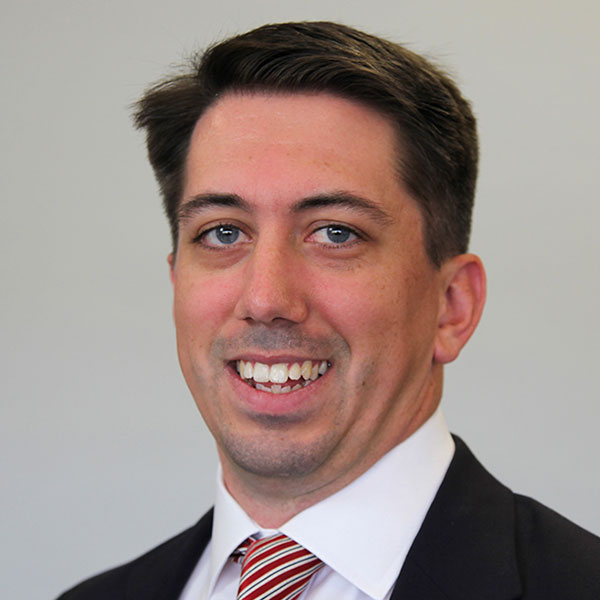
Sr. Principal Systems Engineer
Raytheon, an RTX Business

Chip Andrews is an established systems engineering leader at Raytheon, an RTX Business. Andrews currently acts as the cross-product team lead on a developmental aerospace program, where he is responsible for the systems engineering, verification and validation, and performance. Andrews has gained industry-wide notoriety for his innovative contributions to systems security engineering methods and implementations into missile systems, establishing novel practices for protecting critical technologies against exploitation.
The transition of his career into engineering leadership was predicated on a singular notion: that he could take the behaviors and insights learned through working hand-in-hand with the highest levels of Department of Defense acquisition authorities upstream to a prime systems integrator and embed those principles into the company’s culture. This has afforded Andrews the opportunity to provide these insights across countless programs of the company’s enterprise, ultimately serving to raise the effectiveness of Raytheon’s products as they’ve been employed around the world.
Beyond his formal responsibilities at Raytheon, Andrews is committed to fostering the development of the next generation of engineering talent. He is an active participant in formal mentorship programs within Raytheon and with the University of Arizona. As a manager and people leader, his advice is regularly sought out by direct reports, co-workers and teammates, where his insights are valued for their empathy, challenges, and impartiality.
Andrews is a recipient of the 2023, 2024, and 2025 Raytheon Innovator Awards in recognition of the numerous trade secrets he invented and reduced to practice in that time.

Advanced Technology Leadership Program / Aeronautical Engineer Staff
Lockheed Martin Corporation
Anthony Ashley is the Computational Fluid Dynamics (CFD) Digital Transformation Tech Lead at Lockheed Martin, responsible for enabling expanded use of aerodynamic simulation in the design process through improved accuracy and uncertainty quantification. In this role he ensures that aerodynamic simulations meet or exceed accuracy, cost, and speed requirements. Ashley has integrated critical algorithmic enhancements in flow solvers and supported their application on multiple Skunk Works and Lockheed Martin aircraft including the F-35, F-22, F-16, and C-130. He also brings his expertise to integrated propulsion system compatibility, digital twinning, and adjoint-based optimization.
Ashley is dedicated to supporting and strengthening AIAA. He has authored numerous conference papers and has served on the Applied Aerodynamics Technical Committee since 2022. He has been Technical Discipline Chair/Co-Chair for AIAA AVIATION from 2024 to 2026. He is a primary facilitator of RECAP (Revitalizing Early Career AIAA Participation), increasing the engagement of early-career Lockheed Martin engineers with AIAA. He is also a committed STEM volunteer in the Dallas/Fort Worth area.
Ashley is extremely passionate about mentoring the next generation at Lockheed Martin and AIAA. He serves as lead CFD instructor at Lockheed Martin Aeronautics, ensuring that analysts have the knowledge required to produce accurate results efficiently.
By coupling meticulous execution, a passion for mission success, and an ability to unite functional and program stakeholders, Ashley has elevated Lockheed Martin’s CFD capabilities, delivered measurable savings, and emerged as a distinguished leader and indispensable asset to the aerospace community.

Chief Marketing Officer
Star Catcher Industries
A 2018 AIAA Wernher von Braun Scholarship recipient, Camille Bergin trained as an aerospace engineer before working on NASA’s Artemis program and classified national security missions. But her real distinction is what she did next: she paired her technical fluency with communications command to build category-defining companies, and a new category of technical marketing itself.
As Chief Marketing Officer of Star Catcher, the company building the first power grid in space, Bergin has, in less than two years, transformed an unknown seed-stage startup into a market leader. In October 2025, she led communications for Star Catcher’s world-record optical power-beaming demonstration at NASA Kennedy Space Center. She landed an exclusive in Bloomberg and framed a deeply technical milestone for the investors, customers, and policymakers who decide a company’s future. The positioning and thought leadership Bergin leads have directly enabled a $65 million oversubscribed Series A, ten signed commercial Power Purchase Agreements, and multiple government contracts.
Her influence extends across the industry: she pioneered orbital infrastructure narratives at Orbit Fab, built Vast’s first marketing team, and co-founded Modulate Media. She built The Galactic Gal, a platform of more than 800,000 followers, earning the first creator partnership in U.S. Space Force history.
For the next generation in STEM, Bergin is proof that an engineer can also be a builder, a communicator, and a public voice, all at once. She isn’t just opening doors; she’s showing others where to find them.

Mechanical Engineer
US Army DEVCOM Armaments Center
Jeremy Boling joined the U.S. Army DEVCOM Armaments Center in 2020 with an impressive resume ranging from research fellow at Air Force Research Lab Wright-Patterson, to researching high-velocity VTOL concepts. He is a CFD expert and alleviated an important simulation bottleneck.
Boling recognized that many junior engineers were creating CFD analyses without a comprehensive understanding of the underlying principles. He took immediate action and gathered subject-matter experts to create a review board to examine and critique CFD analyses. This has saved many projects time and money and is a vital training tool for younger engineers.
Since joining U.S. Army DEVCOM Armaments Center Boling has become known as a “rockstar” in his division, as one Division Chief said. Recently, he was called upon to simulate a critical effort for the Joint Enhanced Munitions Technology Program, well outside of the usual Aeroballistics expertise. Boling has an unshakable work ethic. Despite a grueling schedule, he pursues independent aerospace research. He has numerous publications from AIAA SciTech Forum and AIAA AVIATION Forum and is preparing two new submissions for AIAA SciTech Forum 2027. He also takes time to help with the local AIAA section’s children’s events. He truly cares about aerospace and the future of aerospace engineering.

Associate Professor
University at Buffalo - State University of New York
Eleonora Botta is one of the world’s leading experts in space debris capture using tethered nets. Her research addresses the highly complex dynamics of these captures, delivering the first major breakthroughs in the field, and her work has produced immediate advancements while laying a strong foundation for future studies.
Her contributions are underscored by her selection as the inaugural AIAA Niagara Frontier Section Young Professional of the Year, chosen from a competitive pool of nominees across a wide region from Buffalo to Rome, NY, and Toronto to Quebec City, Canada. She has been widely featured in major news outlets discussing the threat of space debris and is a co-author of the book, Innovative Hand Exoskeleton Design for Extravehicular Activities in Space, considered the definitive reference on the subject.
Botta is committed to mentorship. Her graduate students have received prestigious honors including NSF Graduate Research Fellowships, NASA Pathways internships, and multiple Best Paper awards. Her undergraduate students have similarly excelled, earning NASA Space Grant Awards and the Excellence in Research, Scholarship and Creativity Award.
Her exceptional service to the aerospace community includes chairing the AIAA Space Tethers Technical Committee and serving as a member of the AAS Spaceflight Mechanics Committee. She also sits on the editorial board of the International Journal of Space Science and Engineering and is Associate Editor for the AIAA Journal of Spacecraft and Rockets, IEEE Transactions on Aerospace and Electronic Systems, and Advances in Space Research.
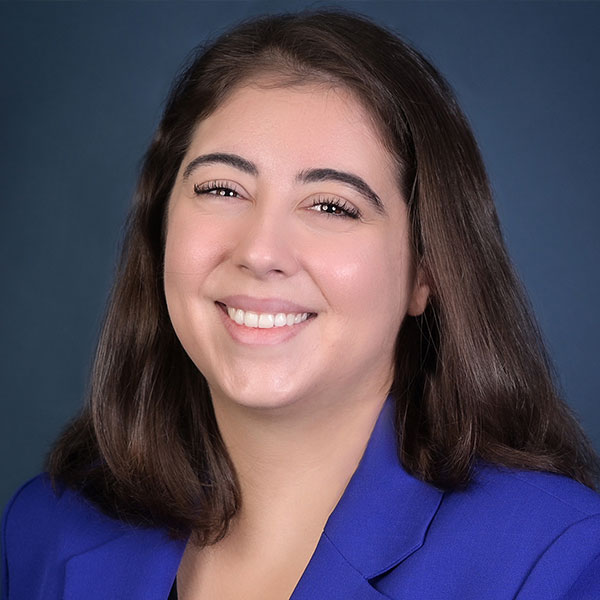
Engineering Specialist, Rotor Dynamics and Aeromechanics
Bell Textron Inc.
Since joining Bell Textron, Angela Buccio’s focus has been on rotorcraft multibody dynamics modeling, aeroelastic stability, and loads predictions. In Italy, she earned the Aerospace Women Award from her university for Aeronautical Engineering Best Thesis. She also won the VFS Lichten Award for her groundbreaking work at Bell on isolated rotor blade flutter which was published in the Journal of the American Helicopter Society.
Buccio consistently demonstrates her ability to tackle complex engineering challenges with precision, creativity, and rigor including developing automated tools to accurately correlate analytical load predictions to flight test data, creating an RCAS structural dynamic model for a commercial helicopter to evaluate a proposed design improvement, and leading the execution of a pilot biomechanical feedback dynamic bench test to assess interactions between the pilots and the automatic flight control system. She also plays a critical role as part of the MV-75 dynamics team.
Buccio is a natural leader and communicator, has meticulous attention to detail, outstanding analytical skills, and the ability to present complex technical concepts with clarity and confidence. These qualities have made her an invaluable asset to her team at Bell Textron and in her volunteer work with her AIAA section. Buccio regularly volunteers for AIAA events, including serving as a judge for the Southwest Aerospace Symposium, participating in the Collin College Engineering Panel, as well as supportingher AIAA section’s Moon Day STEM event.
She holds Bachelor and Master’s Degrees in Aerospace Engineering from Politecnico di Milano, Italy, and serves as a quality role model for young women from diverse backgrounds and countries.

Associate Technical Fellow
The Boeing Company
Alex Carrere is shaping the future of aerospace through high-impact technical contributions and distinguished leadership. In 2024, he became a Boeing Associate Technical Fellow in multidisciplinary design optimization (MDO) methods, where he has advanced integrated processes that replace slow, manual workflows, improving design quality, reducing cycle time, and enabling better informed decisions. His work has reached major Boeing programs and vehicle types, including tactical aircraft, large missiles, blended-wing-body concepts, and electric aircraft.
A defining example is his role as lead developer of Tactical-MDAO, Boeing’s preferred fixed-wing conceptual design capability. His success developing, using, and supporting T-MDAO models across many programs delivered >$30M in documented value over five years, earning a prestigious Boeing-wide Technical Replication Award. He has also led and supported high-value, program-critical studies on MQ-25, T-7A, DARPA CRANE, and advanced fighters, helping teams deliver results that otherwise would have been difficult or infeasible while accelerating Boeing’s digital engineering transition. He was a 2022 Engineering Team of the Year finalist for his key technical contributions to Boeing’s $120M+ DARPA CRANE program and led the capture and execution of the $2M+ NASA MBSA&E effort. He serves on the Boeing MDO community steering committee, helping shape enterprise direction.
Carrere’s influence extends beyond Boeing through active AIAA leadership where he shapes the future of MDO. He is a member of the MDO Technical Committee, serves as Technical Deputy Chair for AIAA SciTech Forum 2027, and co-leads a standards working group. He organized special sessions with NASA at AIAA SciTech Forum 2026 and has authored eight technical publications.

Senior Propulsion Engineer
Lockheed Martin Corporation
Daniel Castro is known to his colleagues for his balance of propulsion defense innovation and proactive aerospace community leadership. Castro joined Lockheed Martin Aeronautics in 2018, and is currently excelling as the engine mechanical and systems engineering integrator for a major SkunkWorks® program. In this role, he manages the vital bridge between complex hardware and vehicle architecture. Castro has steered his team to deliver critical milestones under compressed timelines, securing a 15% program cost reduction and positioning the platform for further funding.
Castro’s technical contributions significantly advance propulsion systems and engine integration. Born in Colombia and with Bachelor and Master of Science degrees in Aerospace Engineering from UCF and UCLA, he leads Skunk Works® projects focused on engine development and model-based systems engineering (MBSE). Castro recently led and moderated the LM Inlet Systems Symposium, an internal event that gathered inlet practitioners across the corporation for a one-day exchange of technical projects. He is the AIAA INPSI (Inlet Nozzle Propulsion Systems Integration) Deputy TDC (Technical Discipline Chair) for AIAA SciTech Forum 2027, overseeing the selection ofINPSI papers to be presented during the forum and coordinating the logistics.
Castro is leaving a permanent mark by rewriting the blueprint for early-career engagement. As project manager for the AIAA AVIATION Forum 2024 RECAP initiative, he restored the strategic framework to revitalize early-career conference participation by securing company budget, orchestrating logistics, and providing direct mentorship. Within Lockheed Martin, he actively fosters a collaborative culture that empowers junior engineers. Castro is already establishing the professional infrastructure and human talent necessary to sustain the future of aviation.

Assistant Professor of Aerospace Engineering
University of Central Florida
Paula do Vale Pereira is advancing aerospace engineering by expanding the design space for complex space missions through innovative solutions to thermal challenges that affect spacecraft performance, efficiency, and reliability.
As a graduate student, she contributed to three CubeSat missions, leading thermal control efforts for technically demanding applications, including a deformable mirror requiring exceptional thermal stability and a laser system with significant cooling requirements. As a faculty member, she continues to push the boundaries of small satellite capabilities. Through the University Nanosatellite Program Mission Concept, sponsored by AFRL and NASA, her team is developing methods to minimize thermal cycling in high-performance onboard computers. This work aims to enable nanosatellites to function as nodes within long-duration, distributed “supercomputers” in space, potentially revolutionizing low-cost, scalable orbital computing for missions extending beyond Earth orbit.
do Vale Pereira also has a history of leadership within AIAA. Since 2023, she has served as Deputy Technical Program Chair for ASCEND, chaired the Small Satellite Technical Committee’s Technical Affairs Subcommittee, and has been a member of the Space Exploration Integration Committee since 2024. She has reviewed abstracts and chaired technical sessions for ASCEND and AIAA SciTech since 2022. As faculty advisor to the AIAA Florida Tech Student Branch in 2023 and 2024, she mentored students who were hosting the record-breaking 2024 AIAA Region II Student Conference.

Aerodynamic Stability and Control Engineer
The Boeing Company
As Associate Technical Fellow at The Boeing Company, Dan Donahue repeatedly advances the identification, testing techniques, and modeling methodologies of dynamic derivatives and unsteady aerodynamic effects while guiding the next generation of engineers. As lead aerodynamic stability and control engineer for a proprietary program, he shapes technical direction across multiple platforms – including F-15, F/A-18, T-7A, and MQ-25 – and leads a cross-divisional research group spanning several Boeing divisions. Throughout these efforts, Donahue directed over 40 experimental test campaigns of static and dynamic wind tunnel, water tunnel, and flight testing to validate and refine his theories. His most consequential advancements include methods for isolating quasi-static and unsteady aerodynamic derivatives during dynamic testing, applying reduced-order modeling as simulation alternatives to traditional Taylor Series expansion methods, and developing methods to identify regions of unsteady aerodynamics from static wind tunnel and CFD data. These contributions directly shape how the aerospace industry will model unsteady aerodynamics in future simulations – moving the field from approximation toward precision.
Donahue’s impact extends beyond research. He holds a patent in flight controls, authors Boeing Design Practices, mentors over a dozen early-career engineers, instructs a Fluid Dynamics Laboratory at Washington University in St. Louis, and previously served as Young Professional chair for the AIAA St. Louis Section. Through sustained knowledge advancement, leading cross-disciplinary teams, publishing best practices, and sustained mentorship, Donahue’s blend of technical rigor, program impact, and commitment to future workforce development leaves measurable and lasting marks on the field that merits recognition as a rising technical leader.
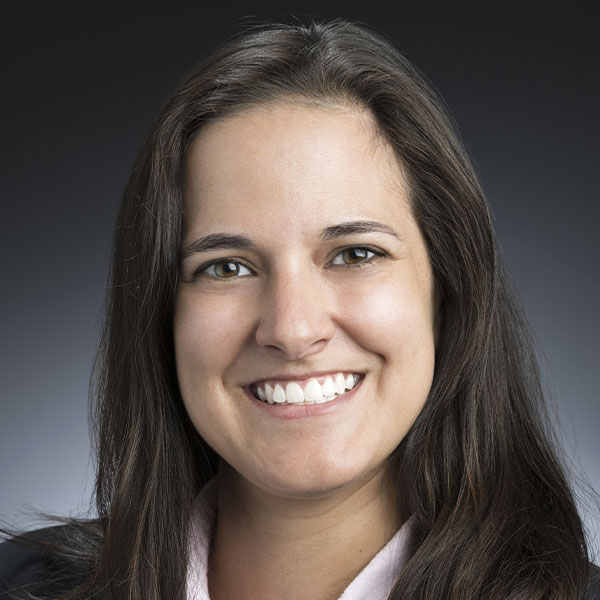
Senior Professional Staff II and Assistant Project Manager
Johns Hopkins University Applied Physics Laboratory (JHUAPL)
Carolyn Eady is a technical leader whose work spans ballistic missile defense, missile systems, and complex system‑of‑systems architectures. She combines deep technical expertise with a strong commitment to building high performing teams, empowering and mentoring staff through hands-on technical engagement.
With a foundation in mathematics and biomathematics, Eady brings a distinct perspective to aerospace and national security challenges. As chief engineer for a multiyear development and test program, she led a small, cross‑functional team that guided both government and industry partners in delivering a complex, system‑of‑systems capability. Her communication with senior laboratory and military leadership is consistently clear, candid, and solutions‑oriented. Eady and her team were awarded the JHUAPLDirector’s Special Achievement Award in 2022, recognizing the impact of her work on some of our hardest national security challenges.
Eady is now the command and control (C2) lead and assistant project manager for novel space system rapid prototyping efforts, driving system architecture, tasking algorithms, and C2 test design. She leverages her previous work shaping global multidomain C2 algorithms for tracking, state estimation, scheduling, and sensor resource management – work that is informing the development of future multi-domain operations.
Beyond her program work, Eady’s leadership extends to the broader community: she serves on the AIAA Information and Command and Control Systems Technical Committee and is part of the technical discipline committee for AIAA SciTech Forum planning. Eady also supports JHUAPL efforts to strengthen S&T outreach and academic engagement between JHUAPL and other academic institutions, and she bolsters colleagues’ growth through JHUAPL’s mentoring program.

Assistant Professor
The Pennsylvania State University
Roshan Eapen is redefining how we detect, track, and autonomously operate spacecraft. His research uniquely integrates dynamical systems theory, optimal control, sensing, and experimental validation to solve problems of immediate relevance to autonomous space operations.
In just four years at Penn State, Eapen established two first-of-their-kind research facilities: PSUDO, a ground-based SSA observatory that has tracked Artemis, James Webb Space Telescope, and other assets, providing the astrodynamics community with critical data; and the GRIP Laboratory, a DoD-DURIP-funded, gravity-offloaded testbed for proximity operations that bridges algorithms with real-world validation.
His theoretical contributions are equally impactful. His Hamilton-Jacobi framework addresses longstanding computational barriers limiting real-time autonomous guidance for cislunar and proximity operations, while his momentum-map and pseudo-constants-of-motion framework provides new analytical tools for trajectory design and orbit determination in multibody environments. NASA recognized this work through a highly competitive Early Career Faculty Award.
Eapen actively transitions research into operational impact through collaborations with Peraton, Space Kinetics, and Applied Research Laboratory at Penn State. He also serves as treasurer of the AAS Space Flight Mechanics Committee and has contributed to international space policy discussions through INDUS-X. Equally important, he has built a deeply student-centered research and teaching environment. His students have earned NSF Graduate Research and DoD SMART Fellowships, while his immersive XR visualization tools, observatory initiatives, and outreach workshops are helping inspire and train the next generation of aerospace engineers and space researchers. Through both technical innovation and mentorship, he is leaving a lasting mark on the future of autonomous space operations.
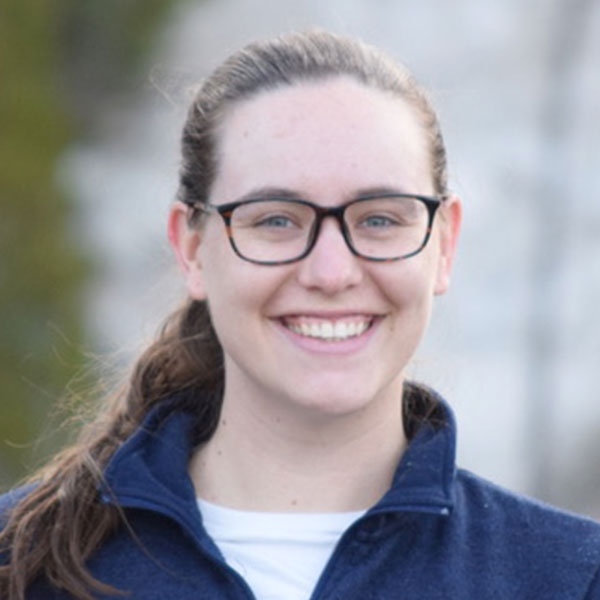
Modeling & Simulation Engineer
Northrop Grumman Corporation
Fazzini has a combination of technical vision, professional leadership, and commitment to strengthening the aerospace community that is exceptionally rare for an early career engineer. At Northrop Grumman, she is a strong advocate for integrating mission engineering and operations analysis into the traditional aerospace disciplines to help push the industry towards design approaches that connect aircraft capability, operational effectiveness, and real-world mission outcomes. Her doctoral work reflects this same forward-looking mindset as it couples aircraft design and operations analysis through emerging and state-of-the-art digital tools.
In addition to her technical depth, Fazzini has demonstrated significant volunteer leadership across AIAA. She is a member of the Design/Build/Fly organizing committee, Director Emeritus of the Young Professional Group, member of the AIAA SciTech Forum Advisory Committee, provides national-level mentorship, and participates in her local community through both AIAA and SWE. Through these roles, she consistently advocates and shapes opportunities for students and young professionals while contributing to the broader technical direction of the aerospace community.
Fazzini is pushing the industry toward revolutionary new ways to design while also making the industry more welcoming and a better place to work. As a vocal champion for the young engineer’s voice, she is ensuring emerging leaders are heard, supported, and empowered.
Mechanical Systems Engineer
Jet Propulsion Laboratory
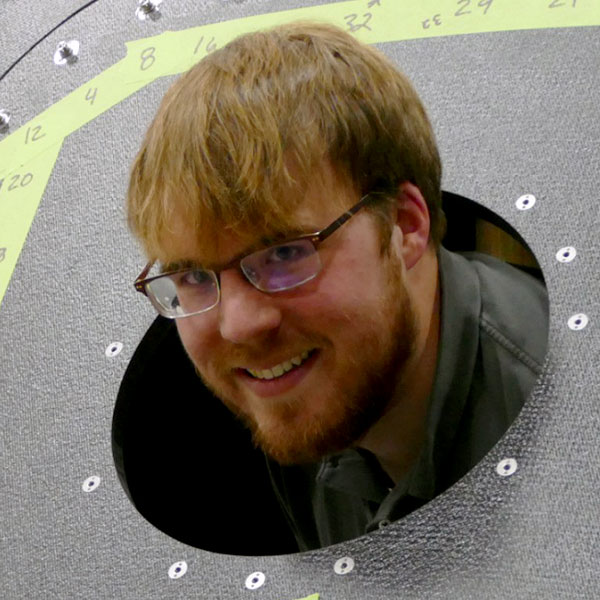
Jason Ginn graduated from his Master’s in Aerospace Engineering in 2014 from Georgia Tech and immediately started at NASA and Caltech’s Jet Propulsion Laboratory. There he has worked in the EDL Mechanical Engineering group supporting the Low-Density Supersonic Decelerator program, Mars 2020, the Mars Sample Return Concept Mission, and multiple early phase Mars, moon, and Venus EDL systems. For Mars 2020, Ginn served as the cognizant engineer and contract technical manager for the aeroshell, backshell interface plate, parachute support structure, and the parachute closeout cone. He also designed the mechanical interfaces to MEDLI2 and the Parachute Uplook Cameras, allowing for first-ever imagery of a parachute inflating at Mars. He ensured successful delivery and flight of this hardware when Mars 2020 landed at Jezero Crater on 18 February 2021.
Ginn continues to bring a depth of knowledge in EDL Mechanical Systems Engineering to both JPL and the wider community of EDL engineers. On Mars Sample Return concept mission, he served as a mechanical systems engineer for both entry and descent and the Mars ascent vehicle, tackling some of the hardest problems on the spacecraft design. He has a deep understanding of the mechanical design requirements for Martian EDL, and his knowledge is helping the next Mars missions perform early trade studies.
Ginn has mentored numerous young engineers and interns over his time at JPL, and is working to shape the next generation of EDL engineers into a competent and capable workforce to support upcoming missions.

Director UAV Icing Lab & Head of Aerodynamics
Norwegian University of Science and Technology & Ubiq Aerospace
Richard Hann is one of the foremost young leaders in in-flight icing of UAVs, a field he has helped transform from a niche research topic into an internationally recognized aerospace challenge. His work addresses a critical barrier to autonomous aviation: enabling uncrewed aircraft to operate safely and reliably in icing and adverse weather conditions, particularly in winter and Arctic environments.
At the Norwegian University of Science and Technology, Hann founded and leads the UAV Icing Lab, now comprising six Ph.D. students. He has built an integrated research program spanning flight testing, icing wind tunnel experiments, numerical simulation, operational risk assessment, and technology development. As the leading author in UAV icing publications, he has become a central scientific voice in the field. His research has secured Norwegian and European funding, including leadership roles in four European projects.
Hann’s impact extends beyond scientific work and publications. At Ubiq Aerospace, he helps translate research into deployable ice protection and detection technologies for UAVs, linking academic rigor with commercial, defense, and certification needs. He has also contributed UAV icing validation datasets to AIAA Ice Prediction Workshop activities, supporting future certification and safe operations.
He has built up the international UAV icing community by initiating the UAV Icing Workshop, co-chairing a NATO STO AVT task force (AVT-388) with 55 representatives from 15 nations, and contributing actively to AIAA by leading technical sessions and panel discussions. Hann exemplifies technical excellence, future potential, and field-shaping leadership.
Senior Research Engineer and Division Chief
Georgia Institute of Technology
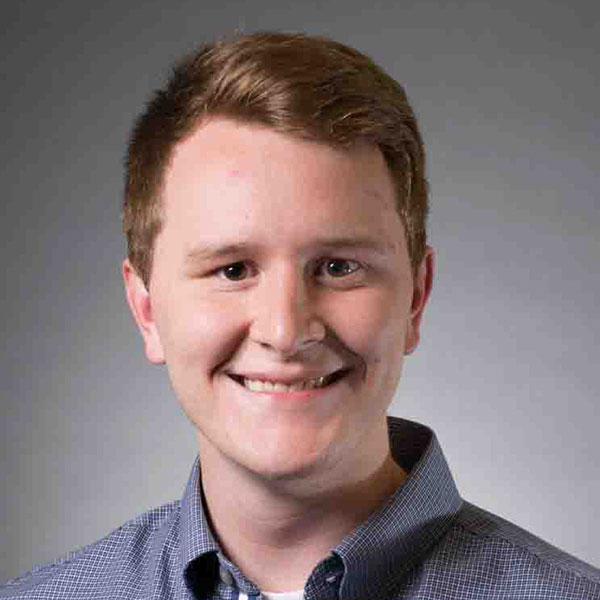
Evan Harrison has made significant contributions to the aviation field, particularly in aerospace systems safety, airworthiness certification, and model-based systems engineering (MBSE). At the Aerospace Systems Design Laboratory, his work bridges the gap between complex aircraft design and regulatory compliance.
One area of impact is Harrison’s research on advancement of model-based approaches for aircraft certification. Collaborating with agencies like FAA and NASA, he has developed frameworks to streamline noise certification and conduct regulatory gap analyses for novel, electrified powertrain aircraft. His research has provided foundational MBSE methods to support the airworthiness standards for innovative concepts like NASA’s X-57.
As an expert in vehicle- and system-level safety assessment, his research focuses on predicting and mitigating loss-of-control incidents for general aviation and evaluating the operational reliability of emerging urban air mobility and eVTOL vehicle designs. His safety frameworks and energy-based flight safety analysis methods have contributed to modern flight-data monitoring programs aimed at improving fixed-wing aviation safety.
He has also been impactful as an instructor for various undergraduate and graduate-level courses at Georgia Tech, educating the next generation of aerospace engineers about aircraft design, safety by design, and vehicle performance. Harrison contributes to the aerospace profession through his technical publications and active membership in the AIAA General Aviation Technical Committee and the Transformational Flight Technical Integration and Outreach Committee.
Through his research, teaching, and industry engagement, Harrison helps shape the future of safer, cleaner, and more efficient vehicle architectures.
Senior Engineering Specialist
The Aerospace Corporation
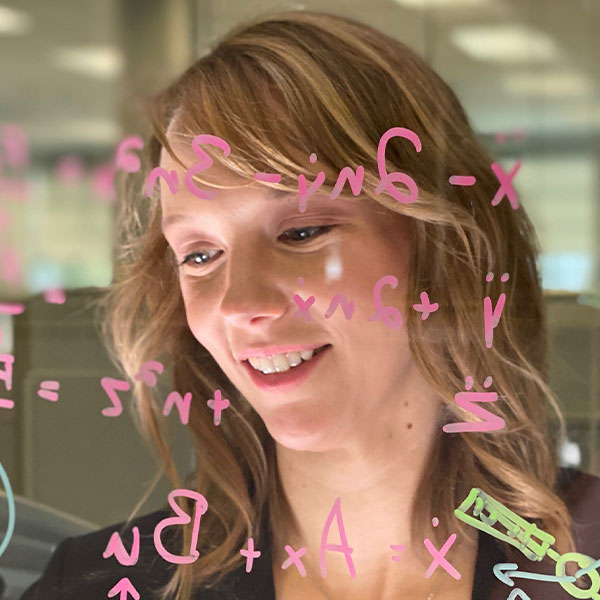
Kerianne Hobbs is a rare force in aerospace, uniquely spanning the air and space domains with an impactful career of leadership and achievement that bridges fundamental theory and real-world flight testing. In her prior role at Air Force Research Laboratory she led the Safe Trusted Autonomy for Responsible Spacecraft (STARS) program from 2023 to 2025, directing 50+ researchers in trailblazing work on neural network control systems, runtime assurance, and human-autonomy teaming. She contributed to the Automatic Ground Collision Avoidance System (Auto-GCAS), which won the 2018 Collier Trophy as a technology that has prevented 13 pilot fatalities. Hobbs pioneered the Space Trusted Autonomy Readiness (STAR) Levels, now integral to government roadmaps.
Currently at The Aerospace Corporation, she is increasing the technology readiness level of safe machine learning-based autonomous control. As lead author of the 2025 AIAA white paper on “Autonomous Aerospace Systems R&D Priorities,” she literally wrote the roadmap for the future of safe autonomy. With 70+ technical publications, a decade of service on the AIAA Intelligent Systems Technical Committee, and recognition as a 2024 AIAA Associate Fellow, Hobbs is a thought leader in high-assurance autonomous flight control. Mentoring 40+ students, serving on 11 graduate committees at seven universities, and inspiring multiple students to pursue Ph.D.s in aerospace engineering, Hobbs exemplifies the future leader who is defining the safety-critical standards that will govern autonomous flight for decades to come.
Assistant Professor
University of Michigan
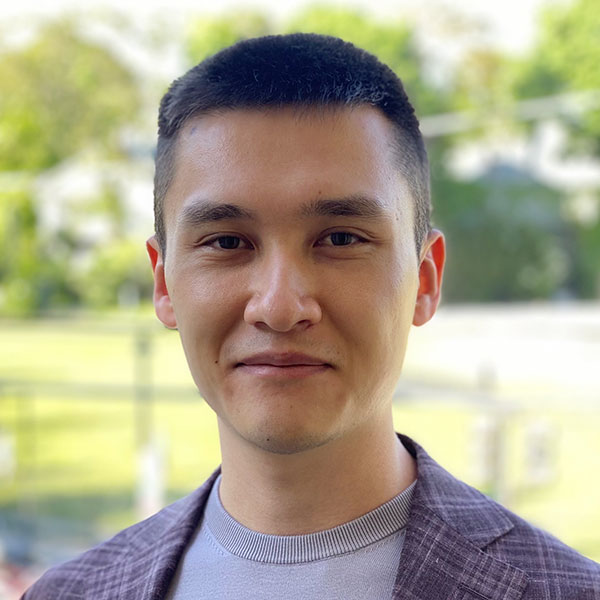
Oliver Jia-Richards’ research group has made several contributions in the area of space mobility, studying both the physics of in-space propulsion systems and their applications to spaceflight mechanics. Notable contributions include collaborating on the first end-to-end performance analysis of an iodine-based electric micropropulsion system using in-space flight data. The resulting publication is currently among the top 1% of most-downloaded papers from the Journal of Propulsion and Power. He has also made several contributions to the modeling and understanding of electrospray thrusters. Since starting his doctorate in 2019 he has published 16 journal articles, many in AIAA journals.
Jia-Richards has also made significant contributions to student mentorship and teaching. He has taught spacecraft attitude dynamics and astrodynamics to a total of 660 undergraduate and graduate students during his first four years at U-M, consistently receiving very high student evaluations. He co-developed a new problem solving initiative course on space debris remediation in collaboration with the U-M Law School. He has also mentored several students through U-M’s Undergraduate Research Opportunities Program and Summer Undergraduate Research in Engineering program, and is an active member of his department’s Undergraduate Committee
For AIAA he is a member of both the Electric Propulsion and Space Systems technical committees; previously was the Deputy Director, STEM K-12 for AIAA Region III; assists in running the AIAA Middle School Essay Contest; and is newly serving as a University Chair for the AIAA Michigan Section.

Graduate Research Assistant
Embry-Riddle Aeronautical University
Before the age of 30, Sang-A Lee has established herself as one of the leading emerging scholars in aviation safety and unmanned aircraft systems (UAS) research. As Lab Manager and principal research contributor on multiple FAA-sponsored ASSURE projects, she has helped secure and execute a portfolio exceeding $10 million in federally funded research focused on UAS traffic analysis, collision risk, remote identification, and airspace integration. Her work directly supports FAA efforts to safely integrate emerging aerospace technologies into the National Airspace System.
Lee’s innovative contribution includes her dissertation on aviation maintenance safety culture. Through the development of new frameworks examining trust, fear, and organizational influences on safety performance, she has introduced a human-centered approach to understanding and mitigating maintenance-related risk.
Her impact also extends beyond dissertation. Lee authored a 155-page FAA-sponsored gap analysis synthesizing 238 technical sources and has presented her work to FAA officials, industry leaders, military executives, and academic audiences. With 17 peer-reviewed publications, multiple first-author articles, and leadership of interdisciplinary research teams, she is shaping the future of aviation safety and advanced air mobility through research that is both scientifically rigorous and operationally relevant.

Assistant Professor
University of Michigan
Max Li is an emerging aerospace engineering leader whose work is shaping exciting advances in air transportation systems, including next generation air traffic management, aviation operations, airline and airport systems, and advanced air mobility. At the University of Michigan, Li has established a vibrant research program and the Laboratory for Air Transportation, Infrastructure, and Connected Environments (LATTICE) dedicated to air transportation system resilience, optimization, and decision-making under uncertainty – areas of critical importance to the future of air transportation. His work imaginatively addresses significant challenges, including how to make aviation networks more efficient, robust, adaptive, and capable of operating safely under uncertainty and disruption. Specific examples of his impactful research contributions include analysis of autonomous vehicle impacts on airport leakage and environmental implications, development of large-language-model-driven conversational agents for strategic air traffic flow management, and stochastically optimized distributionally robust ground delay programs using learning-driven airport capacity predictions.
Li’s extensive publication record includes more than 30 journal articles and more than 70 conference papers addressing a broad range of topics in air traffic control, air traffic management, network optimization, airline and airport operations, and advanced air mobility. He has built strong collaborations across academia, industry, and government with research projects sponsored by NASA, FAA, DARPA, MITRE, NSF, and Collins Aerospace. Beyond research, Li has taught hundreds of students at Michigan and contributed extensively to the aerospace community through editorial service, technical committee leadership, conference organization, and international engagement.

Director, Ahmic Operations
CUBRC
Ryan Meritt is an engineer, veteran, entrepreneur, and technical leader whose career bridges fundamental research and commercialization. His doctoral research at Virginia Tech advanced boundary-layer diagnostics through skin-friction measurement techniques now used across national hypersonic testing programs. He was commissioned into the U.S. Air Force while completing his doctorate, leading scramjet propulsion test campaigns at Air Force Research Laboratory before separating as a Captain.
At age 25, Meritt founded Ahmic Aerospace as a solo entrepreneur with no outside funding and became the first to commercialize wall shear sensors for aerospace applications. Over the following decade, Ahmic delivered more than 1,000 precision instruments supporting thermal, force, and moment measurements for NASA, DoD, national laboratories, and universities, including sensors flown on 10+ hypersonic vehicles. The company grew to $3M revenue with 30%+ annual growth, earning Inc. 5000 recognition as one of America’s fastest-growing private companies. Ahmic’s work was also featured on “Viewpoint with Dennis Quaid.” In 2024, Ahmic was acquired by CUBRC; Meritt continues to lead the division.
As an AIAA Ground Testing Technical Committee member, Meritt helps shape priorities in ground test technology. He has supported six startup funding rounds through a Virginia Tech-affiliated investment group, mentors founders, and delivers seminars at AFRL, AFIT, and universities on aerospace innovation and entrepreneurship.
His honors include the 2026 Dayton Business Journal Forty-Under-40, 2025 AIAA AMT Innovation Award, 2025 Virginia Tech Outstanding Alumni Achievement Award, and 2022 Virginia Tech Emerging Leaders Award. He has authored 30+ technical publications and holds two U.S. patents, advancing measurement capabilities underpinning next-generation aerospace systems.

PhD Candidate, Mirzayan Fellow at National Academy of Sciences
Purdue University
Mahhad Nayyer is an emerging aerospace leader whose record reflects expertise in astrodynamics, space sustainability, policy, and international service. He is a Ph.D. candidate in Aeronautics and Astronautics at Purdue University, where his research advances analytical orbital capacity and Space Situational Awareness (SSA). He has published over a dozen scientific publications in reputable journals and conferences. He is an international graduate of the United States Air Force Academy, Class of 2014.
Mahhad’s impact is both technical and community-centered. As Co-Lead of the Space Safety and Sustainability Project Group at the Space Generation Advisory Council (SGAC), he led a 200-member global volunteer team and supported research papers, webinars, workshops, outreach projects that reached more than 2,000 young professionals worldwide. He has been instrumental in creating scholarships for SGAC young professionals worth over €50,000.
His leadership extends beyond research and professional service. Mahhad helped lead Pakistan’s first agricultural payload to the International Space Station, sending wheat seeds aboard Crew-11 as a scientific, cultural, and educational milestone. He has been selected as a 2026 National Academies Christine Mirzayan Fellow to work on space policy with national stakeholders in Washington, D.C. Mahhad has briefed Congressional staff on policy recommendations for America’s leadership in the future of SSA.
Mahhad’s excellence has been recognized with the 2022 AIAA ASCEND Diverse Dozen, the 2025 American Astronautical Society Patti Grace Smith Award, and the 2025 IAF Young Space Leader Award. His technical rigor, operational experience, mentorship, and global service represents the best of the next generation of aerospace leadership.

Air Traffic Controller and Aerospace Media Producer
Dominican Institute of Civil Aviation (IDAC), El Nuevo Diario, & Nolim Studios
Olga Isabel Pérez Encarnación is an air traffic controller, journalist, and aerospace innovator with 15 years of experience in aviation and over eight years in media and communications.
She is the creator and producer of Quiero ser piloto, an aviation competition broadcast as a television series in the Dominican Republic. The project has awarded 43 scholarships in English language training, Private Pilot training, Instrument Rating training, and Aircraft Maintenance Technician training. With more than 2 million views, the series received international recognition at the Air Traffic Management Awards 2024 during Airspace World 2025.The project’s scholarships and aviation opportunities are funded through the same advertising and partnerships generated by the television series itself. The program is conducting an exploratory study on the use of virtual reality flight simulators in aviation training.. Pérez Encarnación organized the first female aviation fly-in in the Dominican Republic.
Her innovation also extends to aviation operations. Pérez Encarnación is the creator of SARA (System AI Real-time for Aviation), an AI-powered assistant designed to provide fast, traceable, and reliable access to critical aeronautical information for air traffic controllers, pilots, and dispatchers. The platform has been used and evaluated by 220 indivuals across six countries, including the United Statesand won first place in ENAIRE’s 2024 International Air Navigation Innovation Competition. Preliminary studies with nearly 100 aviation professionals showed that 88% considered access to operational information slow or complex; SARA’s goal is to measurably reduce information retrieval time.. In 2026, Pérez Encarnación received the Women in Tech LATAM Most Disruptive Award for SARA and will represent Latin America in the global competition.
Branch Chief, Analysis
Space Systems Command
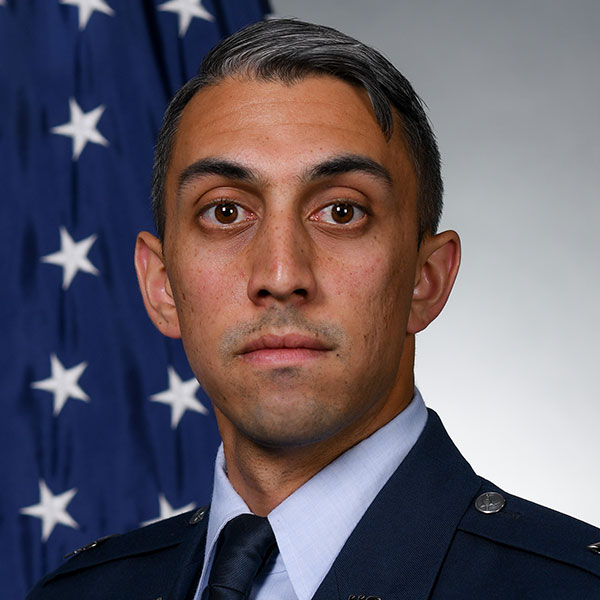
Since entering the aerospace field in 2022, Capt. Ashwin Rao, Ph.D., USAF, has driven monumental advancements in optical sensing, hypersonic aerothermodynamics, and reentry flight testing. In his prior role as a program manager at the Air Force Research Laboratory, he spearheaded the Prometheus program – now a ~$200M dual-use hypersonic testbed leveraging commercial spacecraft to accelerate experimentation for future reentry systems. By pioneering this model, Rao enabled a high-cadence architecture supporting quarterly orbital reentry flight opportunities while reducing flight costs by two orders of magnitude for the entire U.S. hypersonics enterprise.
Within the AIAA community, Rao is renowned as the principal investigator for the Optical Sensing of Plasmas in the ReEntry Environment (OSPREE) flight experiment. Leading a 30-person government-industry team, he directed the rapid, one-year development of a $2M space-qualified optical emission spectroscopy payload. He oversaw its seamless build, integration, launch, orbit, atmospheric reentry, and land recovery. OSPREE captured groundbreaking in situ thermochemical data of the reentry shock layer at extreme (Mach 25+) conditions – an unprecedented achievement. Today, over 20 national partners leverage this vital data to anchor state-of-the-art modeling and simulation tools essential for designing civil space and defense reentry systems.
Rao’s exceptional scientific leadership delivers game-changing aerothermodynamic insights and accelerated, affordable flight testing to the hypersonics enterprise. His tireless efforts to accelerate test and experimentation in extreme environments are moving the needle in the design of future high-performance reentry systems.

Director of Flight Sciences
FlexCompute
Harry Smith is a technically accomplished engineer who combines deep aerospace expertise with innovative approaches to data, software, and decision-making. Early in his career he demonstrated a passion for teaching aerodynamics and flight mechanics.
At the Aircraft Research Association in England, he created a Digital Image Correlation capability for model-deformation measurement, still in use a decade later.
Moving to Boeing’s Aurora subsidiary, Smith created PARADIGM, a system-of-systems decision platform for fleet planning, routing, and infrastructure, with a pioneering capability for future fuel types: what aircraft should we build when requirements differ vastly from kerosene?
Now at the CFD start-up Flexcompute, he has again built tools to make CFD more productive: Thread and Tailor. Thread records the full lineage of every computational analysis. Common practice leaves that information scattered, so a run is often costly or impossible to reproduce. Tailor starts from a cheap low-fidelity prior, such as a vortex-lattice, across a large N-dimensional space, then uses a neural network to learn where higher-fidelity CFD captures physics the low-order methods miss and runs the expensive cases only there. This drastically lowers the cost of filling a database and ensures every point earns its place, so no surprises arise at flight test.
Through his public-facing aeronautics website, Smith has helped make sophisticated aerospace concepts more accessible to engineers and students. His YouTube lessons and website have been watched and visited thousands of times.
Smith stands out as a technical pioneer whose influence reaches far beyond his immediate projects. His combination of achievements, aerospace knowledge, software innovation, technical communication, and leadership exemplifies the future of the aerospace workforce.
Program Management Manager - Chief of Staff
The Boeing Company
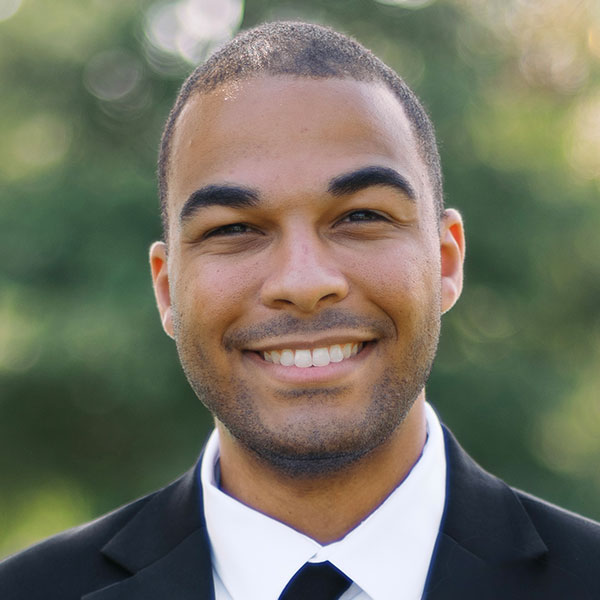
Chad Stearns has a proven ability to bridge the gap between complex engineering and strategic business execution. Earning a B.S. in Business Administration (Cum Laude) and a M.S. in Systems Engineering from Embry-Riddle Aeronautical University, Stearns leverages this dual expertise at The Boeing Company to lead the full spectrum of cost, schedule, and technical execution of executive fleet programs.
Since joining Boeing full-time in 2019, Stearns has demonstrated rapid, progressive leadership across high-stakes defense platforms, including E-7 International, Phantom Works, and VVIP executive fleet programs. Currently serving as Chief of Staff for an executive fleet program, he seamlessly manages program integration and administrative operations for portfolios worth hundreds of millions of dollars. His impact on the field lies in his ability to steer these massive, critical defense assets with absolute precision.
Stearns is leaving his mark on the aviation industry by actively building its future. Beyond his corporate achievements, he serves as an Adjunct Professor for Embry-Riddle Aeronautical University’s Worldwide School of Engineering, dedicating his time to teaching and mentoring the next generation of aviation professionals. Furthermore, his commitment to the industry’s pipeline is proven by his past board service as Secretary and Chair of the Governance & Audit Committee for an Oklahoma STEAM workforce development nonprofit. At just 29 years old, Stearns has already established a profound legacy of operational excellence and workforce empowerment, shaping both today’s defense capabilities and tomorrow’s aviation leaders.
Senior Vice President of Product Development
Electra
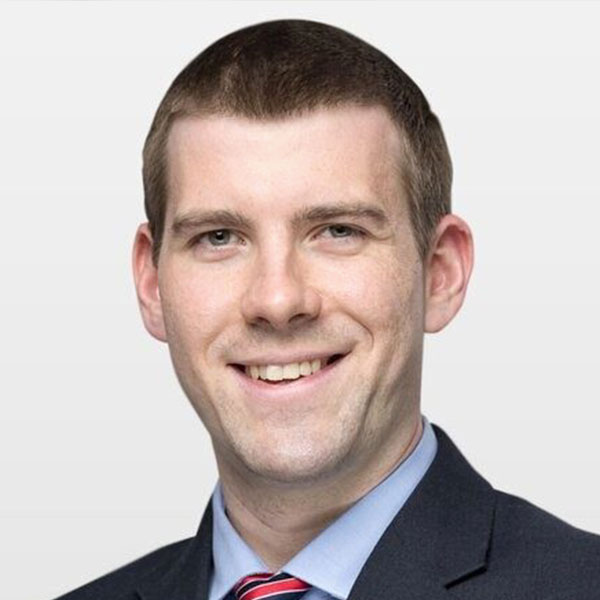
James “JP” Stewart is a 31-year-old aerospace engineer and leader of note. As senior vice president of Product Development at Electra, he is responsible for all aspects of the company’s operations.
Stewart is transforming the future of flight through a new Direct Aviation paradigm for regional air mobility that gives people the freedom to travel from where they are to where they want to go, avoiding long drives and overburdened airports. Ultra-short takeoff and landing aircraft are the key enablers. Electra has successfully designed and flight demonstrated the world’s first two-seat EL-2 Goldfinch aircraft, which requires only a 150-foot runway for takeoff and landing. EL-2 proved the feasibility of an integrated system with blown-lift technology and hybrid-electric propulsion. As the EL-2 Program Manager, Stewart brought his exceptional technical expertise, practical insights, and impressive business acumen to bear on this successful endeavor. Stewart is now focused on developing the game-changing nine-passenger ultra-STOL EL-9 aircraft with entry into service in 2029.
Stewart is a 2026 AIAA Associate Fellow; a National Business Aviation Association 2024 Business Aviation Top 40 Under 40 award recipient; a 2021 Virginia Tech Alumni Emerging Leaders award honoree; and a 2016 Aviation Week 20 Twenties laureate. He is an active pilot and instructor, flying both sailplanes and powered aircraft. He has represented the U.S. Soaring Team four times in World Championships. Stewart earned a University Honors Bachelor of Science in Aerospace Engineering from Virginia Tech in 2018.

Product and Commercialization Lead
Wisk Aero
As Product and Commercialization Lead at Wisk Aero, a Boeing subsidiary developing autonomous eVTOL aircraft, Aman Deep Tripathi leads the market requirements and business case for the Generation 6 aircraft and Wisk’s future product strategy. His work sets the technical roadmap guiding 800+ engineers through a decade-long certification effort..
Tripathi co-authored the Wisk–Boeing and Wisk–Skyports Concepts of Operations for autonomous air mobility. These have become foundational references across the international AAM standards and policy community, informing efforts at NASA, FAA, and ICAO, and shaping how the industry integrates uncrewed aircraft into the airspace. He has also published research with multiple NASA divisions.
He also gives generously to the profession – serving on the Transportation Research Board’s aviation economics committee, advising ICAO’s AAM Study Group, reviewing articles for leading aerospace journals, judging the CES Innovation and Global AAM Awards, and authoring a case study for a University of Washington competition (350+ students), alongside several U.S. patent applications in autonomous flight.
Colleagues and supervisors say that what distinguishes Tripathi is range: he turns market demand into engineering requirements, financial cases, and operational concepts that others now build upon. He is a leader both today and in the future and his blend of technical depth and commercial impact continue to make an impact.

Systems Engineer Staff
Lockheed Martin Corporation
John Warren exemplifies the emerging talent that is reshaping today’s aerospace landscape. He blends a strategic mindset, technical mastery, and an innate ability to translate complex engineering concepts into clear, actionable insight. As the Systems Engineering Staff Product Owner at Lockheed Martin, Warren has overseen a diverse portfolio of AMMM software products – including critical NOAA, Philippines Air Force, and U.S. Air Force Capability Management Update 2 solutions – guiding cross‑functional teams to on‑time, contract‑compliant deliveries. His concise executive briefings consistently empower senior leaders to make data‑driven decisions, underscoring his talent for communicating technical detail to non‑technical stakeholders.
Warren’s proficiency in Agile methodologies and tools such as DOORS has streamlined requirement management and iteration reviews, while his hands‑on expertise in lab verification, budget stewardship, and technical documentation ensures rigorous compliance across all phases of development. Prior to Lockheed Martin, his tenure with the U.S. Air Force honed his instrumentation, electrical‑design, and software‑development skills, delivering innovative solutions for the F‑35, C‑12, and B‑1 platforms. From redesigning telemetry trays to authoring comprehensive engineering manuals, he has repeatedly demonstrated an ability to absorb new technologies rapidly and apply them to mission‑critical challenges.
Beyond technical accomplishments, Warren mentors junior engineers, fosters collaborative environments, and champions continuous learning – qualities essential for nurturing the next generation of aerospace innovators. His career trajectory reflects a relentless commitment to excellence, adaptability, and strategic impact, positioning him as a truly up‑and‑coming professional of the aerospace community.
Associate Professor
University of Minnesota
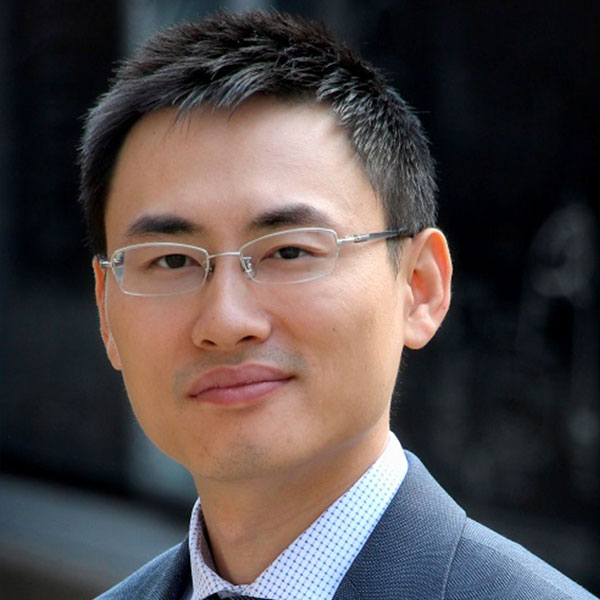
Suo Yang is a visionary leader in aerospace propulsion whose work bridges the gap between fundamental multi-physics modeling and actionable technologies for high-speed, high-efficiency, low-emission, and low-noise flights. As a tenured Associate Professor at the University of Minnesota, his trajectory is marked by an elite “Triple Crown” of Young Investigator/Faculty awards from DARPA, ONR, and AFOSR—a distinction that cements his status as one of the nation’s premier young pioneers in defense and commercial aerospace research.
Yang is leaving his mark by solving critical bottlenecks in aerospace propulsion through high-fidelity numerical simulation. His breakthroughs include pioneering 3D simulation capability for turbulent plasma-assisted ignition in scramjets, first-principled phase change modeling for hypersonic shock-droplet interaction in multiphase detonation, simulation-based propulsion control, and discovering the micro-jet structures that govern oblique detonation stability (a discovery that is transitioning into Mach 9+ flight testing). His predictive models and accelerated robust algorithms have been directly adopted by industry titans like Rolls-Royce and Mitsubishi Heavy Industries to optimize next-generation engines.
Beyond technical mastery, Yang is a sustained technical steward within AIAA. Currently serving as the High-Speed Air-Breathing Propulsion (HSABP) Technical Discipline Chair for both AIAA SciTech Forums 2026 and 2027, he is actively shaping the community’s future by organizing high-impact panels and mentoring students toward prestigious global honors like the AIAA Martin Summerfield Propellants and Combustion Graduate Award. Yang is not merely participating in the aerospace field; he is fundamentally architecting the computational tools and leading the professional communities that will define the next era of aerospace excellence.
Modeling & Simulation Engineer
Northrop Grumman Corporation
Fazzini has a combination of technical vision, professional leadership, and commitment to strengthening the aerospace community that is exceptionally rare for an early career engineer. At Northrop Grumman, she is a strong advocate for integrating mission engineering and operations analysis into the traditional aerospace disciplines to help push the industry towards design approaches that connect aircraft capability, operational effectiveness, and real-world mission outcomes. Her doctoral work reflects this same forward-looking mindset as it couples aircraft design and operations analysis through emerging and state-of-the-art digital tools.
In addition to her technical depth, Fazzini has demonstrated significant volunteer leadership across AIAA. She is a member of the Design/Build/Fly organizing committee, Director Emeritus of the Young Professional Group, member of the AIAA SciTech Forum Advisory Committee, provides national-level mentorship, and participates in her local community through both AIAA and SWE. Through these roles, she consistently advocates and shapes opportunities for students and young professionals while contributing to the broader technical direction of the aerospace community.
Fazzini is pushing the industry toward revolutionary new ways to design while also making the industry more welcoming and a better place to work. As a vocal champion for the young engineer’s voice, she is ensuring emerging leaders are heard, supported, and empowered.
Associate Technical Fellow
The Boeing Company
Alex Carrere is shaping the future of aerospace through high-impact technical contributions and distinguished leadership. In 2024, he became a Boeing Associate Technical Fellow in multidisciplinary design optimization (MDO) methods, where he has advanced integrated processes that replace slow, manual workflows, improving design quality, reducing cycle time, and enabling better informed decisions. His work has reached major Boeing programs and vehicle types, including tactical aircraft, large missiles, blended-wing-body concepts, and electric aircraft.
A defining example is his role as lead developer of Tactical-MDAO, Boeing’s preferred fixed-wing conceptual design capability. His success developing, using, and supporting T-MDAO models across many programs delivered >$30M in documented value over five years, earning a prestigious Boeing-wide Technical Replication Award. He has also led and supported high-value, program-critical studies on MQ-25, T-7A, DARPA CRANE, and advanced fighters, helping teams deliver results that otherwise would have been difficult or infeasible while accelerating Boeing’s digital engineering transition. He was a 2022 Engineering Team of the Year finalist for his key technical contributions to Boeing’s $120M+ DARPA CRANE program and led the capture and execution of the $2M+ NASA MBSA&E effort. He serves on the Boeing MDO community steering committee, helping shape enterprise direction.
Carrere’s influence extends beyond Boeing through active AIAA leadership where he shapes the future of MDO. He is a member of the MDO Technical Committee, serves as Technical Deputy Chair for AIAA SciTech Forum 2027, and co-leads a standards working group. He organized special sessions with NASA at AIAA SciTech Forum 2026 and has authored eight technical publications.
Mechanical Systems Engineer
Jet Propulsion Laboratory
Jason Ginn graduated from his Master’s in Aerospace Engineering in 2014 from Georgia Tech and immediately started at NASA and Caltech’s Jet Propulsion Laboratory. There he has worked in the EDL Mechanical Engineering group supporting the Low-Density Supersonic Decelerator program, Mars 2020, the Mars Sample Return Concept Mission, and multiple early phase Mars, moon, and Venus EDL systems. For Mars 2020, Ginn served as the cognizant engineer and contract technical manager for the aeroshell, backshell interface plate, parachute support structure, and the parachute closeout cone. He also designed the mechanical interfaces to MEDLI2 and the Parachute Uplook Cameras, allowing for first-ever imagery of a parachute inflating at Mars. He ensured successful delivery and flight of this hardware when Mars 2020 landed at Jezero Crater on 18 February 2021.
Ginn continues to bring a depth of knowledge in EDL Mechanical Systems Engineering to both JPL and the wider community of EDL engineers. On Mars Sample Return concept mission, he served as a mechanical systems engineer for both entry and descent and the Mars ascent vehicle, tackling some of the hardest problems on the spacecraft design. He has a deep understanding of the mechanical design requirements for Martian EDL, and his knowledge is helping the next Mars missions perform early trade studies.
Ginn has mentored numerous young engineers and interns over his time at JPL, and is working to shape the next generation of EDL engineers into a competent and capable workforce to support upcoming missions.
Systems Engineer Staff
Lockheed Martin Corporation
John Warren exemplifies the emerging talent that is reshaping today’s aerospace landscape. He blends a strategic mindset, technical mastery, and an innate ability to translate complex engineering concepts into clear, actionable insight. As the Systems Engineering Staff Product Owner at Lockheed Martin, Warren has overseen a diverse portfolio of AMMM software products – including critical NOAA, Philippines Air Force, and U.S. Air Force Capability Management Update 2 solutions – guiding cross‑functional teams to on‑time, contract‑compliant deliveries. His concise executive briefings consistently empower senior leaders to make data‑driven decisions, underscoring his talent for communicating technical detail to non‑technical stakeholders.
Warren’s proficiency in Agile methodologies and tools such as DOORS has streamlined requirement management and iteration reviews, while his hands‑on expertise in lab verification, budget stewardship, and technical documentation ensures rigorous compliance across all phases of development. Prior to Lockheed Martin, his tenure with the U.S. Air Force honed his instrumentation, electrical‑design, and software‑development skills, delivering innovative solutions for the F‑35, C‑12, and B‑1 platforms. From redesigning telemetry trays to authoring comprehensive engineering manuals, he has repeatedly demonstrated an ability to absorb new technologies rapidly and apply them to mission‑critical challenges.
Beyond technical accomplishments, Warren mentors junior engineers, fosters collaborative environments, and champions continuous learning – qualities essential for nurturing the next generation of aerospace innovators. His career trajectory reflects a relentless commitment to excellence, adaptability, and strategic impact, positioning him as a truly up‑and‑coming professional of the aerospace community.
Engineering Specialist, Rotor Dynamics and Aeromechanics
Bell Textron Inc.
Since joining Bell Textron, Angela Buccio’s focus has been on rotorcraft multibody dynamics modeling, aeroelastic stability, and loads predictions. In Italy, she earned the Aerospace Women Award from her university for Aeronautical Engineering Best Thesis. She also won the VFS Lichten Award for her groundbreaking work at Bell on isolated rotor blade flutter which was published in the Journal of the American Helicopter Society.
Buccio consistently demonstrates her ability to tackle complex engineering challenges with precision, creativity, and rigor including developing automated tools to accurately correlate analytical load predictions to flight test data, creating an RCAS structural dynamic model for a commercial helicopter to evaluate a proposed design improvement, and leading the execution of a pilot biomechanical feedback dynamic bench test to assess interactions between the pilots and the automatic flight control system. She also plays a critical role as part of the MV-75 dynamics team.
Buccio is a natural leader and communicator, has meticulous attention to detail, outstanding analytical skills, and the ability to present complex technical concepts with clarity and confidence. These qualities have made her an invaluable asset to her team at Bell Textron and in her volunteer work with her AIAA section. Buccio regularly volunteers for AIAA events, including serving as a judge for the Southwest Aerospace Symposium, participating in the Collin College Engineering Panel, as well as supportingher AIAA section’s Moon Day STEM event.
She holds Bachelor and Master’s Degrees in Aerospace Engineering from Politecnico di Milano, Italy, and serves as a quality role model for young women from diverse backgrounds and countries.
Aerodynamic Stability and Control Engineer
The Boeing Company
As Associate Technical Fellow at The Boeing Company, Dan Donahue repeatedly advances the identification, testing techniques, and modeling methodologies of dynamic derivatives and unsteady aerodynamic effects while guiding the next generation of engineers. As lead aerodynamic stability and control engineer for a proprietary program, he shapes technical direction across multiple platforms – including F-15, F/A-18, T-7A, and MQ-25 – and leads a cross-divisional research group spanning several Boeing divisions. Throughout these efforts, Donahue directed over 40 experimental test campaigns of static and dynamic wind tunnel, water tunnel, and flight testing to validate and refine his theories. His most consequential advancements include methods for isolating quasi-static and unsteady aerodynamic derivatives during dynamic testing, applying reduced-order modeling as simulation alternatives to traditional Taylor Series expansion methods, and developing methods to identify regions of unsteady aerodynamics from static wind tunnel and CFD data. These contributions directly shape how the aerospace industry will model unsteady aerodynamics in future simulations – moving the field from approximation toward precision.
Donahue’s impact extends beyond research. He holds a patent in flight controls, authors Boeing Design Practices, mentors over a dozen early-career engineers, instructs a Fluid Dynamics Laboratory at Washington University in St. Louis, and previously served as Young Professional chair for the AIAA St. Louis Section. Through sustained knowledge advancement, leading cross-disciplinary teams, publishing best practices, and sustained mentorship, Donahue’s blend of technical rigor, program impact, and commitment to future workforce development leaves measurable and lasting marks on the field that merits recognition as a rising technical leader.
Director of Flight Sciences
FlexCompute
Harry Smith is a technically accomplished engineer who combines deep aerospace expertise with innovative approaches to data, software, and decision-making. Early in his career he demonstrated a passion for teaching aerodynamics and flight mechanics.
At the Aircraft Research Association in England, he created a Digital Image Correlation capability for model-deformation measurement, still in use a decade later.
Moving to Boeing’s Aurora subsidiary, Smith created PARADIGM, a system-of-systems decision platform for fleet planning, routing, and infrastructure, with a pioneering capability for future fuel types: what aircraft should we build when requirements differ vastly from kerosene?
Now at the CFD start-up Flexcompute, he has again built tools to make CFD more productive: Thread and Tailor. Thread records the full lineage of every computational analysis. Common practice leaves that information scattered, so a run is often costly or impossible to reproduce. Tailor starts from a cheap low-fidelity prior, such as a vortex-lattice, across a large N-dimensional space, then uses a neural network to learn where higher-fidelity CFD captures physics the low-order methods miss and runs the expensive cases only there. This drastically lowers the cost of filling a database and ensures every point earns its place, so no surprises arise at flight test.
Through his public-facing aeronautics website, Smith has helped make sophisticated aerospace concepts more accessible to engineers and students. His YouTube lessons and website have been watched and visited thousands of times.
Smith stands out as a technical pioneer whose influence reaches far beyond his immediate projects. His combination of achievements, aerospace knowledge, software innovation, technical communication, and leadership exemplifies the future of the aerospace workforce.
Director UAV Icing Lab & Head of Aerodynamics
Norwegian University of Science and Technology & Ubiq Aerospace
Richard Hann is one of the foremost young leaders in in-flight icing of UAVs, a field he has helped transform from a niche research topic into an internationally recognized aerospace challenge. His work addresses a critical barrier to autonomous aviation: enabling uncrewed aircraft to operate safely and reliably in icing and adverse weather conditions, particularly in winter and Arctic environments.
At the Norwegian University of Science and Technology, Hann founded and leads the UAV Icing Lab, now comprising six Ph.D. students. He has built an integrated research program spanning flight testing, icing wind tunnel experiments, numerical simulation, operational risk assessment, and technology development. As the leading author in UAV icing publications, he has become a central scientific voice in the field. His research has secured Norwegian and European funding, including leadership roles in four European projects.
Hann’s impact extends beyond scientific work and publications. At Ubiq Aerospace, he helps translate research into deployable ice protection and detection technologies for UAVs, linking academic rigor with commercial, defense, and certification needs. He has also contributed UAV icing validation datasets to AIAA Ice Prediction Workshop activities, supporting future certification and safe operations.
He has built up the international UAV icing community by initiating the UAV Icing Workshop, co-chairing a NATO STO AVT task force (AVT-388) with 55 representatives from 15 nations, and contributing actively to AIAA by leading technical sessions and panel discussions. Hann exemplifies technical excellence, future potential, and field-shaping leadership.
Director, Ahmic Operations
CUBRC
Ryan Meritt is an engineer, veteran, entrepreneur, and technical leader whose career bridges fundamental research and commercialization. His doctoral research at Virginia Tech advanced boundary-layer diagnostics through skin-friction measurement techniques now used across national hypersonic testing programs. He was commissioned into the U.S. Air Force while completing his doctorate, leading scramjet propulsion test campaigns at Air Force Research Laboratory before separating as a Captain.
At age 25, Meritt founded Ahmic Aerospace as a solo entrepreneur with no outside funding and became the first to commercialize wall shear sensors for aerospace applications. Over the following decade, Ahmic delivered more than 1,000 precision instruments supporting thermal, force, and moment measurements for NASA, DoD, national laboratories, and universities, including sensors flown on 10+ hypersonic vehicles. The company grew to $3M revenue with 30%+ annual growth, earning Inc. 5000 recognition as one of America’s fastest-growing private companies. Ahmic’s work was also featured on “Viewpoint with Dennis Quaid.” In 2024, Ahmic was acquired by CUBRC; Meritt continues to lead the division.
As an AIAA Ground Testing Technical Committee member, Meritt helps shape priorities in ground test technology. He has supported six startup funding rounds through a Virginia Tech-affiliated investment group, mentors founders, and delivers seminars at AFRL, AFIT, and universities on aerospace innovation and entrepreneurship.
His honors include the 2026 Dayton Business Journal Forty-Under-40, 2025 AIAA AMT Innovation Award, 2025 Virginia Tech Outstanding Alumni Achievement Award, and 2022 Virginia Tech Emerging Leaders Award. He has authored 30+ technical publications and holds two U.S. patents, advancing measurement capabilities underpinning next-generation aerospace systems.
Advanced Technology Leadership Program / Aeronautical Engineer Staff
Lockheed Martin Corporation
Anthony Ashley is the Computational Fluid Dynamics (CFD) Digital Transformation Tech Lead at Lockheed Martin, responsible for enabling expanded use of aerodynamic simulation in the design process through improved accuracy and uncertainty quantification. In this role he ensures that aerodynamic simulations meet or exceed accuracy, cost, and speed requirements. Ashley has integrated critical algorithmic enhancements in flow solvers and supported their application on multiple Skunk Works and Lockheed Martin aircraft including the F-35, F-22, F-16, and C-130. He also brings his expertise to integrated propulsion system compatibility, digital twinning, and adjoint-based optimization.
Ashley is dedicated to supporting and strengthening AIAA. He has authored numerous conference papers and has served on the Applied Aerodynamics Technical Committee since 2022. He has been Technical Discipline Chair/Co-Chair for AIAA AVIATION from 2024 to 2026. He is a primary facilitator of RECAP (Revitalizing Early Career AIAA Participation), increasing the engagement of early-career Lockheed Martin engineers with AIAA. He is also a committed STEM volunteer in the Dallas/Fort Worth area.
Ashley is extremely passionate about mentoring the next generation at Lockheed Martin and AIAA. He serves as lead CFD instructor at Lockheed Martin Aeronautics, ensuring that analysts have the knowledge required to produce accurate results efficiently.
By coupling meticulous execution, a passion for mission success, and an ability to unite functional and program stakeholders, Ashley has elevated Lockheed Martin’s CFD capabilities, delivered measurable savings, and emerged as a distinguished leader and indispensable asset to the aerospace community.
Assistant Professor
The Pennsylvania State University
Roshan Eapen is redefining how we detect, track, and autonomously operate spacecraft. His research uniquely integrates dynamical systems theory, optimal control, sensing, and experimental validation to solve problems of immediate relevance to autonomous space operations.
In just four years at Penn State, Eapen established two first-of-their-kind research facilities: PSUDO, a ground-based SSA observatory that has tracked Artemis, James Webb Space Telescope, and other assets, providing the astrodynamics community with critical data; and the GRIP Laboratory, a DoD-DURIP-funded, gravity-offloaded testbed for proximity operations that bridges algorithms with real-world validation.
His theoretical contributions are equally impactful. His Hamilton-Jacobi framework addresses longstanding computational barriers limiting real-time autonomous guidance for cislunar and proximity operations, while his momentum-map and pseudo-constants-of-motion framework provides new analytical tools for trajectory design and orbit determination in multibody environments. NASA recognized this work through a highly competitive Early Career Faculty Award.
Eapen actively transitions research into operational impact through collaborations with Peraton, Space Kinetics, and Applied Research Laboratory at Penn State. He also serves as treasurer of the AAS Space Flight Mechanics Committee and has contributed to international space policy discussions through INDUS-X. Equally important, he has built a deeply student-centered research and teaching environment. His students have earned NSF Graduate Research and DoD SMART Fellowships, while his immersive XR visualization tools, observatory initiatives, and outreach workshops are helping inspire and train the next generation of aerospace engineers and space researchers. Through both technical innovation and mentorship, he is leaving a lasting mark on the future of autonomous space operations.
Mechanical Engineer
US Army DEVCOM Armaments Center
Jeremy Boling joined the U.S. Army DEVCOM Armaments Center in 2020 with an impressive resume ranging from research fellow at Air Force Research Lab Wright-Patterson, to researching high-velocity VTOL concepts. He is a CFD expert and alleviated an important simulation bottleneck.
Boling recognized that many junior engineers were creating CFD analyses without a comprehensive understanding of the underlying principles. He took immediate action and gathered subject-matter experts to create a review board to examine and critique CFD analyses. This has saved many projects time and money and is a vital training tool for younger engineers.
Since joining U.S. Army DEVCOM Armaments Center Boling has become known as a “rockstar” in his division, as one Division Chief said. Recently, he was called upon to simulate a critical effort for the Joint Enhanced Munitions Technology Program, well outside of the usual Aeroballistics expertise. Boling has an unshakable work ethic. Despite a grueling schedule, he pursues independent aerospace research. He has numerous publications from AIAA SciTech Forum and AIAA AVIATION Forum and is preparing two new submissions for AIAA SciTech Forum 2027. He also takes time to help with the local AIAA section’s children’s events. He truly cares about aerospace and the future of aerospace engineering.
Senior Vice President of Product Development
Electra
James “JP” Stewart is a 31-year-old aerospace engineer and leader of note. As senior vice president of Product Development at Electra, he is responsible for all aspects of the company’s operations.
Stewart is transforming the future of flight through a new Direct Aviation paradigm for regional air mobility that gives people the freedom to travel from where they are to where they want to go, avoiding long drives and overburdened airports. Ultra-short takeoff and landing aircraft are the key enablers. Electra has successfully designed and flight demonstrated the world’s first two-seat EL-2 Goldfinch aircraft, which requires only a 150-foot runway for takeoff and landing. EL-2 proved the feasibility of an integrated system with blown-lift technology and hybrid-electric propulsion. As the EL-2 Program Manager, Stewart brought his exceptional technical expertise, practical insights, and impressive business acumen to bear on this successful endeavor. Stewart is now focused on developing the game-changing nine-passenger ultra-STOL EL-9 aircraft with entry into service in 2029.
Stewart is a 2026 AIAA Associate Fellow; a National Business Aviation Association 2024 Business Aviation Top 40 Under 40 award recipient; a 2021 Virginia Tech Alumni Emerging Leaders award honoree; and a 2016 Aviation Week 20 Twenties laureate. He is an active pilot and instructor, flying both sailplanes and powered aircraft. He has represented the U.S. Soaring Team four times in World Championships. Stewart earned a University Honors Bachelor of Science in Aerospace Engineering from Virginia Tech in 2018.
Assistant Professor
University of Michigan
Max Li is an emerging aerospace engineering leader whose work is shaping exciting advances in air transportation systems, including next generation air traffic management, aviation operations, airline and airport systems, and advanced air mobility. At the University of Michigan, Li has established a vibrant research program and the Laboratory for Air Transportation, Infrastructure, and Connected Environments (LATTICE) dedicated to air transportation system resilience, optimization, and decision-making under uncertainty – areas of critical importance to the future of air transportation. His work imaginatively addresses significant challenges, including how to make aviation networks more efficient, robust, adaptive, and capable of operating safely under uncertainty and disruption. Specific examples of his impactful research contributions include analysis of autonomous vehicle impacts on airport leakage and environmental implications, development of large-language-model-driven conversational agents for strategic air traffic flow management, and stochastically optimized distributionally robust ground delay programs using learning-driven airport capacity predictions.
Li’s extensive publication record includes more than 30 journal articles and more than 70 conference papers addressing a broad range of topics in air traffic control, air traffic management, network optimization, airline and airport operations, and advanced air mobility. He has built strong collaborations across academia, industry, and government with research projects sponsored by NASA, FAA, DARPA, MITRE, NSF, and Collins Aerospace. Beyond research, Li has taught hundreds of students at Michigan and contributed extensively to the aerospace community through editorial service, technical committee leadership, conference organization, and international engagement.
Product and Commercialization Lead
Wisk Aero
As Product and Commercialization Lead at Wisk Aero, a Boeing subsidiary developing autonomous eVTOL aircraft, Aman Deep Tripathi leads the market requirements and business case for the Generation 6 aircraft and Wisk’s future product strategy. His work sets the technical roadmap guiding 800+ engineers through a decade-long certification effort..
Tripathi co-authored the Wisk–Boeing and Wisk–Skyports Concepts of Operations for autonomous air mobility. These have become foundational references across the international AAM standards and policy community, informing efforts at NASA, FAA, and ICAO, and shaping how the industry integrates uncrewed aircraft into the airspace. He has also published research with multiple NASA divisions.
He also gives generously to the profession – serving on the Transportation Research Board’s aviation economics committee, advising ICAO’s AAM Study Group, reviewing articles for leading aerospace journals, judging the CES Innovation and Global AAM Awards, and authoring a case study for a University of Washington competition (350+ students), alongside several U.S. patent applications in autonomous flight.
Colleagues and supervisors say that what distinguishes Tripathi is range: he turns market demand into engineering requirements, financial cases, and operational concepts that others now build upon. He is a leader both today and in the future and his blend of technical depth and commercial impact continue to make an impact.
Graduate Research Assistant
Embry-Riddle Aeronautical University
Before the age of 30, Sang-A Lee has established herself as one of the leading emerging scholars in aviation safety and unmanned aircraft systems (UAS) research. As Lab Manager and principal research contributor on multiple FAA-sponsored ASSURE projects, she has helped secure and execute a portfolio exceeding $10 million in federally funded research focused on UAS traffic analysis, collision risk, remote identification, and airspace integration. Her work directly supports FAA efforts to safely integrate emerging aerospace technologies into the National Airspace System.
Lee’s innovative contribution includes her dissertation on aviation maintenance safety culture. Through the development of new frameworks examining trust, fear, and organizational influences on safety performance, she has introduced a human-centered approach to understanding and mitigating maintenance-related risk.
Her impact also extends beyond dissertation. Lee authored a 155-page FAA-sponsored gap analysis synthesizing 238 technical sources and has presented her work to FAA officials, industry leaders, military executives, and academic audiences. With 17 peer-reviewed publications, multiple first-author articles, and leadership of interdisciplinary research teams, she is shaping the future of aviation safety and advanced air mobility through research that is both scientifically rigorous and operationally relevant.
Senior Research Engineer and Division Chief
Georgia Institute of Technology
Evan Harrison has made significant contributions to the aviation field, particularly in aerospace systems safety, airworthiness certification, and model-based systems engineering (MBSE). At the Aerospace Systems Design Laboratory, his work bridges the gap between complex aircraft design and regulatory compliance.
One area of impact is Harrison’s research on advancement of model-based approaches for aircraft certification. Collaborating with agencies like FAA and NASA, he has developed frameworks to streamline noise certification and conduct regulatory gap analyses for novel, electrified powertrain aircraft. His research has provided foundational MBSE methods to support the airworthiness standards for innovative concepts like NASA’s X-57.
As an expert in vehicle- and system-level safety assessment, his research focuses on predicting and mitigating loss-of-control incidents for general aviation and evaluating the operational reliability of emerging urban air mobility and eVTOL vehicle designs. His safety frameworks and energy-based flight safety analysis methods have contributed to modern flight-data monitoring programs aimed at improving fixed-wing aviation safety.
He has also been impactful as an instructor for various undergraduate and graduate-level courses at Georgia Tech, educating the next generation of aerospace engineers about aircraft design, safety by design, and vehicle performance. Harrison contributes to the aerospace profession through his technical publications and active membership in the AIAA General Aviation Technical Committee and the Transformational Flight Technical Integration and Outreach Committee.
Through his research, teaching, and industry engagement, Harrison helps shape the future of safer, cleaner, and more efficient vehicle architectures.
Chief Marketing Officer
Star Catcher Industries
A 2018 AIAA Wernher von Braun Scholarship recipient, Camille Bergin trained as an aerospace engineer before working on NASA’s Artemis program and classified national security missions. But her real distinction is what she did next: she paired her technical fluency with communications command to build category-defining companies, and a new category of technical marketing itself.
As Chief Marketing Officer of Star Catcher, the company building the first power grid in space, Bergin has, in less than two years, transformed an unknown seed-stage startup into a market leader. In October 2025, she led communications for Star Catcher’s world-record optical power-beaming demonstration at NASA Kennedy Space Center. She landed an exclusive in Bloomberg and framed a deeply technical milestone for the investors, customers, and policymakers who decide a company’s future. The positioning and thought leadership Bergin leads have directly enabled a $65 million oversubscribed Series A, ten signed commercial Power Purchase Agreements, and multiple government contracts.
Her influence extends across the industry: she pioneered orbital infrastructure narratives at Orbit Fab, built Vast’s first marketing team, and co-founded Modulate Media. She built The Galactic Gal, a platform of more than 800,000 followers, earning the first creator partnership in U.S. Space Force history.
For the next generation in STEM, Bergin is proof that an engineer can also be a builder, a communicator, and a public voice, all at once. She isn’t just opening doors; she’s showing others where to find them.
Air Traffic Controller and Aerospace Media Producer
Dominican Institute of Civil Aviation (IDAC), El Nuevo Diario, & Nolim Studios
Olga Isabel Pérez Encarnación is an air traffic controller, journalist, and aerospace innovator with 15 years of experience in aviation and over eight years in media and communications.
She is the creator and producer of Quiero ser piloto, an aviation competition broadcast as a television series in the Dominican Republic. The project has awarded 43 scholarships in English language training, Private Pilot training, Instrument Rating training, and Aircraft Maintenance Technician training. With more than 2 million views, the series received international recognition at the Air Traffic Management Awards 2024 during Airspace World 2025.The project’s scholarships and aviation opportunities are funded through the same advertising and partnerships generated by the television series itself. The program is conducting an exploratory study on the use of virtual reality flight simulators in aviation training.. Pérez Encarnación organized the first female aviation fly-in in the Dominican Republic.
Her innovation also extends to aviation operations. Pérez Encarnación is the creator of SARA (System AI Real-time for Aviation), an AI-powered assistant designed to provide fast, traceable, and reliable access to critical aeronautical information for air traffic controllers, pilots, and dispatchers. The platform has been used and evaluated by 220 indivuals across six countries, including the United Statesand won first place in ENAIRE’s 2024 International Air Navigation Innovation Competition. Preliminary studies with nearly 100 aviation professionals showed that 88% considered access to operational information slow or complex; SARA’s goal is to measurably reduce information retrieval time.. In 2026, Pérez Encarnación received the Women in Tech LATAM Most Disruptive Award for SARA and will represent Latin America in the global competition.
Program Management Manager - Chief of Staff
The Boeing Company
Chad Stearns has a proven ability to bridge the gap between complex engineering and strategic business execution. Earning a B.S. in Business Administration (Cum Laude) and a M.S. in Systems Engineering from Embry-Riddle Aeronautical University, Stearns leverages this dual expertise at The Boeing Company to lead the full spectrum of cost, schedule, and technical execution of executive fleet programs.
Since joining Boeing full-time in 2019, Stearns has demonstrated rapid, progressive leadership across high-stakes defense platforms, including E-7 International, Phantom Works, and VVIP executive fleet programs. Currently serving as Chief of Staff for an executive fleet program, he seamlessly manages program integration and administrative operations for portfolios worth hundreds of millions of dollars. His impact on the field lies in his ability to steer these massive, critical defense assets with absolute precision.
Stearns is leaving his mark on the aviation industry by actively building its future. Beyond his corporate achievements, he serves as an Adjunct Professor for Embry-Riddle Aeronautical University’s Worldwide School of Engineering, dedicating his time to teaching and mentoring the next generation of aviation professionals. Furthermore, his commitment to the industry’s pipeline is proven by his past board service as Secretary and Chair of the Governance & Audit Committee for an Oklahoma STEAM workforce development nonprofit. At just 29 years old, Stearns has already established a profound legacy of operational excellence and workforce empowerment, shaping both today’s defense capabilities and tomorrow’s aviation leaders.
Senior Engineering Specialist
The Aerospace Corporation
Kerianne Hobbs is a rare force in aerospace, uniquely spanning the air and space domains with an impactful career of leadership and achievement that bridges fundamental theory and real-world flight testing. In her prior role at Air Force Research Laboratory she led the Safe Trusted Autonomy for Responsible Spacecraft (STARS) program from 2023 to 2025, directing 50+ researchers in trailblazing work on neural network control systems, runtime assurance, and human-autonomy teaming. She contributed to the Automatic Ground Collision Avoidance System (Auto-GCAS), which won the 2018 Collier Trophy as a technology that has prevented 13 pilot fatalities. Hobbs pioneered the Space Trusted Autonomy Readiness (STAR) Levels, now integral to government roadmaps.
Currently at The Aerospace Corporation, she is increasing the technology readiness level of safe machine learning-based autonomous control. As lead author of the 2025 AIAA white paper on “Autonomous Aerospace Systems R&D Priorities,” she literally wrote the roadmap for the future of safe autonomy. With 70+ technical publications, a decade of service on the AIAA Intelligent Systems Technical Committee, and recognition as a 2024 AIAA Associate Fellow, Hobbs is a thought leader in high-assurance autonomous flight control. Mentoring 40+ students, serving on 11 graduate committees at seven universities, and inspiring multiple students to pursue Ph.D.s in aerospace engineering, Hobbs exemplifies the future leader who is defining the safety-critical standards that will govern autonomous flight for decades to come.
Senior Professional Staff II and Assistant Project Manager
Johns Hopkins University Applied Physics Laboratory (JHUAPL)
Carolyn Eady is a technical leader whose work spans ballistic missile defense, missile systems, and complex system‑of‑systems architectures. She combines deep technical expertise with a strong commitment to building high performing teams, empowering and mentoring staff through hands-on technical engagement.
With a foundation in mathematics and biomathematics, Eady brings a distinct perspective to aerospace and national security challenges. As chief engineer for a multiyear development and test program, she led a small, cross‑functional team that guided both government and industry partners in delivering a complex, system‑of‑systems capability. Her communication with senior laboratory and military leadership is consistently clear, candid, and solutions‑oriented. Eady and her team were awarded the JHUAPLDirector’s Special Achievement Award in 2022, recognizing the impact of her work on some of our hardest national security challenges.
Eady is now the command and control (C2) lead and assistant project manager for novel space system rapid prototyping efforts, driving system architecture, tasking algorithms, and C2 test design. She leverages her previous work shaping global multidomain C2 algorithms for tracking, state estimation, scheduling, and sensor resource management – work that is informing the development of future multi-domain operations.
Beyond her program work, Eady’s leadership extends to the broader community: she serves on the AIAA Information and Command and Control Systems Technical Committee and is part of the technical discipline committee for AIAA SciTech Forum planning. Eady also supports JHUAPL efforts to strengthen S&T outreach and academic engagement between JHUAPL and other academic institutions, and she bolsters colleagues’ growth through JHUAPL’s mentoring program.
Senior Propulsion Engineer
Lockheed Martin Corporation
Daniel Castro is known to his colleagues for his balance of propulsion defense innovation and proactive aerospace community leadership. Castro joined Lockheed Martin Aeronautics in 2018, and is currently excelling as the engine mechanical and systems engineering integrator for a major SkunkWorks® program. In this role, he manages the vital bridge between complex hardware and vehicle architecture. Castro has steered his team to deliver critical milestones under compressed timelines, securing a 15% program cost reduction and positioning the platform for further funding.
Castro’s technical contributions significantly advance propulsion systems and engine integration. Born in Colombia and with Bachelor and Master of Science degrees in Aerospace Engineering from UCF and UCLA, he leads Skunk Works® projects focused on engine development and model-based systems engineering (MBSE). Castro recently led and moderated the LM Inlet Systems Symposium, an internal event that gathered inlet practitioners across the corporation for a one-day exchange of technical projects. He is the AIAA INPSI (Inlet Nozzle Propulsion Systems Integration) Deputy TDC (Technical Discipline Chair) for AIAA SciTech Forum 2027, overseeing the selection ofINPSI papers to be presented during the forum and coordinating the logistics.
Castro is leaving a permanent mark by rewriting the blueprint for early-career engagement. As project manager for the AIAA AVIATION Forum 2024 RECAP initiative, he restored the strategic framework to revitalize early-career conference participation by securing company budget, orchestrating logistics, and providing direct mentorship. Within Lockheed Martin, he actively fosters a collaborative culture that empowers junior engineers. Castro is already establishing the professional infrastructure and human talent necessary to sustain the future of aviation.
Associate Professor
University of Minnesota
Suo Yang is a visionary leader in aerospace propulsion whose work bridges the gap between fundamental multi-physics modeling and actionable technologies for high-speed, high-efficiency, low-emission, and low-noise flights. As a tenured Associate Professor at the University of Minnesota, his trajectory is marked by an elite “Triple Crown” of Young Investigator/Faculty awards from DARPA, ONR, and AFOSR—a distinction that cements his status as one of the nation’s premier young pioneers in defense and commercial aerospace research.
Yang is leaving his mark by solving critical bottlenecks in aerospace propulsion through high-fidelity numerical simulation. His breakthroughs include pioneering 3D simulation capability for turbulent plasma-assisted ignition in scramjets, first-principled phase change modeling for hypersonic shock-droplet interaction in multiphase detonation, simulation-based propulsion control, and discovering the micro-jet structures that govern oblique detonation stability (a discovery that is transitioning into Mach 9+ flight testing). His predictive models and accelerated robust algorithms have been directly adopted by industry titans like Rolls-Royce and Mitsubishi Heavy Industries to optimize next-generation engines.
Beyond technical mastery, Yang is a sustained technical steward within AIAA. Currently serving as the High-Speed Air-Breathing Propulsion (HSABP) Technical Discipline Chair for both AIAA SciTech Forums 2026 and 2027, he is actively shaping the community’s future by organizing high-impact panels and mentoring students toward prestigious global honors like the AIAA Martin Summerfield Propellants and Combustion Graduate Award. Yang is not merely participating in the aerospace field; he is fundamentally architecting the computational tools and leading the professional communities that will define the next era of aerospace excellence.
Assistant Professor
University of Michigan
Oliver Jia-Richards’ research group has made several contributions in the area of space mobility, studying both the physics of in-space propulsion systems and their applications to spaceflight mechanics. Notable contributions include collaborating on the first end-to-end performance analysis of an iodine-based electric micropropulsion system using in-space flight data. The resulting publication is currently among the top 1% of most-downloaded papers from the Journal of Propulsion and Power. He has also made several contributions to the modeling and understanding of electrospray thrusters. Since starting his doctorate in 2019 he has published 16 journal articles, many in AIAA journals.
Jia-Richards has also made significant contributions to student mentorship and teaching. He has taught spacecraft attitude dynamics and astrodynamics to a total of 660 undergraduate and graduate students during his first four years at U-M, consistently receiving very high student evaluations. He co-developed a new problem solving initiative course on space debris remediation in collaboration with the U-M Law School. He has also mentored several students through U-M’s Undergraduate Research Opportunities Program and Summer Undergraduate Research in Engineering program, and is an active member of his department’s Undergraduate Committee
For AIAA he is a member of both the Electric Propulsion and Space Systems technical committees; previously was the Deputy Director, STEM K-12 for AIAA Region III; assists in running the AIAA Middle School Essay Contest; and is newly serving as a University Chair for the AIAA Michigan Section.
Assistant Professor of Aerospace Engineering
University of Central Florida
Paula do Vale Pereira is advancing aerospace engineering by expanding the design space for complex space missions through innovative solutions to thermal challenges that affect spacecraft performance, efficiency, and reliability.
As a graduate student, she contributed to three CubeSat missions, leading thermal control efforts for technically demanding applications, including a deformable mirror requiring exceptional thermal stability and a laser system with significant cooling requirements. As a faculty member, she continues to push the boundaries of small satellite capabilities. Through the University Nanosatellite Program Mission Concept, sponsored by AFRL and NASA, her team is developing methods to minimize thermal cycling in high-performance onboard computers. This work aims to enable nanosatellites to function as nodes within long-duration, distributed “supercomputers” in space, potentially revolutionizing low-cost, scalable orbital computing for missions extending beyond Earth orbit.
do Vale Pereira also has a history of leadership within AIAA. Since 2023, she has served as Deputy Technical Program Chair for ASCEND, chaired the Small Satellite Technical Committee’s Technical Affairs Subcommittee, and has been a member of the Space Exploration Integration Committee since 2024. She has reviewed abstracts and chaired technical sessions for ASCEND and AIAA SciTech since 2022. As faculty advisor to the AIAA Florida Tech Student Branch in 2023 and 2024, she mentored students who were hosting the record-breaking 2024 AIAA Region II Student Conference.
Associate Professor
University at Buffalo - State University of New York
Eleonora Botta is one of the world’s leading experts in space debris capture using tethered nets. Her research addresses the highly complex dynamics of these captures, delivering the first major breakthroughs in the field, and her work has produced immediate advancements while laying a strong foundation for future studies.
Her contributions are underscored by her selection as the inaugural AIAA Niagara Frontier Section Young Professional of the Year, chosen from a competitive pool of nominees across a wide region from Buffalo to Rome, NY, and Toronto to Quebec City, Canada. She has been widely featured in major news outlets discussing the threat of space debris and is a co-author of the book, Innovative Hand Exoskeleton Design for Extravehicular Activities in Space, considered the definitive reference on the subject.
Botta is committed to mentorship. Her graduate students have received prestigious honors including NSF Graduate Research Fellowships, NASA Pathways internships, and multiple Best Paper awards. Her undergraduate students have similarly excelled, earning NASA Space Grant Awards and the Excellence in Research, Scholarship and Creativity Award.
Her exceptional service to the aerospace community includes chairing the AIAA Space Tethers Technical Committee and serving as a member of the AAS Spaceflight Mechanics Committee. She also sits on the editorial board of the International Journal of Space Science and Engineering and is Associate Editor for the AIAA Journal of Spacecraft and Rockets, IEEE Transactions on Aerospace and Electronic Systems, and Advances in Space Research.
PhD Candidate, Mirzayan Fellow at National Academy of Sciences
Purdue University
Mahhad Nayyer is an emerging aerospace leader whose record reflects expertise in astrodynamics, space sustainability, policy, and international service. He is a Ph.D. candidate in Aeronautics and Astronautics at Purdue University, where his research advances analytical orbital capacity and Space Situational Awareness (SSA). He has published over a dozen scientific publications in reputable journals and conferences. He is an international graduate of the United States Air Force Academy, Class of 2014.
Mahhad’s impact is both technical and community-centered. As Co-Lead of the Space Safety and Sustainability Project Group at the Space Generation Advisory Council (SGAC), he led a 200-member global volunteer team and supported research papers, webinars, workshops, outreach projects that reached more than 2,000 young professionals worldwide. He has been instrumental in creating scholarships for SGAC young professionals worth over €50,000.
His leadership extends beyond research and professional service. Mahhad helped lead Pakistan’s first agricultural payload to the International Space Station, sending wheat seeds aboard Crew-11 as a scientific, cultural, and educational milestone. He has been selected as a 2026 National Academies Christine Mirzayan Fellow to work on space policy with national stakeholders in Washington, D.C. Mahhad has briefed Congressional staff on policy recommendations for America’s leadership in the future of SSA.
Mahhad’s excellence has been recognized with the 2022 AIAA ASCEND Diverse Dozen, the 2025 American Astronautical Society Patti Grace Smith Award, and the 2025 IAF Young Space Leader Award. His technical rigor, operational experience, mentorship, and global service represents the best of the next generation of aerospace leadership.
Branch Chief, Analysis
Space Systems Command
Since entering the aerospace field in 2022, Capt. Ashwin Rao, Ph.D., USAF, has driven monumental advancements in optical sensing, hypersonic aerothermodynamics, and reentry flight testing. In his prior role as a program manager at the Air Force Research Laboratory, he spearheaded the Prometheus program – now a ~$200M dual-use hypersonic testbed leveraging commercial spacecraft to accelerate experimentation for future reentry systems. By pioneering this model, Rao enabled a high-cadence architecture supporting quarterly orbital reentry flight opportunities while reducing flight costs by two orders of magnitude for the entire U.S. hypersonics enterprise.
Within the AIAA community, Rao is renowned as the principal investigator for the Optical Sensing of Plasmas in the ReEntry Environment (OSPREE) flight experiment. Leading a 30-person government-industry team, he directed the rapid, one-year development of a $2M space-qualified optical emission spectroscopy payload. He oversaw its seamless build, integration, launch, orbit, atmospheric reentry, and land recovery. OSPREE captured groundbreaking in situ thermochemical data of the reentry shock layer at extreme (Mach 25+) conditions – an unprecedented achievement. Today, over 20 national partners leverage this vital data to anchor state-of-the-art modeling and simulation tools essential for designing civil space and defense reentry systems.
Rao’s exceptional scientific leadership delivers game-changing aerothermodynamic insights and accelerated, affordable flight testing to the hypersonics enterprise. His tireless efforts to accelerate test and experimentation in extreme environments are moving the needle in the design of future high-performance reentry systems.
Sr. Principal Systems Engineer
Raytheon, an RTX Business
Chip Andrews is an established systems engineering leader at Raytheon, an RTX Business. Andrews currently acts as the cross-product team lead on a developmental aerospace program, where he is responsible for the systems engineering, verification and validation, and performance. Andrews has gained industry-wide notoriety for his innovative contributions to systems security engineering methods and implementations into missile systems, establishing novel practices for protecting critical technologies against exploitation.
The transition of his career into engineering leadership was predicated on a singular notion: that he could take the behaviors and insights learned through working hand-in-hand with the highest levels of Department of Defense acquisition authorities upstream to a prime systems integrator and embed those principles into the company’s culture. This has afforded Andrews the opportunity to provide these insights across countless programs of the company’s enterprise, ultimately serving to raise the effectiveness of Raytheon’s products as they’ve been employed around the world.
Beyond his formal responsibilities at Raytheon, Andrews is committed to fostering the development of the next generation of engineering talent. He is an active participant in formal mentorship programs within Raytheon and with the University of Arizona. As a manager and people leader, his advice is regularly sought out by direct reports, co-workers and teammates, where his insights are valued for their empathy, challenges, and impartiality.
Andrews is a recipient of the 2023, 2024, and 2025 Raytheon Innovator Awards in recognition of the numerous trade secrets he invented and reduced to practice in that time.
Sign up to receive updates about the AIAA 30/30 Recognition Program, including future nomination periods, recipient announcements, and program news.
Is a young professional currently working in the field of aerospace and making accomplishments of note in their respective areas. They are the future leaders and pioneers in industry, academia, and government.
The 30/30 Recognition Program is for young professionals in their 30s*, who embody excellence and innovation across the aerospace sector.
*Consideration will also be given to nominees who are younger than 30 who have made notable accomplishments in their careers.
Yes. Self-nominations are permitted. Nominations can also be made on behalf of someone (e.g., a colleague or employee).
No. You do not need to be an AIAA member to receive (or nominate someone for) this recognition.
Both the review process and the presentation of AIAA’s 30/30 are structured around AIAA’s six technical groups:
Plus a seventh group for anyone whose work does not fit into any of the above groups (e.g., public policy, marketing, business development, etc.).
Nominations will be reviewed and assessed by AIAA members who are experts in their field.
Yes. There is no maximum limit on the number of nominees that can be submitted by an individual (or from a company or organization).
Nominees can be from any area (academia, commercial, government/military, etc.) as long as they are working in the field of aerospace.