
Hybrid Rocket Propulsion and Testing Practices – Online Short Course 9 February 2027 - 11 March 2027 Online
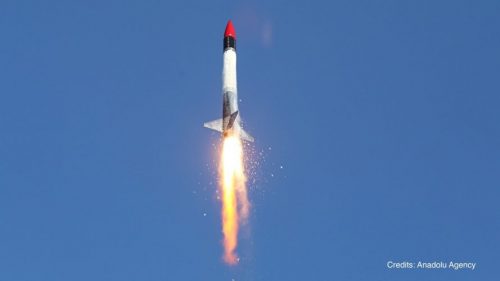
- From 9 February–11 March 2027 (5 weeks, 10 classes, 20 Total Hours)
- Every Tuesday and Thursday from 1–3 p.m. Eastern Time (all sessions will be recorded and available for replay; course notes will be available for download)
- New, essential, and comprehensive course on Hybrid Rocket Propulsion
- All students will receive and AIAA Certificate of Completion at the end of the course
OVERVIEW
The “Hybrid Rocket Propulsion and Testing Practices” course provides an understanding of the fundamentals involved with internal ballistics calculations, material compatibilities, testing and safety on a hybrid rocket development and test program. The course will begin with definition of propulsion systems (solid, liquid and hybrid), and the advantages of hybrid propulsion on practical mission examples such as launch vehicles, in-space propulsion and defense systems. Next, fundamental principles on internal ballistics design on hybrid motor development will be explained. To have an optimum motor design, propellants used in a hybrid propulsion system will be presented. Combustion characteristics and propellant handling with theoretical performance analysis will be presented. NASA’s CEA (Chemical Equilibrium Analysis) software will be used for propellant (oxidizer and fuel) analysis such as heat of combustion calculations for propellants. After explaining fundamentals of propellants, the course dives into details at both oxidizer and fuel for the hybrid rockets. Selection principles, manufacturing techniques, and performance calculation of oxidizers and fuels are presented in the course.
The course continues with various of chapters for a hybrid rocket development segment by segment. First, the course explains motor development and casting using various of fuel grains such as paraffin wax, plastics and HTPB. Also, motor development chapter contains fuel grain, nozzle, pre and the post combustion chamber, injector and the igniter. Secondly, the course explains oxidizer tank design, manufacturing and testing methods. Material compatibility of tank with specific chemicals is one critical factor to be covered in this chapter. Third, main valve design and feed systems will be explained. The course will also cover following topics such as avionics, telemetry, recovery system and airframe (including fin design) for a sounding rocket application.
In addition, testing procedures (including safety and risk methodologies) providing real-world test examples will be covered within this course. Finally, an overlook to small launcher market and evaluation of spaceports using hybrid rockets aims to share audiences’ insights and trends in the industry.
LEARNING OBJECTIVES
- Understand the fundamentals of the hybrid rocket development
- Explain the internal ballistics calculations and performance parameters using NASA CEA software
- Explain the motor development and casting methodologies using various solid fuels such as hydrocarbons and plastics
- Teach the material compatibility and design of feed system, oxidizer tank as well as the main valve
- Explain all segments of a rocket that uses hybrid propulsion such as nose cone, avionics, telemetry, recovery, feed system, pressurizing system, tank, motor, valves, igniters, nozzle and injectors
- Provide real test data examples for data evaluation for a real hybrid rocket practice
- Explain the key concepts for successful test planning to include the importance of the elements for a test procedure, and the composition of a test team.
- Understand the elements of test safety, risk identification, and hazard mitigation.
- Gain foundational skills for analyzing both ground/static and flight test data by applying basic tools for accessing, processing, and saving rocket data acquisition systems.
- Learn the ability to communicate technical content through data presentation, verbal reports, and written technical reports.
- Apply an engineering philosophy that can be able to design a rocket using hybrid propulsion from top to bottom (both for launch vehicles and in-space applications)
AUDIENCE
This course is intended for any engineer, scientist, researcher, or manager who engages in the planning, execution, analysis, and/or reporting of rocket test activities. The course is a broad overview and best suited to graduate students (Master’s or PhD) and/or those with less than 10 years of experience.
COURSE FEES (Sign-In To Register)
AIAA Member Price: $945 USD
AIAA Student Member Price: $495 USD
Non-Member Price: $1,145 USD
CLASSROOM HOURS / CEUs: 20 classroom hours / 2.0 CEU/PDH
CANCELLATION POLICY: A refund less a $50.00 cancellation fee will be assessed for all cancellations made in writing prior to 5 days before the start of the event. After that time, no refunds will be provided.
CONTACT: Please contact Lisa Le or Customer Service if you have any questions about the course or group discounts.
OUTLINE
1. Class 1– Introduction to Rocket Propulsion
- Definition of propulsion (air-breathing versus rockets)
- Classification of solid, liquid, and hybrid rockets
- Hybrid rocket fundamentals
- Internal ballistics calculations
2. Class 2 – Hybrid Rocket Fundamentals
- Regression rate methodologies for different fuels
- Performance analysis such as specific impulse, thrust and nozzle theory
- Propellants selection for hybrid rockets
3. Class 3 – Propellant Design and Manufacturing
- Fuel grain casting
- Oxidizer selection
- Theoretical performance analysis
4. Class 4 – Case Study: NASA CEA for Rockets (Paraffin/N2O and Paraffin/LOX)
- Selection of propellants for specific missions (launch vehicle, in-space, in-situ Moon/Mars)
- Heat of reaction calculations
- Internal ballistics calculations using MATLAB
5. Class 5 – Hybrid Rocket Design
- Motor segment (nozzle, injector, fuel, igniter)
- Propulsion unit (main valve, feed systems and sensors)
- Oxidizer tank
- Rocket airframe (find, nose cone and necessary structures)
- Avionics and telemetry
6. Class 6 – Hybrid Rocket Motor Static (Ground) Test Data Analysis
- Testing principles of the hybrid rockets
- Data analysis using pressure, temperature and load cells
- Performance analysis of a hybrid motor
7. Class 7 – Hybrid Rocket Flight Test Analysis
- Data analysis of the pre-flight
- Data analysis of the post-flight
8. Class 8 – Test Safety Principles
- Rocket system safety with material compatibility
- Hazard identification and mitigation, risk assessment
- Real-world examples – case studies
9. Class 9 – Test Conduct
- Test control and personnel roles
- Communication plan
- Pre-flight predictions
- Test safety risk reduction tools – monitoring safety parameters
10. Class 10 – Small Launcher Market
- Existing companies using hybrid propulsion
- Space port evaluation
- Launch market assessment
COURSE DELIVERY AND MATERIALS
- The course lectures will be delivered via Zoom. Access to the Zoom classroom will be provided to registrants near to the course start date.
- All sessions will be available on-demand within 1-2 days of the lecture. Once available, you can stream the replay video anytime, 24/7.
- All slides will be available for download after each lecture. No part of these materials may be reproduced, distributed, or transmitted, unless for course participants. All rights reserved.
- Between lectures during the course, the instructor(s) will be available via email for technical questions and comments.
- Recommended (optional) textbook: George P. Sutton, Oscar Biblarz, Rocket Propulsion Elements, 9th ed, Wiley, 2016.

Dr. Ozan Kara is Lead Engineer in Rocket Systems at the Technology Innovation Institute, Propulsion and Space Research Center. His expertise is in the development of hybrid rocket propulsion for launch and space applications. Specifically, he worked on novel propellant development using metal additives and mixed use of oxidizers. He performed experimental tests for in-situ Mars Ascent Vehicles that proved that CO2 can be used as an in-situ oxidizer in actual rockets for the first time. Previously, he worked with DeltaV Space Technologies, Turkey in hybrid motor development and LOX based sounding rocket systems. He has also taught at MEF and Yeditepe Universities, Istanbul from 2021 – 2023. In addition, Earth observation technologies for natural disasters, satellite communication, and virulence investigation of bacteria aboard the ISS are among other research he has conducted in his career. Dr. Kara received the 2022 Young Space Leader Award at the IAC 2022 in Paris. In a survey organized for the Aviation and Space Industry, he was among the 100 Most Inspiring Young Professionals in 2022. Dr. Kara is the co-chair of the IAF Space Propulsion committee, and member of the Space Education & Outreach and WD-YPP committees. He was the Middle East regional coordinator in the Space Generation Advisory Council from 2018 – 2020. Dr. Kara is also a rowing athlete, car racer, and photographer.
AIAA Training Links
-
For information, group discounts,
and private course pricing, contact:
Lisa Le, Education Specialist ([email protected])