
Machine Learning for Aerospace Engineering (2-Day Course at SciTech Forum 2027) 9 January 2027 - 10 January 2027 Hyatt Regency Orlando, Orlando, Florida Daily from 8 a.m.–5 p.m.
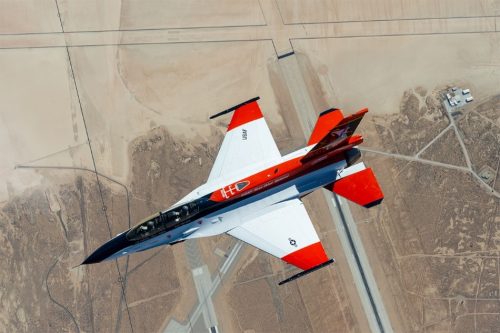
- 8 a.m.–5 p.m. on Saturday, 9 January and Sunday, 10 January 2027, at the Hyatt Regency Orlando before the AIAA SciTech Forum 2027
- This comprehensive face-to-face course covers reduced-order model (ROM) techniques for Machine Learning (ML) and Deep Learning (DL) techniques, focusing on aircraft performance and aerodynamic load analysis.
- All students will receive an AIAA Certificate of Completion at the end of the course.
OVERVIEW
Welcome to Machine Learning for Aerospace Engineering, an intensive, 2-Day short course designed to bridge the gap between traditional aerospace engineering and cutting-edge data science.
As modern aircraft design demands faster iterations across complex flight envelopes, traditional high-fidelity computational fluid dynamics (CFD) methods often become computational bottlenecks. This course provides a data-driven solution, focusing on modern Machine Learning (ML) and Deep Learning (DL) techniques. Participants will learn how to build ultra-fast, highly accurate ML/DL models capable of predicting complex aerodynamic loads and handling aeroelastic phenomena in a fraction of the time.
Over two fast-paced days, this course blends essential theory with highly practical, aerospace-specific demonstrations. We begin with the core physics of aircraft loads and standard deep learning regressions before moving into advanced spatial and geometric learning. You will explore how Convolutional Neural Networks (CNNs) and Autoencoders compress high-dimensional aircraft data, and how Graph Convolutional Networks (GCNs) native to unstructured grids handle complex distributed loads. Finally, the course covers boundary-pushing techniques, including Physics-Informed Neural Networks (PINNs) that leverage on physics, and Recurrent Neural Networks (RNNs) capable of forecasting transient, time-evolving aerodynamic behaviors.
By the conclusion of this program, you will possess a robust toolkit of data-driven methods, backed by realistic hands-on demos (including in-flight icing and airfoil shape variation analyses), allowing you to immediately implement machine learning solutions in industrial or research aerospace settings.
LEARNING OBJECTIVES
- Explain the use of AI/ML in complex aerospace computational problems.
- Differentiate between data-driven ML models and equations-derived models.
- Build, train, and fine-tune standard Deep Neural Networks (DNNs) to predict integrated aerodynamic loads across a varied flight envelope.
- Utilize Convolutional Neural Networks (CNNs) and Autoencoders to compress high-fidelity spatial data and evaluate the impact of airfoil shape variations and in-flight icing.
- Apply Geometric Deep Learning (GDL) and Graph Convolutional Networks (GCNs) directly to unstructured computational fluid dynamics (CFD) grids to predict complex, distributed aerodynamic loads.
- Enhance the prediction accuracy of data-driven ML models with gradient-informed GCNs to ensure physically consistent predictions.
- Implement Recurrent Neural Networks (RNNs) to capture and forecast time-evolving, unsteady aerodynamic behaviors and transient dynamic maneuvers.
- Assess the benefits, computational speedups, and practical boundaries of applying purely data-driven ML methodologies to real-world aerospace engineering and design challenges.
- [See detailed Outline below]
AUDIENCE
This 2-day course is specifically engineered for professionals, researchers, and technical leaders facing the mounting data pressures of modern aircraft development. It is designed for:
- Engineers and computational scientists with an incumbent need to automate repetitive, manual workflows in the aerodynamic design loop, significantly reducing the bottleneck of human intervention.
- Aerospace practitioners who find themselves overwhelmed with massive datasets from high-fidelity CFD and aeroelastic analyses, looking for robust methods to distill essential, high-value information from complex systems.
- Leaders seeking to make engineering processes and business operations more profitable by replacing slow, high-cost computational cycles with ultra-fast, data-driven pipelines that shrink time-to-market.
- Systems engineers and multidisciplinary design optimization (MDO) specialists who require lightweight, real-time aerodynamic models that can be easily exported and utilized downstream for flight dynamics, control law design, and structural optimization.
- Academic and industrial researchers aiming to master advanced deep learning architectures – a such as GNNs, PINNs, and Autoencoders – to solve the structural and computational scalability challenges of very large-scale, expensive simulations.
REGISTRATION FEES (Register Here)
AIAA Member: $745 USD
Student: $395 USD
Non-Member: $945 USD
Register for the course only or as an add-on to Conference registrations. Course participation is in-person only.
CONTACT
Please contact Lisa Le, Education Manager, for questions about the course or group discounts (for 5+ participants).
OUTLINE (with approximate times):
Day 1: Foundations, Dimensionality Reduction & GNNs (8 Hours)
Day 1 establishes the mathematical and ML foundations before diving into spatial and geometric deep learning architectures for handling complex grid structures.
2.0 Hours | Module 1: Core Fundamentals & ROM Introduction
- Introduction to aircraft load challenges and physical governing equations.
- The transition from full-order computational models to data-driven AI/ML models.
3.0 Hours | Module 2: Machine Learning, Deep Learning & Icing Fundamentals
- Fundamentals of ML & DL architectures, standard neural networks, and model fine-tuning techniques.
- Hands-on Session / Demo: In-flight icing simulation and modeling foundations.
- Applications covered: Integrated aerodynamic loads across the flight envelope using deep neural networks (DNNs).
3.0 Hours | Module 3: Graph Deep Learning & Graph Convolutional Networks
- Overview of Geometric Deep Learning (GDL) & Graph Convolutional Networks (GCN) tailored for unstructured computational fluid dynamics (CFD) grids.
- Implementation of graph autoencoders for complex spatial data compression.
- Hands-on Session / Demo: Predicting distributed aerodynamic loads across the flight envelope using Graph Neural Networks (GNNs).
Day 2: Advanced Network Architectures & Time-Series Modeling (8 Hours)
Day 2 focuses on advanced physical constraints, structural dimensionality reduction, and time-evolving behaviors.
4.0 Hours | Module 4: CNNs and Autoencoders for Dimensionality Reduction
- Utilizing Convolutional Neural Networks (CNNs) and standard Autoencoders for high-fidelity data compression and feature extraction.
- Hands-on Session / Demo: Analyzing airfoil shape variations across the flight envelope using CNN and Autoencoder frameworks.
- Hands-on Session / Demo: Evaluating the aerodynamic effects of in-flight icing.
2.0 Hours | Module 5: Physics-Informed Neural Networks & Advanced GCNs
- Introduction to Physics-Informed Neural Networks (PINNs) to embed physics into ML models.
- Utilizing gradient-informed GCNs to enhance prediction accuracy on aerodynamic boundaries.
2.0 Hours | Module 6: Recurrent Neural Networks & Time-Evolution
- Overview of Recurrent Neural Networks (RNNs/LSTMs) for predicting transient and time-evolving aerodynamic flows.
- Hands-on Session / Demo: Time-forecasting of integrated and distributed aerodynamic loads during dynamic maneuvers.
Soft copy course notes will be made available 3-5 days prior to the course event. You will receive an email with detailed instructions on how to access your course notes. Since these notes will not be distributed on site, AIAA and your course instructor highly recommend that you bring your computer with the course notes already downloaded.
Dr. Andrea Da Ronch is a Professor of Aeronautics and Astronautics at the University of Southampton (United Kingdom). He earned his Ph.D. in Aerospace Engineering from the University of Liverpool (United Kingdom) in 2012, and his double M.Sc. in Aeronautical Engineering from the Polytechnic University of Milan (Italy, and KTH Sweden) in 2008. Alongside his academic tenure, he operates an independent engineering consultancy and is the CSO and co-founder of IngeniAI, a specialized company developing custom AI/ML software solutions for the automotive, aeronautical, and aerospace industries. Dr. Da Ronch has led the development of numerous software tools that are actively used today in industrial production environments. He is an Associate Fellow of AIAA – Class of 2026, a Member of the Royal Aeronautical Society (RAeS), and has published over 40 refereed journal articles and a textbook.
Dr. David Massegur is CEO and co-founder of IngeniAI, and a visiting Research Associate at the University of Southampton (United Kingdom). He earned his Ph.D. in Aerospace Engineering from the University of Southampton in 2025, and his M.Sc. in Aeronautical Engineering from the Polytechnic University of Milan in 2006. Bringing over 10 years of high-performance engineering experience across multiple Formula 1 teams, Dr. Massegur specializes in the intersection of advanced computational fluid dynamics and machine learning architectures, developing high-efficiency software tools tailored to solve complex industrial scalability and process automation bottlenecks.
AIAA Training Links
-
For information, group discounts,
and private course pricing, contact:
Lisa Le, Education Specialist ([email protected])