
Multiphase Flows for Aerospace Applications – Online Short Course 3 May 2027 - 26 May 2027 Online
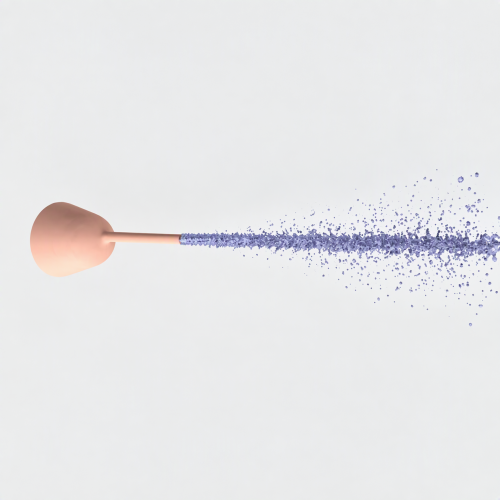
- From 3–26 May 2027 (4 Weeks, 8 Classes, 16 Total Hours)
- Every Monday and Wednesday at 1–3 p.m. Eastern Time (all sessions will be recorded and available for replay; course notes will be available for download)
- All students will receive an AIAA Certificate of Completion at the end of the course.
OVERVIEW
Multiphase flows are central to many aerospace applications, including fuel injection and atomization, aircraft icing, particle-laden flows, combustion and propulsion, shock–droplet and shock–particle interactions, hypersonic flight, and flows involving phase change. These problems are particularly challenging because they combine complex interfacial dynamics, turbulence, compressibility, multiple spatial and temporal scales, and strong coupling among different phases.
This 16-hour course provides an integrated introduction to the physics, computational modeling, experimental investigation, and aerospace applications of multiphase flows. The course is designed to connect fundamental physical concepts with the tools used to study and predict real multiphase systems.
The course begins with an introduction to the fundamental physics and mathematical description of multiphase flows, including interfacial forces, characteristic nondimensional parameters, breakup, coalescence, and important aerospace examples. This foundation is followed by focused lectures on two major classes of interface-capturing methods: diffuse-interface methods and Volume-of-Fluid (VOF) methods. Participants will learn the governing ideas behind these approaches, their numerical implementation, strengths and limitations, and how they are applied to flows involving complex interface deformation and topology changes.
The course next introduces experimental methods for low- and high-speed multiphase flows, including phase Doppler particle analysis (PDPA), shadowgraphy, and laser-induced fluorescence (LIF). Participants will consider how diagnostic selection, measurement resolution, and uncertainty affect interpretation of multiphase-flow experiments.
A dedicated lecture on primary atomization and sprays examines fuel sprays, combustion, and phase change, integrating physical understanding with simulation, modeling, and experimental approaches. An interactive session on low-speed multiphase flows then compares computational methods with experimental observations, using sprays and other representative examples to examine discrepancies and current challenges.
The final two classes address high-speed multiphase flows, with emphasis on droplet breakup and impingement, their simulation and modeling, and experimental evidence. An interactive high-speed session compares numerical methods and evaluates simulation results against experiments and theory, using representative datasets where available to investigate differences, sources of error, and open challenges.
By bringing together fundamental physics, numerical methods, experiments, and practical applications, the course will provide participants with a broad framework for understanding multiphase-flow problems and selecting appropriate approaches for their analysis.
LEARNING OBJECTIVES
Upon completion of this course, participants will be able to:
- Identify and characterize multiphase-flow regimes relevant to aerospace applications and determine the dominant physical mechanisms and nondimensional parameters.
- Describe the governing physical principles of fluid–fluid and fluid–particle systems, including surface tension, interfacial stresses, deformation, breakup, coalescence, and phase interactions.
- Explain the mathematical and numerical foundations of diffuse-interface methods and evaluate their advantages and limitations for multiphase-flow simulations.
- Explain the principles of Volume-of-Fluid methods, including volume-fraction transport, interface reconstruction, surface-tension modeling, and conservation considerations.
- Recognize key numerical challenges in interface-resolved multiphase simulations, including curvature evaluation, mass and momentum conservation, interface resolution, and spurious numerical effects.
- Compare numerical approaches for multiphase flows and assess their assumptions, strengths, limitations, and suitability for a given flow regime.
- Understand experimental methods for low- and high-speed multiphase flows, including phase Doppler particle analysis (PDPA), shadowgraphy, laser-induced fluorescence (LIF), and other relevant diagnostics.
- Evaluate experimental measurement accuracy, uncertainty, spatial and temporal resolution, and repeatability in multiphase-flow studies.
- Explain primary atomization and spray physics, including the roles of fuel sprays, combustion, and phase change, and compare experimental and computational approaches.
- Analyze low-speed multiphase-flow examples by comparing simulations and experimental data and identifying possible sources of disagreement.
- Explain high-speed droplet breakup and impingement, and assess the roles of modeling, simulation, experiments, and potentially phase change.
- Critically compare high-speed numerical predictions with experimental data and physical theory, identifying errors, uncertainties, and unresolved challenges.
AUDIENCE
This course is intended for engineers, scientists, researchers, graduate students, and technical professionals interested in understanding or modeling multiphase flows in aerospace and related applications.
The course will be particularly useful for individuals working in:
- Computational fluid dynamics
- Experimental fluid mechanics
- Aircraft icing and phase change
- Fuel sprays and atomization
- Propulsion and combustion
- Particle- and droplet-laden flows
- High-speed and hypersonic flows
- Shock–particle and shock–droplet interactions
- Turbulent multiphase flows
- Development and validation of multiphase-flow models
Participants should have a basic undergraduate-level understanding of fluid mechanics. Familiarity with numerical methods or experimental fluid mechanics will be useful but is not required.
COURSE FEES (Sign-In To Register)
– AIAA Member Price: $945 USD
– AIAA Student Member Price: $495 USD
– Non-Member Price: $1,145 USD
CLASSROOM HOURS / CEUs: 16 classroom hours / 1.6 CEU/PDH
CANCELLATION POLICY: A refund less a $50.00 cancellation fee will be assessed for all cancellations made in writing prior to 5 days before the start of the event. After that time, no refunds will be provided.
CONTACT: Please contact Lisa Le or Customer Service if you have any questions about the course or group discounts.
CLASS 1 — Introduction to Multiphase Flows
Instructor: Suhas S. Jain | 2 Hours
This lecture establishes the fundamental physical and mathematical concepts required for the remainder of the course. Participants will be introduced to the definition and classification of multiphase flows, including gas–liquid, liquid–liquid, and fluid–particle systems involving droplets, bubbles, films, particles, and sprays. Representative aerospace applications will include aircraft icing, fuel injection and atomization, propulsion and combustion, particle-laden high-speed flows, shock–droplet and shock–particle interactions, and phase-change processes.
The lecture will introduce the physics of fluid interfaces, including surface tension, interfacial energy, the Young–Laplace pressure jump, and interfacial stress conditions. Important nondimensional parameters—including the Reynolds, Weber, Capillary, Ohnesorge, Bond/Eötvös, Stokes, and Mach numbers—will be discussed in the context of identifying dominant physical mechanisms. Canonical multiphase phenomena such as droplet and bubble deformation, breakup, coalescence, and interfacial instabilities will also be introduced. The session will conclude with an overview of governing conservation equations and the major approaches used to model multiphase flows, including sharp- and diffuse-interface formulations, interface-tracking and interface-capturing methods, and Eulerian and Lagrangian descriptions.
CLASS 2 — Diffuse-Interface Methods for Multiphase Flows
Instructor: Suhas S. Jain | 2 Hours
This lecture introduces the mathematical foundations, numerical formulation, and practical application of diffuse-interface methods for multiphase flows. The distinction between sharp- and diffuse-interface descriptions will first be established, followed by the mathematical representation of interfaces using phase indicators and order parameters. Free-energy-based approaches, phase-field formulations, and governing equations such as the Cahn–Hilliard and Allen–Cahn equations will be introduced together with their coupling to the Navier–Stokes equations.
Particular attention will be given to the representation of surface tension and interfacial stresses, interface thickness, numerical resolution, and the treatment of large density and viscosity contrasts. Conservative and non-conservative formulations will be compared, with emphasis on mass and momentum conservation. The lecture will also examine boundary conditions, wetting, interface curvature, breakup and coalescence, and the ability of diffuse-interface methods to naturally accommodate changes in interface topology. The advantages, limitations, and appropriate applications of these methods will be discussed through representative multiphase-flow examples.
CLASS 3 — Volume-of-Fluid Methods for Multiphase Flows
Instructor: Olivier Desjardins | 2 Hours
This lecture covers the fundamental concepts and practical numerical considerations associated with Volume-of-Fluid (VOF) methods, one of the most widely used approaches for simulating flows with deforming fluid interfaces. Participants will learn how interfaces are represented using volume fractions and how the volume-fraction field is transported through the computational domain. Geometric and algebraic VOF approaches will be discussed, with particular attention to interface reconstruction techniques such as piecewise-linear interface construction.
The lecture will address the calculation of interface normals and curvature, representation of surface tension, balanced-force formulations, and the origins and mitigation of spurious or parasitic currents. Conservation of mass and momentum, consistent transport schemes, and treatment of large density and viscosity ratios will be emphasized. Additional topics will include breakup and coalescence, adaptive mesh refinement, grid-resolution requirements, and the tradeoffs among numerical accuracy, robustness, and computational expense. Applications to droplets, liquid jets, atomization, and turbulent multiphase flows will illustrate the capabilities and limitations of modern VOF approaches.
CLASS 4 — Experimental Methods for Multiphase Flows: Low- and High-Speed Diagnostics
Instructor: Jacob McFarland | 2 Hours
This lecture introduces experimental techniques for studying multiphase flows across low- and high-speed regimes. Participants will examine experimental design, generation and characterization of droplets and particles, and practical considerations such as optical access, calibration, spatial and temporal resolution, and reproducibility. Low-speed diagnostics will include phase Doppler particle analysis (PDPA) for measurements of droplet size and velocity, together with other representative techniques for dispersed-phase characterization.
For high-speed multiphase flows, the lecture will discuss shadowgraphy and laser-induced fluorescence (LIF), focusing on what each method measures, how data are interpreted, and the challenges of rapidly evolving interfaces and dispersed phases. Examples will illustrate diagnostic selection, synchronization, measurement uncertainty, and complementary use of experimental methods to support physical interpretation and numerical-model validation.
CLASS 5 — Primary Atomization and Sprays
Instructor: Olivier Desjardins | 2 Hours
This lecture focuses on the physical processes governing primary atomization and the evolution of sprays in aerospace applications. Topics include liquid-jet and sheet instability, ligament formation, droplet breakup, and the development of fuel sprays. The roles of turbulent flow, combustion, and phase change will be considered in understanding spray formation and behavior in propulsion systems.
The lecture will connect high-fidelity simulation, predictive modeling, and experimental investigation of atomization and sprays. Participants will examine numerical representations of liquid interfaces and spray dynamics, modeling assumptions and limitations, and the types of experimental observations used to evaluate predictions. Representative examples will highlight the challenges of connecting interface-resolved physics to engineering-scale spray models.
CLASS 6 — Interactive Session: Low-Speed Multiphase Flows
Instructor: Jacob McFarland | 2 Hours
This interactive session brings together computational and experimental perspectives on low-speed multiphase flows. Participants will compare representative numerical approaches, discussing the differences in interface treatment, modeling assumptions, resolution requirements, and the information each method can provide. Illustrative example codes or results may be used where suitable.
Using representative experimental observations and simulations, the group will discuss how to compare quantities consistently, interpret discrepancies, and identify sources of numerical and measurement error. Sprays may serve as an example problem. The session will conclude with an open discussion of current scientific and practical challenges in predictive low-speed multiphase-flow modeling and measurement.
CLASS 7 — High-Speed Multiphase Flows: Droplet Breakup and Impingement
Instructor: Christoph Brehm | 2 Hours
This lecture examines high-speed multiphase-flow phenomena, with particular emphasis on droplet deformation, breakup, and impingement. Participants will consider the effects of compressibility, shocks, aerodynamic loading, relative phase motion, and surface interactions on droplet response. Relevant physical timescales and nondimensional parameters will be used to interpret the dominant regimes; phase-change effects may be discussed where relevant.
The lecture will integrate simulations, models, and experiments used to investigate high-speed droplets and dispersed phases. Topics include numerical treatment of compressible multiphase interactions, representation of breakup and impingement, experimental diagnostics, and tradeoffs between physical fidelity, computational cost, and model applicability. Aerospace examples will connect the underlying physics to practical flow conditions.
CLASS 8 — Interactive Session: High-Speed Multiphase-Flow Problems
Instructor: Christoph Brehm | 2 Hours
The final interactive session focuses on critical interpretation of high-speed multiphase-flow predictions. Participants will compare representative numerical methods and their assumptions, then examine computational results alongside experimental measurements and theoretical expectations. Example data, potentially including droplet-breakup test cases, may be used to explore agreement and differences among approaches.
Participants will discuss possible causes of discrepancies, including modeling approximations, numerical resolution, initial and boundary conditions, experimental uncertainty, and interpretation of observed quantities. Through guided discussion, they will propose ways to diagnose errors and improve comparisons, identify current challenges, and synthesize lessons from the course on connecting multiphase-flow physics, numerical modeling, and experimental evidence.
COURSE DELIVERY AND MATERIALS
- The course lectures will be delivered via Zoom. Access to the Zoom classroom will be provided to registrants near to the course start date.
- All sessions will be available on-demand within 1-2 days of the lecture. Once available, you can stream the replay video anytime, 24/7.
- All slides will be available for download after each lecture. No part of these materials may be reproduced, distributed, or transmitted, unless for course participants. All rights reserved.
- Between lectures during the course, the instructor(s) will be available via email for technical questions and comments.
Georgia Institute of Technology
Suhas S. Jain is an Assistant Professor in the George W. Woodruff School of Mechanical Engineering and Daniel Guggenheim School of Aerospace Engineering at the Georgia Institute of Technology and leads the Flow Physics and Computational Science Laboratory. He is also the Director of Georgia Tech’s Center for Multiphase Flow Research. His research focuses on multiphase, turbulent, and compressible flows, with particular emphasis on interface-resolved computational methods, interfacial transport, phase change, aircraft icing, turbulence, high-performance computing, and data-driven modeling. He received his M.S. and Ph.D. in Mechanical Engineering from Stanford University and subsequently conducted postdoctoral research at Stanford’s Center for Turbulence Research.
Christoph Brehm
University of Maryland
Christoph Brehm is an Associate Professor in the Department of Aerospace Engineering at the University of Maryland. His research focuses on computational methods for complex high-speed flows, including hypersonic aerodynamics, turbulence, particle-laden flows, fluid–structure interactions, and other multiphysics problems. His work includes advanced numerical algorithms, Cartesian and immersed-boundary methods, adaptive computation, and large-scale high-performance computing for aerospace applications.
Olivier Desjardins
Cornell University
Olivier Desjardins is a Professor in the Sibley School of Mechanical and Aerospace Engineering at Cornell University. His research focuses on the development and application of high-fidelity computational methods for turbulent multiphase and reacting flows. His work includes Volume-of-Fluid methods, multiphase turbulence, atomization, droplets and particles, sprays, combustion, and large-scale direct and large-eddy simulations. He received his Ph.D. in Mechanical Engineering from Stanford University.
Jacob McFarland
Texas A&M University
Jacob McFarland is an Associate Professor in the Department of Mechanical Engineering at Texas A&M University. His research focuses on experimental fluid mechanics under extreme conditions, with particular interests in shock-driven multiphase flows, variable-density mixing, droplet and particle dynamics, compressible flows, and energetic systems. His work combines advanced experimental facilities and diagnostics to investigate strongly transient multiphase phenomena and generate quantitative datasets for understanding and modeling complex flows.
AIAA Training Links
-
For information, group discounts,
and private course pricing, contact:
Lisa Le, Education Specialist ([email protected])