
Overview of Electric Propulsion for Spacecraft – Online Short Course 23 February 2027 - 6 April 2027 Online
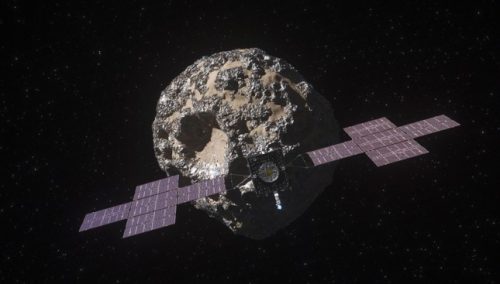
Instructed by experts from the AIAA Electric Propulsion Technical Committee
- From 23 February–6 April 2027 (6.5 Weeks, 13 Classes, 26 Total Hours)
- Every Tuesday and Thursday at 1–3 p.m. ET (all sessions will be recorded and available for replay; course notes will be available for download)
- This new, essential course provides a comprehensive and practical survey of EP.
- All students will receive an AIAA Certificate of Completion at the end of the course.
OVERVIEW
The Overview of Electric Propulsion for Spacecraft course provides a wide-reaching overview of the many various technologies and applications of electric propulsion (EP) for spacecraft, combining theoretical descriptions with practical considerations and historical usage. In the first half of the course, the student will learn about the physical operating principles and practical implementations of the various types of EP thrusters. Then, in the second half of the course, a variety of topics such as ground testing, modeling and simulation, supporting technologies, mission optimization, and future research directions are covered to give the student a comprehensive picture of EP development and application in the real world. The course is divided into 13 2-hour classes, taught by leading experts in the field.
LEARNING OBJECTIVES
This course will provide an understanding of:
- the motivation, benefits, and drawbacks of EP compared to conventional chemical propulsion.
- the physics of operation for the various forms of EP.
- the development and implementation history of the various forms of EP.
- the benefits and drawbacks of each form of EP compared to others.
- the primary life-limiting mechanisms of the various forms of EP.
- the importance of the ground testing environment and which factors are most relevant.
- how the various types of EP thrusters are modeled and why such models are important.
- how EP systems are designed and implemented on spacecraft and what supporting technologies are required.
- unique aspects and considerations of mission design and optimization for missions which utilize EP.
- current priorities and future directions in EP research and development.
- [See below for detailed outline]
AUDIENCE
This course is targeted towards:
- Students studying electric propulsion who desire a big picture perspective of the EP technological landscape and to understand practical considerations relevant to EP implementation
- Propulsion engineers and researchers in the space industry who desire a better understanding of the theory and history behind the various types of EP thrusters and of the relevant considerations when developing and implementing systems which utilize them
- Non-propulsion engineers (e.g. systems or electrical engineers) in the space industry who work on missions and subsystems which use or interact with EP and desire a better understanding of EP technologies
COURSE FEES (Sign-In To Register)
– AIAA Member Price: $995 USD
– Non-Member Price: $1,195 USD
– AIAA Student Member Price: $495 USD
CLASSROOM HOURS / CEUs: 26 classroom hours / 2.6 CEU/PDH
Cancellation Policy: A refund less a $50.00 cancellation fee will be assessed for all cancellations made in writing prior to 5 days before the start of the event. After that time, no refunds will be provided.
Contact: Please contact Lisa Le or Customer Service if you have questions about the course or group discounts (for 5+ participants).
OUTLINE
1. Fundamentals of Rocket Propulsion and Plasma Physics
● Instructor: Kristina Lemmer
● Content: Basics of space travel including the rocket equation and electric propulsion mission profiles; plasma physics fundamentals including electric and magnetic fields, sheaths, particle interactions, and important plasma parameters.
2. Electrothermal Acceleration: Resistojets and Arcjets
● Instructor: Keith Goodfellow
● Content: Overview of nozzle flow and nozzle parameters; heating mechanisms; arc discharges and electrodes; propellants and feed systems; flight history and systems.
3. Electrostatic Acceleration: Gridded Ion and Hall Thrusters
● Instructor: George Soulas / Rich Hofer
● Content: Electrostatic acceleration; gridded ion thruster design and operating principles; space charge limitation; grid erosion; major development and flight programs; Hall thruster design and operating principles; magnetic shielding; major development and flight programs.
4. Electromagnetic Acceleration: PPTs, MPDs, and PITs
● Instructor: Hani Kamhawi
● Content: Electromagnetic acceleration; PPT design and operating principles; MPD design and operating principles; applied-field vs self-field MPDs; PIT design and operating principles; mission applications of each type; flight system design challenges.
5. Electrosprays and Vacuum Arc Thrusters
● Instructor: Paddy Neumann
● Content: Overview of electrospray and vacuum/cathodic arc systems; operating physics of each system; how the physics drives design choices; interactions with the spacecraft and the space environment.
6. RF-based Thrusters
● Instructor: Christine Charles
● Content: RF-based Thrusters; RF power coupling mechanisms; particle transport and momentum transfer in expanding magnetised plasmas; RF-amplifiers and plasma impedance matching techniques; ground performance assessment; scalability and applications.
7. Cathode Technologies
● Instructor: Dan Lev
● Content: Why cathodes are needed; hollow cathode design and operating principles; emitter materials; cathode poisoning; heaterless cathodes; non-thermionic cathodes (e.g. RF).
8. Ground Testing of EP Thrusters
● Instructor: Wensheng Huang / Jason Frieman
● Content: Design of Research experiment; common diagnostics; test facilities; ground support equipment; engineering and flight tests; integration tests; managing test requirements/documentation/risks; managing test logistics (schedule/personnel).
9. Modeling and Simulation of EP Thrusters
● Instructor: Ioannis Mikellides
● Content: Fundamentals of EP plasma physics and the critical role of modeling and simulation (M&S) in research, development, and flight implementation; complexities of EP plasma physics arising from wide-ranging spatiotemporal scales; governing equations and numerical approaches for collisional and collision-less plasmas, including specific models and methods like magnetohydrodynamics (MHD) and Particle-in-Cell; applications to high-density EP (e.g. electromagnetic thrusters), lower-density systems (e.g. ion engines optics), and devices with complex boundary conditions (e.g. hollow cathodes); examples of existing computational codes; examples of how M&S has impacted EP R&D and flight qualification.
10. Power Conversion for EP
● Instructor: Corey Rhodes / Luis Pinero
● Content: Architectures of Power Processing Units (PPUs) for electric propulsion; PPU functional and performance specifications; thruster integration considerations; power converter topologies; EEE components, analyses, and testing.
11. EP System Design and Mission Optimization
● Instructor: Alex Nikrant
● Content: Architecture of EP systems; supporting technologies (flow control, power distribution, etc.); redundancy; mission-level advantages and drawbacks of EP; low thrust orbit transfers; trading thrust and specific impulse; real-world examples of EP systems and mission architectures.
12. Current Priorities in EP Research and Development
● Instructor: Justin Little
● Content: Alternate propellants; multimode EP-CP systems sharing propellant; air-breathing EP for VLEO; very high power EP systems for nuclear applications; facility effect mitigation for high power EP testing.
13. EP of the Future: Nuclear Fusion Propulsion
● Instructor: Peter Turchi
● Content: Why fusion propulsion? Mission parameters; fusion physics and technologies; elements of a fusion propulsion system; conceptual design guidance; research topics and challenges where electric propulsion experience can help.
COURSE DELIVERY AND MATERIALS
- The course lectures will be delivered via Zoom. Access to the Zoom classroom will be provided to registrants near to the course start date.
- All sessions will be available on-demand within 1-2 days of the lecture. Once available, you can stream the replay video anytime, 24/7.
- All slides will be available for download after each lecture. No part of these materials may be reproduced, distributed, or transmitted, unless for course participants. All rights reserved.
- Between lectures during the course, the instructor(s) will be available via email for technical questions and comments.
Dr. Kristina Lemmer is a Professor and the director of the Aerospace Laboratory for Plasma Experiments at Western Michigan University. She is a WMU Distinguished Faculty Scholar, and her research has been supported by AFOSR, NASA, NSF, and AFRL. She has been teaching an introductory electric propulsion course for the past 10 years.
Dr. Keith Goodfellow received his B.S. in Mechanical Engineering from the University of Utah in 1986, his M.S. in Mechanical Engineering from Purdue University in 1988, and his Ph.D. in Aerospace Engineering from the University of Southern California (USC) in 1996. He has over 38 years of professional experience in the fields of electric thruster and power processor development and flight systems with roles at the Jet Propulsion Laboratory, Lockheed Martin Skunk Works, and Aerojet Rocketdyne. He has been an Adjunct Professor at USC for over 26 years where he teaches classes in rocket propulsion and rarefied gases. He is currently the Chief Engineer for the Arcjet and Ion Engine product lines at Aerojet Rocketdyne. He is an AIAA Associate Fellow.
George C. Soulas received his B.S. and M.S. in Aeronautical and Astronautical Engineering in 1988 and 1991, respectively, from the Ohio State University in Columbus Ohio. He has over thirty years of experience in electric propulsion at the NASA Glenn Research Center and has worked on gridded ion thrusters, Hall thrusters, MPD thrusters, and hollow cathodes for propulsion and plasma contactors. His experience includes research and development, as well as the manufacturing and testing of spaceflight hardware. More recently, he was the thruster lead engineer for NEXT-C gridded ion thruster and is presently the qualification test lead engineer for the Solar Electric Propulsion Hall thruster at the Glenn Research Center.
Dr. Richard R. Hofer is Principal Engineer and Supervisor of the Electric Propulsion Group at JPL, where he is recognized as a world leader in Hall thruster technology. Since joining JPL in 2005, his research and leadership have produced high-impact innovations that are enabling the next phase of robotic and human exploration of the solar system. He has designed Hall thrusters from 1 to 100 kW and led technology developments that have secured programs valued at several hundred million dollars, now foundational to U.S. government efforts. As Supervisor, he ensures the technical excellence and long-term growth of electric propulsion at JPL, and as Principal Engineer he leads development and qualification of thrusters for deep space missions. Dr. Hofer is an AIAA Fellow, serves on the Board of Directors of the Electric Rocket Propulsion Society, and is a former Chair of the AIAA Electric Propulsion Technical Committee. He has received numerous honors, including the NASA Exceptional Engineering Achievement Medal, holds nine patents, and has authored more than 180 technical publications.
Dr. Hani Kamhawi received his B.S., M.S., and Ph.D. in Aeronautical and Astronautical Engineering from the Ohio State University in Columbus Ohio. Dr. Kamhawi has over thirty years of experience in electric propulsion at the NASA Glenn Research Center. Dr. Kamhawi has worked on magneto plasma dynamic (MPD) thrusters, gigawatt plasma sources, pulsed plasma thrusters (PPT), gridded ion thrusters, hollow cathodes, and Hall effect thrusters. Dr. Kamhawi’s experience includes research and development of hollow cathodes and various thrusters as well as manufacturing and testing of spaceflight hardware (hollow cathode for ISS and Hall thrusters). In the past ten years, Dr. Kamhawi has been mainly supporting the development and testing of the Advanced Electric Propulsion System (AEPS), a 12 kW Hall thruster that is planned for the NASA Power and Propulsion Element. Dr. Kamhawi served as the lead test engineer and also as the lead thruster design engineer from NASA.
Dr. Patrick “Paddy” Neumann founded Neumann Space in 2015 to develop and commercialise research in pulsed cathodic arc spacecraft propulsion systems undertaken at the University of Sydney. He holds an adjunct associate professorship at Adelaide University, is an Associate Fellow of the AIAA and a member of the AIAA Electric Propulsion Technical Committee. In 2020, Paddy received the Lawrence Sperry Award from the AIAA “for continued development of miniature electric spacecraft propulsion systems and ceaseless advocacy for the development of Australian space capabilities”. In 2022, Paddy was named Australian Scientist of the Year at the Australian Space Awards.
Dr. Christine Charles completed her Engineering Degree at the University of Rennes in 1987, received her PhD from Orléans University in 1990 and is Professor and Lead of the Space Plasma, Power and Propulsion (SP3) laboratory at the Australian National University. She works on experimental expanding radiofrequency (RF) plasmas applied to space science (particle acceleration, current-free electric double layers) and space propulsion (RF-based thrusters such as the Helicon thruster and the Pocket Rocket electrothermal plasma thruster). She overseas space hardware testing in the WOMBAT space simulation chamber national facility of the SP3 laboratory. She has over thirty years of experience in R&D (microelectronics industry, hydrogen fuel cells, RF plasma sources, diagnostics and power supplies) and is a Fellow of the American Physical Society and of the Australian Academy of Science.
Dr. Dan Lev received his PhD from Princeton University in 2012 where his research focused on MPD thrusters and PPTs. He then joined Rafael, Israel, where he conducted research and developed Hall thruster-based propulsion systems. In 2021 he joined Georgia Tech’s High-Power Electric Propulsion Laboratory, where he took the position of Research Engineer. In parallel, Dr. Lev also teaches the electric propulsion courses at Georgia Tech and the Technion – Israel Institute of Technology.
Dr. Wensheng Huang is a researcher in the Electric Propulsion Systems branch at the NASA Glenn Research Center. He presently works on the ion propulsion systems for NASA’s Power and Propulsion Element and was the principle investigator for NASA’s Plasma Diagnostics Package. His experiences range from single-person research tests to flight tests involving tens of personnel. Wensheng received a PhD in Aerospace Engineering from the University of Michigan in 2011 under the tutelage of Prof. Alec D. Gallimore.
Dr. Jason Frieman is the Flight Test Lead for the Advanced Electric Propulsion System (AEPS) at NASA Glenn Research Center, where he oversees the ground testing and performance evaluation of AEPS thrusters prior to their integration onto the Gateway Power and Propulsion Element. He holds a BS, MS, and Ph.D. in Aerospace Engineering from the Georgia Institute of technology and has authored over 45 publications on electric propulsion during his 14-year career.
Dr. Ioannis (Yiangos) Mikellides (Ph.D., 1999) is a Senior Research Scientist and Principal Engineer at NASA’s Jet Propulsion Laboratory. He received his doctoral degree in Aeronautical and Astronautical Engineering with concentration in plasma propulsion and computational magnetohydrodynamics. Over the last three decades he has investigated by theory and numerical simulations physics of ionized gases in a broad range of applications that have included discharge processes in GW-level, high-pressure chambers and hypersonic nozzles, ablative thrusters, fusion-powered subsonic/supersonic plasma flows through magnetic nozzles, MHD shocks, electric propulsion plumes and their interactions with materials and X-ray-radiating astrophysical plasmas. Dr. Mikellides also developed the 2-D axisymmetric scientific codes OrCa2D and Hall2De, the first comprehensive model of the partially ionized gas in hollow cathodes and the first model of Hall thrusters with a magnetic field aligned mesh, respectively. He has published more than 200 technical articles on the theory and numerical simulation of plasmas and has co-authored the 2023 book “Fundamentals of Electric Propulsion”. He is a Fellow of the AIAA, a senior member of the IEEE and a member of the APS/Division of Plasma Physics.
Corey Rhodes received his B.S. in Applied Physics from West Virginia Wesleyan College and M.Eng. in Electrical Engineering from Virginia Tech in 2016 and 2019, respectively. He has eight years of experience at the NASA Glenn Research Center with the Electric Propulsion Systems branch in both testing of Hall and gridded ion thrusters as well as development and testing of power processing unit (PPU) hardware. His experience includes research in electrical setup considerations for ground testing of Hall thrusters, development of sub-kilowatt class Hall thruster PPUs, and applications of resonant power conversion topologies in electric propulsion. He currently serves as the lead PPU engineer for the development of a 1 kW Hall thruster PPU for the Small Spacecraft Electric Propulsion (SSEP) project at the NASA Glenn Research Center.
Luis R. Pinero received his B.S in Electrical Engineering from the University of Puerto Rico, Mayaguez in 1990 and his M.S. in Electrical Engineering from Cleveland State University in 1996. He has worked at NASA Glenn Research center over 35 in power electronics for electric propulsion. His experience includes development, fabrication, testing, and integration of power processing units for gridded ion thrusters, Hall thrusters, pulsed plasma thrusters, arcjets, and hollow cathodes for solar electric and nuclear electric propulsion systems.
Alex Nikrant is an electric propulsion engineer with Northrop Grumman Space Systems, where he is the lead engineer for the NGHT-1X Hall thruster and thruster system developed for the Mission Extension Pod satellite servicing vehicle. Additionally, he supports emerging development activities related to space nuclear power. Prior to working at Northrop Grumman, he received a bachelors in physics in 2017 and a masters in aerospace engineering in 2019 from Virginia Tech. He is an active member of both the Electric Propulsion and Nuclear & Future Flight Propulsion AIAA Technical Committees.
Dr. Justin Little is an Associate Professor in the William E. Boeing Department of Aeronautics & Astronautics at the University of Washington. He received a BS in Physics and Aerospace Engineering from the University of California, Irvine, and a PhD in Mechanical & Aerospace Engineering from Princeton University. Prof. Little’s research focuses on understanding how low-temperature plasma physics influence the performance and design of emerging electric propulsion technologies. His research methods emphasize a close relationship between reduced-order theoretical modeling and innovative experiment design to explore the fundamental scaling of dominant physics. He is a National Defense Science and Engineering Graduate Fellow, a recipient of the AFOSR Young Investigator Program award, and a recipient of the DARPA Young Faculty Award.
Dr. Peter J. Turchi – BSE (1967), MA (1969), PhD (1970) Aerospace and Mechanical Sciences, Princeton University, Princeton, NJ. Dr. Turchi has over sixty years of experience in electric rocket propulsion, pulsed power and controlled thermonuclear fusion, ranging from electrostatic acceleration of dielectrics to pulsed plasma thrusters to self-field and applied-field MPD arcjets to nuclear-electric propulsion concepts based on magnetic flux compression powered by fission or fusion energy. He chaired the AIAA Electric Propulsion TC (1992-1994) and was President of the Electric Rocket Propulsion Society (1994-2004). He is presently a member of the AIAA Nuclear and Future Flight Propulsion TC. Dr. Turchi is a Fellow of the AIAA and a Life Fellow of the IEEE.
AIAA Training Links
-
For information, group discounts,
and private course pricing, contact:
Lisa Le, Education Specialist ([email protected])