
Space Vehicle Dynamics and Control – Online Short Course 20 April 2027 - 13 May 2027 Online
Instructed by Bong Wie, Professor Emeritus of Aerospace Engineering at Iowa State University
- From 20 April–13 May 2027 (4 Weeks, 8 Lectures, 16 Total Hours)
- Every Tuesday and Thursday at 1–3 p.m. Eastern Time (all sessions will be recorded and available for replay; course notes will be available for download)
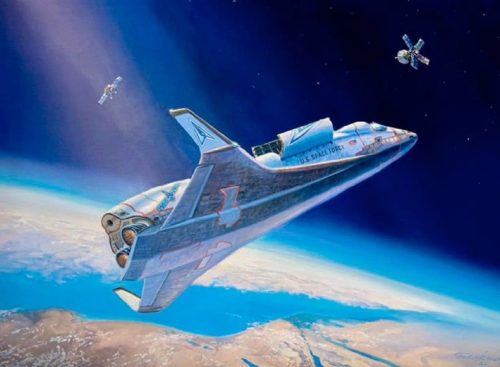
- This course provides a coherent, unified framework for dynamical modeling, analysis, and control of attitude and orbital motions of a variety of space vehicles, including 3-axis stabilized GEO communications satellites, the International Space Station, the Hubble Space Telescope, agile imaging satellites equipped with control moment gyros, large solar sails, very large space solar power satellites (SSPS), and trans-atmospheric vehicles (aka spaceplanes) such as X-37B.
- This course also discusses a variety of emerging advanced space vehicles (being developed for operation in LEO), including orbital data centers, solar power-beaming satellites, space-based solar mirrors/reflectors, space-based interceptors, space-control weapons, and VLEO (Very Low Earth Orbit) spacecraft.
- It also discusses attitude stabilization and orbital guidance problems for advanced LEO spacecraft performing autonomous orbital intercept, rendezvous, and proximity operations.
- All students will receive an AIAA Certificate of Completion upon completing the course.
OVERVIEW
This short course presents a coherent, unified framework for mathematical modeling, analysis, and control of space vehicle attitude and orbital motion. Spacecraft dynamics and control problems of practical interest are treated from a dynamical systems point of view. This course is based on the AIAA textbook “Space Vehicle Dynamics and Control (2nd edition, 2008),” which contains over 260 pages of additional material on the dynamic modeling and control of complex spacecraft such as agile imaging satellites equipped with CMGs, large solar sails, and very large space solar power satellites. This course will discuss a variety of advanced space vehicles being developed for operation in LEO, including orbital data centers, solar power-beaming satellites, space-based solar mirrors/reflectors, space-based interceptors, space-control weapons, and VLEO spacecraft. It will also discuss attitude stabilization and orbital guidance problems for advanced LEO spacecraft performing autonomous orbital intercept, rendezvous, and proximity operations.
KEY COURSE TOPICS
- Fundamentals of 3-D rotational kinematics and rigid-body dynamics
- Practical examples of spacecraft attitude and orbit control design
- Dynamical modeling and attitude control design for the International Space Station
- Precision pointing control redesign for the Hubble Space Telescope
- Singularity analysis and robust steering logic design for control moment gyros
- Rapid retargeting control of agile imaging satellites equipped with CMGs
- Attitude and orbit control of very large space solar power satellites (SSPS) in GEO
- AOCS design for large solar sails
- Recent advances in complex space vehicles being developed for operation in LEO, such as orbital data centers, solar power-beaming satellites, space-based solar mirrors/reflectors, space-based interceptors, space-control weapons, and VLEO spacecraft
- Autonomous orbital intercept, rendezvous, and proximity operations, employing Lambert, PN, and generalized-ZEM/ZEV guidance algorithms, as applied to space-based interceptors and space-control weapons.
- Attitude and orbit control problems for trans-atmospheric vehicles such as X-37B
AUDIENCE
Dynamics and control analysts, AOCS engineers, space systems engineers, space mission designers, and technical managers involved with preliminary or detailed design of advanced space vehicles will find this course useful. GN&C engineers/researchers and graduate students will also benefit from this course, which emphasizes practical dynamics and control problems for complex space vehicles.
COURSE FEES (Sign-In To Register)
– AIAA Member Price: $995 USD
– AIAA Student Member Price: $495 USD
– Non-Member Price: $1,195 USD
CLASSROOM HOURS / CEUs: 16 classroom hours / 1.6 CEU/PDH
CANCELLATION POLICY: A refund less a $50.00 cancellation fee will be assessed for all cancellations made in writing at least 5 days before the start of the event. After that time, no refunds will be provided.
CONTACT: Please contact Lisa Le or Customer Service if you have any questions about the course or group discounts.
1. Rotational Kinematics
- Course Outline
- Direction Cosine Matrix vs. Rotation Matrix
- Euler Angles and Euler’s Eigenaxis Rotation
- Quaternions
- Rotational Kinematic Differential Equations
2. Rigid-Body Dynamics
- Angular Momentum of a Rigid Body
- Inertia Matrix and Inertia Dyadic
- Euler’s Rotational Equations of Motion
- Stability of Torque-Free Motion about the Principal Axes
- Rigid Body in a Circular Orbit
3. Spacecraft Attitude Control Analysis and Design
- Quaternion-Feedback Reorientation Maneuvers
- Large-Angle Slew Maneuvers Under Actuator/Sensor Constraints
- Dynamics and Control of the International Space Station
- TVC Design for a Spacecraft with Propellant Sloshing
- ACS Design for 3-axis Stabilized GEO Communications Satellites
- Nonlinear On-Off PWPF Modulation of Reaction Control Systems
- Precision Pointing Control Redesign for the Hubble Space Telescope
4. Agile Imaging Satellites Equipped with CMGs
- Introduction to Agile Imaging Satellites
- Single-Gimbal CMG Systems
- CMG Singularities and Singular Surfaces
- Singularity Avoidance/Escape Logic
- Rapid Multitarget Acquisition & Pointing Control
5. Solar Sail Dynamics and Control
- Solar Sail Attitude Control Issues
- Solar-Sail Flight Validation Mission in LEO
- Attitude Control of Solar Sails Using Reaction Wheels
- Introduction to the Asteroid Deflection Problem
- Solar Sail Mission Concept for Asteroid Deflection
6. Attitude and Orbit Control of a Very Large SSPS in GEO
- Introduction to SSPS Concepts
- Perturbed Orbital Dynamics in GEO
- Attitude Stabilization of an Inertially Oriented Spacecraft in GEO
- Attitude and Orbit Control Simulation
7. Recent Emerging Trends for Advanced LEO Spacecraft
- Introduction to Sun-Synchronous Orbit
- Orbital Data Centers
- Space-Based Solar Mirrors/Reflectors
- Solar Power-Beaming Satellites
- Space-Based Interceptors
- Space-Control Weapons
- VLEO (Very Low Earth Orbit) Spacecraft
- Trans-Atmospheric Vehicles (e.g., X-37B)
8. Orbital Intercept and Rendezvous Maneuvers
- CWH Equations of Relative Motion
- Orbital Intercept, Rendezvous, and Proximity Operations
- Lambert Guidance
- PN Guidance and its Variants
- Generalized-ZEM/ZEV Feedback Guidance
- Illustrative Case Studies
COURSE DELIVERY AND MATERIALS
- The course lectures will be delivered via Zoom. Access to the Zoom classroom will be provided to registrants near the course start date.
- All sessions will be available on-demand within 1-2 days of the lecture. Once available, you can stream the replay video anytime, 24/7.
- All slides will be available for download after each lecture. No part of these materials may be reproduced, distributed, or transmitted, unless for course participants. All rights reserved.
- Between lectures during the course, the instructor(s) will be available via email for technical questions and comments.

Bong Wie is Professor Emeritus of Aerospace Engineering at Iowa State University. He holds a B.S. in aerospace engineering from Seoul National University and an M.S. and Ph.D. in aeronautics and astronautics from Stanford University. In 2006, he received AIAA’s Mechanics and Control of Flight Award for his innovative research on advanced control of complex spacecraft such as solar sails, large flexible structures, and agile imaging satellites equipped with control moment gyros. He is the author of two AIAA textbooks: “Space Vehicle Dynamics and Control(2nd edition, 2008)” and “Space Vehicle Guidance, Control, and Astrodynamics (2015).” He has published 219 technical papers, including 82 journal articles, and he has an h-index of 48 in Google Scholar.He holds three U.S. patents on singularity-avoidance steering logic of control moment gyros. In the early 2010s, he was actively involved in guidance, control, and astrodynamics research for deflecting or disrupting hazardous near-Earth objects (NEOs). From 2011 to 2014, he was an NIAC (NASA Advanced Innovative Concepts) Fellow developing an innovative solution to NASA’s NEO impact-threat mitigation grand challenge and its flight-validation mission design. His NIAC study effort has resulted in two distinct concepts for effectively disrupting hazardous asteroids with short warning time. They are referred to as a hypervelocity asteroid intercept vehicle (HAIV) and a multiple kinetic-energy impactor vehicle (MKIV). During the late 2010s, his research focused on further developing the ZEM/ZEV feedback guidance strategies for robotic/human Mars-powered descent & landing with hazard avoidance and precision targeting. Since 2020, he has been investigating the guidance and control problems of hypersonic entry vehicles and high-performance missiles with precision impact time and angle control (ITAC) constraints. He was Associate Editor of AIAA Journal of Guidance, Control, and Dynamics (1986-1991) and AAS Journal of the Astronautical Sciences (1993-1995). From 2018 to 2023, he was co-Editor of Astrodynamics, an international journal established in 2018. A variety of on-demand short courses by Dr. Wie are available from AIAA. They are:
- Advanced Flight Dynamics and Control of Aircraft, Missiles, and Hypersonic Vehicles
- A Practical Approach to Flight Dynamics and Control of Aircraft, Missiles, and Hypersonic Vehicles
- Flight Vehicle Guidance, Navigation, and Control Systems (GNC): Analysis and Design
- Fundamentals of Astrodynamics for Space Missile Defense
- Fundamentals of Classical Astrodynamics and Applications
- Fundamentals of Space Vehicle Guidance, Control, and Astrodynamics
- Guidance and Control of Hypersonic Vehicles
- Guidance and Control of Next-Gen Missiles and Hypersonic Vehicles
AIAA Training Links
-
For information, group discounts,
and private course pricing, contact:
Lisa Le, Education Specialist ([email protected])