
Spacecraft Design, Development, and Operations (2-Day Course at SciTech Forum 2027) 9 January 2027 - 10 January 2027 Hyatt Regency Orlando, Orlando, Florida Daily from 8 a.m.–5 p.m.
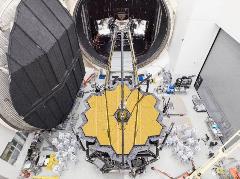
Instructor: Don Edberg, Professor of Aerospace Engineering at Cal Poly Pomona & Adjunct Lecturer, Astronautical Engineering, University of Southern California (USC), Former Boeing Technical Fellow
- 8 a.m.–5 p.m. on Saturday, 9 January and Sunday, 10 January 2027, at the Hyatt Regency Orlando before the AIAA SciTech Forum 2027
- This comprehensive face-to-face course focuses on the application of numerous engineering disciplines to the design and analysis of spacecraft.
- The course includes many illustrative application examples of existing or heritage hardware to enhance the learning experience.
- All students will receive an AIAA Certificate of Completion at the end of the course.
OVERVIEW
This two-day course presents a condensed version of the instructor’s 36-hour short course, arguably THE most comprehensive short course on spacecraft design. Attendees will be exposed to an extensive and coherent treatment of the fundamental principles involved with the interdisciplinary design of spacecraft. For note taking, this course includes an electronic copy of the author’s 1,900+ slides for the unabridged short course, “Spacecraft Design, Development, and Operation — Class Notes,” ISBN 9798844081002. Attendees will be presented the following topics:
Day 1:
- History of spacecraft, current spacecraft, launch vehicles & launch sites.
- Introduction to orbits, orbital mechanics. Orbit types, special orbits (geostationary, Molniya, sun-synchronous).
- Spacecraft Design Drivers 1: Pre-launch & launch environment, transportation loads; launch / ascent trajectories & event definitions
- Spacecraft Design Drivers 2: Space environment & how it affects spacecraft. Gravitational perturbations, station-keeping. Space radiation (cosmic rays, solar flares, coronal mass ejections). Single-event upsets; static discharge; atomic oxygen; orbital debris; outgassing.
- Spacecraft Mission & Payload Development: spacecraft missions & types; design-development-flight cycle; direct- & remote-sensing payloads; payload design & selection. Spacecraft design drivers; mass & power estimation & allocations; margins; volume considerations, launch vehicle interface.
- Structures, mechanisms, structural analysis. The general arrangement, Configuration Checklist. Deployment mechanisms, pointing & articulation; restraints & launch locks; separation systems. Design load factors, dynamics, acoustics, random vibrations; the loads cycle; coupled loads analysis.
Day 2:
- Propulsion systems: ∆v & the rocket equation; mass ratios, specific impulse. Solid, liquid mono- and bipropellant, electric propulsion. Mass & volume estimation, tank sizing.
- Spacecraft attitude sensing, dynamics and control: a survey of stabilization, sensing, & control schemes: three-axis, gravity-gradient, spinners. Thrusters; reaction/momentum wheels, CMGs, magnetic torquers. Pointing accuracy.
- Thermal control: requirements; energy balance; passive thermal control including coatings & insulation. Thermal Analysis: radiation; view factors. Simplified whole-spacecraft analysis; transient analysis.
- Power systems: definitions. Energy sources. Sizing & life estimation for solar arrays & batteries. Electrical power system sizing & mass estimation. Operational modes. Cabling!
- Telecommunications: basics, definitions; the Link equation & data link budget; antennas & performance; ranging; ground stations & deep space network.
- Command & data handling: basics; data types, encoding, & commutation; telemetry; functions of computers & onboard storage. Software.
- Testing, failures, lessons learned: why spacecraft fail; the Five Mistakes to Look For, selected failure case studies, redundancy.
AUDIENCE
This course is intended for engineers of all types – systems, controls, structures, propulsion, reliability, manufacturing, as well as researchers, mission designers, technical managers, and both undergraduate and graduate students, who want to enhance their understanding of the fundamental principles of the design and operation of spacecraft. This introductory course focuses on the basic physical concepts and mathematics utilized in the preliminary design and analysis of space vehicles including many practical aspects.
REGISTRATION FEES (Register Here)
AIAA Member: $745 USD
Student: $395 USD
Non-Member: $945 USD
Register for the course only or as an add-on to Conference registrations. Course participation is in-person only.
CONTACT
Please contact Lisa Le, Education Manager, for questions about the course or group discounts (for 5+ participants).
Soft copy course notes will be made available 3-5 days prior to the course event. You will receive an email with detailed instructions on how to access your course notes. Since these notes will not be distributed on site, AIAA and your course instructor highly recommend that you bring your computer with the course notes already downloaded.
AIAA Associate Fellow and former Boeing Technical Fellow Don Edberg has been teaching aerospace vehicle design since 2001 at California State Polytechnic University, Pomona (CPP); he also holds part-time positions at USC and UCLA. He is co-author of the 1st and 2nd editions of the Design of Rockets and Space Launch Vehicles textbook published in 2020 and 2022. The 1st edition won the 2021 AIAA Summerfield Award for the best textbook published in the last five years. CPP student design teams he has advised have placed 1st, 2nd, or 3rd over 20 times in AIAA student design competitions in Missile Systems, Space Transportation Systems, Spacecraft Design, and Aircraft Design. At CPP, he has received the California State University Wang Family Excellence in Teaching Award, the Engineers’ Council Distinguished Engineering Educator Achievement Award, the Provost’s Excellence in Teaching award, the College of Engineering’s Outstanding Teaching and Outstanding Advisor awards, and the Northrop Grumman Faculty Teaching award. He has presented short courses in launch vehicle design and spacecraft design to several NASA centers, US Air Force, National U.S. Transportation Safety Board, Civil Aeronautics Authority (U.K.), Northrop Grumman, Boeing Satellite Systems, and several smaller aerospace businesses. He was a Technical Fellow at Boeing and McDonnell Douglas, where he authored or co-authored ten US patents and received the Silver Eagle award from McDonnell Douglas as Chief Engineer on the STABLE active microgravity vibration isolation system that successfully flew on STS-73 shuttle mission. He has also worked at Convair, AeroVironment (where he was the chief engineer on the electric-powered, back-packable FQM-151 Pointer UAV), JPL, NASA Ames, NASA MSFC, and US Air Force Research Lab. He received a B.A. in Applied Mechanics from the University of California, San Diego, and M.S. and Ph.D. degrees in Aeronautical and Astronautical Sciences from Stanford. He is an Eminent Engineer in Tau Beta Pi and was Engineer of the Year of the AIAA Orange County, CA section.
AIAA Training Links
-
For information, group discounts,
and private course pricing, contact:
Lisa Le, Education Specialist ([email protected])