Author: aiaaorg

AIAA Announces 2024 Region VII Student Conference Winners

FOR IMMEDIATE RELEASE

December 5, 2024 – Reston, Va. – The American Institute of Aeronautics and Astronautics (AIAA) is pleased to announce the winners of the 2024 Region VII Student Conference, held 25–26 November at Swinburne University of Technology, Melbourne, Australia, and online.

Attendees presented 46 papers and represented 20 universities. The conference had a strong international presence with students from 11 countries including Australia, Bangladesh, China, India, Israel, Japan, New Zealand, Nigeria, South Korea, Turkey, the United Kingdom, and the United States. Papers presented at the conference will be published by AIAA and available on Aerospace Research Center (ARC) in January 2025.

“We are thrilled to see our student members in action during the Region VII Student Conference. It’s vital for university students to gain practical experience presenting their research findings and receiving valuable feedback from aerospace professionals,” said AIAA CEO Clay Mowry. “We look forward to seeing these students shape the future of aerospace!”

For the undergraduate, masters, and undergraduate team categories, first-place winners received a cash prize of $500 and an invitation to participate in the International Student Conference during the 2025 AIAA SciTech Forum, 6–10 January, Orlando, Florida. Second-place winners received a cash prize of $300 and third-place received $250. The high school students received $100 for first place, $75 for second place, and $50 for third place.

AIAA student conferences give students an opportunity to present and publish their work in front or their peers and members of the industry. The AIAA Foundation sponsors student conferences. All of the AIAA seven regions host a conference each year. The Regional Student Conferences for Regions I-VI will take place in spring 2025.

2024 AIAA Region VII Student Conference Paper Winners

High School Category

  • 1st Place: Anay Ashwin, Haileybury College, Australia, “Venna Regolith Sample Acquisition Device – A Novel Proof of Concept for Lunar Rovers”
  • 2nd Place: Henri Kim, Seoul Foreign School, South Korea, “Effects of Boeing 767 Winglet Types on Flight Efficiency: A Computational Fluid Dynamics Approach”
  • 3rd Place: Cheney Wu and Nate Osikowicz, Cranbook Schools, United States, “An Airfoil Tensegrity Design: Concept, Algorithm Development, and Programming Implementation”

Undergraduate Category

  • 1st Place: Said Mouhaiche and Anne Bettens, University of Sydney, Australia, “Lazily Reformulating Design Optimization as a Classification Problem”
  • 2nd Place: Leon Phillips and Daniel Edgington-Mitchell, Monash University, Australia, “Investigating the Influence of Separate Propellant Streams in Rotating-Detonation Engine Injectors”
  • 3rd Place: Thomas Finley and Daniel Edgington-Mitchell, Monash University, Australia, “Modelling and Schlieren Analysis of Shock Wave Reflections Over a Turbine Cascade”

Masters Category

  • 1st Place: Zhen Hong Chai and Tulasi Parashar, Victoria University of Wellington, New Zealand, “Performance Insights into Applied-Field Magnetoplasmadynamic Thrusters with the Princeton AF-MPD Database”
  • 2nd Place: Shiva Jogu and Karan Das, Amity University, India, “Mitigating Shock Wave Challenges through Secondary Recirculation in Mixed Compression Supersonic Air Intake”
  • 3rd Place: Serika Yokoyama and Kikuko Miyata, Meijo University, Japan, “Discussion on Autonomous Sensor Data Selection Method for Planetary Rover Localization and its Verification”

Team Category

  • 1st Place: Hardit Saini, Milcha Masresha, Andrews Agyei, Raima Rahman, Omar Abdi, Aamna Abbasi, Imad Foughali, and Eldad Avital, Queen Mary University of London, United Kingdom, “Small Horizontal Axis Wind Turbine Aerodynamic-Structural Design for Improved Performance Using Gurney Flaps”
  • 2nd Place: Asif Hasnayeen, Md Redwan Iqbal, Farhan Syeed, Morsalin Sheikh, and Gp Capt A N Somanna, Military Institute of Science and Technology, Bangladesh, “Construction of a Small Fixed Wing UAV for Surveillance”
  • 3rd Place: Lisa Dsouza, Adithya Vijay, Pranay Agrawal, Ullas AJ, Katkam Naveen, Anurag Kumar Jha, and NK Gahlot, Amity University, India, “Numerical Analysis of Pintle Nozzle Geometry Optimization for Improved Thrust in Rocket Engines”

Media Contact: Rebecca Gray, [email protected], 804-397-5270 cell

About AIAA
The American Institute of Aeronautics and Astronautics (AIAA) is the world’s largest aerospace technical society. With nearly 30,000 individual members from 91 countries, and 100 corporate members, AIAA brings together industry, academia, and government to advance engineering and science in aviation, space, and defense. For more information, visit aiaa.org, or follow AIAA on X/TwitterFacebookLinkedIn, and Instagram.

Joby Receives FAA Approval to Launch Air Taxi Flight Academy

Flying Magazine reports Joby on Tuesday “said it received Part 141 flight academy certification from the FAA, laying the groundwork to begin training qualified aviators at its Joby Aviation Academy in Watsonville, California, a short air taxi flight away from its headquarters in Santa Cruz. The company intends to offer private pilot, instrument rating, commercial pilot, and certified flight instructor courses, beginning at entry level. Graduates could go on to fly air taxis for Joby or a competitor.”
Full Story (Flying Magazine)

India to Launch European Proba-3 Satellites on Dec. 5 to Create Artificial Eclipses in Space

SPACE reports, “A European mission that will use two satellites to create artificial eclipses in Earth orbit will launch early Thursday morning (Dec. 5) … The ESA’s Proba-3 formation-flying mission is scheduled to lift off atop an Indian Polar Satellite Launch Vehicle (PSLV) from Satish Dhawan Space Center on Thursday at 5:42 a.m. EST (1042 GMT; 4:42 p.m. local time in India).”
Full Story (SPACE)

Flight Rate of Falcon 9 is 30 Times Higher Than Shuttle at 1/100th the Cost

Ars Technica reports, “SpaceX recently hit some notable milestones with its workhorse Falcon 9 rocket, and even in the full context of history, the performance of the vehicle is pretty incredible. Last Tuesday, the company launched a batch of Starlink v2-mini satellites from Kennedy Space Center in Florida on a Falcon 9 rocket, marking the 400th successful mission by the Falcon 9 rocket.”
Full Story (Ars Technica)

AIAA Announces 2025 Sustained Service Awards Winners

FOR IMMEDIATE RELEASE

December 3, 2024 – Reston, Va. – The American Institute of Aeronautics and Astronautics (AIAA) is pleased to announce the winners of the 2025 Sustained Service Awards. The award recognizes sustained, significant service and contributions to AIAA by members of the Institute.

“Volunteers are the driving force of the Institute – we couldn’t achieve our mission without the ingenuity, hands-on collaboration, and selfless service of our members,” said AIAA CEO Clay Mowry. “This year’s Sustained Service honorees exemplify servant leadership. We are grateful for their invaluable contributions to our community.”

The Sustained Service Award winners are AIAA members in good standing who have shown continuing dedication to the interests of the Institute by making significant and sustained contributions over a period of time, typically 10 years or more. Active participation and service at the local section/regional level, and/or the national level is a potential discriminator in the evaluation of candidates.

The 2025 Sustained Service Awards winners are:

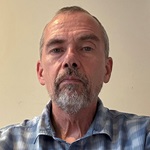
  • Steven X. BauerSteven X. Bauer, NASA Langley Research Center
    For sustained leadership, service, and contributions to the Hampton Roads Section, Region I, and AIAA National.Bauer became an AIAA student member in his freshman year of college, 1981. He served as student branch officer and has held many positions in the Hampton Roads Section, including section chair. He was the Region I Director for six years. Bauer has worked at NASA Langley Research Center since 1983 and is retiring in December 2024.
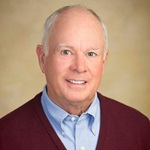
  • Gene R. DionneGene R. Dionne, Lockheed Martin Corporation (retired)
    For his passionate, unmatched support of AIAA and the Rocky Mountain Section through volunteering across all committees.Dionne spent 26 years in the U.S. Air Force, mostly in space systems acquisition and technology development. He was intimate in the manufacturing, integration, test and launch/on-orbit operations of ~30 satellites, which all exceeded their mean mission durations. Dionne spent 22 years at Lockheed Martin Space in systems engineering and program management. He was selected as AIAA Fellow in 2014, and served on the Fellows Selection Committee for three years. He was AIAA Rocky Mountain Section Chair for two years and continued to assist on the section’s executive council for another 20 years as the “Fellow-at-large.”
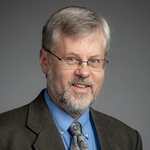
  • Trevor S. ElliottTrevor S. Elliott, University of Tennessee at Chattanooga
    For prolific, dedicated, and outstanding service to AIAA forums, technical committees, student teams, outreach groups, rocketry organizations, and aerospace communities leading to numerous student-led recognitions.Elliott is a UC Foundation Associate Professor of Mechanical Engineering at the University of Tennessee at Chattanooga. He serves as primary Faculty Advisor for the UTC Racing Mocs, SAE Chapter, and the UTC Rocket Mocs, roles where he has guided teams that have won national placement in collegiate competitions and set a world record in amateur rocketry. He is an active member of the AIAA Solid Rockets Technical Committee and Hybrid Rockets Technical Committee chair and technical discipline chair.
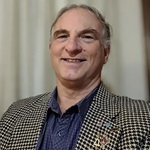
  • David C. FlemingDavid C. Fleming, University of Michigan
    For sustained service to the Cape Canaveral Section and Florida Institute of Technology Student Branch through continued participation, council leadership, and unwavering dedication to AIAA’s mission.Fleming earned a B.S. degree in Aeronautics and Astronautics from MIT and M.S. and Ph.D. degrees from the University of Maryland, College Park. He served on the faculty of the Florida Institute of Technology for 28 years, including a three-year term as department head. Fleming was faculty adviser of the AIAA Florida Tech Student Branch for over 25 years. Currently, he serves as Lecturer at the University of Michigan.
  • Aaron L. Harcrow Jr.Aaron L. Harcrow Jr., No Box Innovations
    For over 30 years of outstanding and sustained service to the Atlanta Section and Region II, contributing to the success of the Section.Harcrow joined AIAA as a student member in 1981 and regards his 42-plus-years membership as a learning experience in the many ways to volunteer for AIAA, for which there appears to be no end in sight! In addition to volunteering for AIAA, Harcrow has developed multidisciplinary skills in aerospace engineering, systems engineering, project management, innovative design, product development, CAD/CAM/CNC, computer programming, and teaching undergraduate engineering courses. He holds one USPTO patent.
  • Christopher J. PestakChristopher J. Pestak, HX5, LLC
    For dedicated service to AIAA and the field of aerospace for over 40 years, and holding significant leadership positions within AIAA.Pestak is Program Manager of the Glenn Engineering and Research Support (GEARS) contract for HX5, LLC. He manages 350 staff supporting NASA Glenn Research Center performing wide-ranging work in space and aeronautics. Spaceflight systems have been a primary focus of his 42-year career. Pestak holds a B.S. in Electrical Engineering and an M.S. in Industrial Engineering, both from Cleveland State University. He is an AIAA Fellow.
  • Robert W. PitzRobert W. Pitz, Vanderbilt University
    For over three decades of distinguished and continuous service to AIAA, especially in national leadership roles involving publication, honors, ethics, and technical committee activities.Pitz has mechanical engineering degrees from Purdue University (B.S.) and UC Berkeley (M.S. and Ph.D.). After five years at GE Research, he joined Vanderbilt University where he is a Professor in the Department of Mechanical Engineering and served as Department Chair (1998–2017). He won the NSF Presidential Young Investigator Award (1987) and AIAA Best Paper Award in Propellants & Combustion (1996). Pitz is an AIAA Fellow. He also is a Fellow of ASME and the Combustion Institute.

Media Contact: Rebecca Gray, [email protected], 804-397-5270 cell

About AIAA
The American Institute of Aeronautics and Astronautics (AIAA) is the world’s largest aerospace technical society. With nearly 30,000 individual members from 91 countries, and 100 corporate members, AIAA brings together industry, academia, and government to advance engineering and science in aviation, space, and defense. For more information, visit aiaa.org, and follow AIAA on X/TwitterFacebookLinkedIn, and Instagram.

Early-bird Registration for AIAA SciTech Forum Ends 16 December

AIAA News

The 2025 forum will feature approximately 3,000 technical presentations spanning 60+ topics, including aerodynamic measurement technology, applied aerodynamics, fluid dynamics, guidance, navigation, and control, hypersonics, intelligent systems, propellants and combustions, spaceflight mechanics, and more. Professionals and students can save up to 25%.

Learn More 

ULA Preparing New Vulcan Centaur Rocket for 1st Space Force Mission

SPACE reports United Launch Alliance’s Vulcan Centaur rocket is set for its first U.S. Space Force mission, promising cost-effective launches and advanced technology.  “In late 2024 or early 2025, United Launch Alliance (ULA)’s Vulcan Centaur rocket will fly its first of more than two dozen U.S. Space Force missions allocated under a national security space launch contract.”
Full Story (SPACE)