Most organizations strive for strategic alignment, but in reality, strategy lives in slide decks, plans in spreadsheets, and risks in separate systems. By the time information reaches executives, it is often outdated, turning alignment into a periodic exercise rather than an ongoing capability.
In aerospace and defense programs, where coordination across engineering, operations, cost, schedule, and risk is critical, this disconnect makes it difficult to maintain a clear line of sight from strategic priorities to execution.
In this session, we will explore how organizations can move from misalignment to decisions guided by a true golden thread, using unified data to provide ongoing decision guidance from strategy through initiatives, delivery, risks, and outcomes. You will learn how to:
Connect familiar data sources into a unified view without rebuilding your planning approach
Reveal how changes ripple across plans in real time
Clarify trade-offs by exposing competing priorities and resource constraints
Shift leadership conversations from static reporting to dynamic decision-making
Speaker:
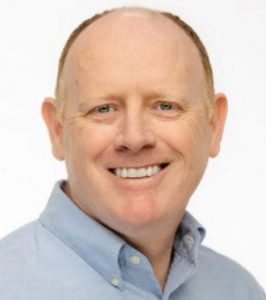
Jason Lefever
Director, Solutions Engineering
Lumivero
This webinar is free of charge and is open to the public. Registered attendees will receive a post-event email to access the on-demand recording.
The last two years have witnessed a surge in the acceleration in our ability to generate, curate, and use data for large-scale training of modern physics-AI surrogates. Additionally, physics-AI architectures are rapidly improving in their ability to accurately represent complex, industrially relevant geometries and associated physics. Extrapolating into the future, we must ask ourselves the question: “What does this mean for the future of aerospace engineering?”
During this webinar, Professor Alonso will describe the evolving landscape of artificial intelligence and machine learning methods as they relate to various applications in aerospace engineering, including design space exploration, optimization, uncertainty quantification, and data assimilation for digital twins. For example, Luminary Cloud has developed SHIFT-CCA, a physics-AI model for external aerodynamics (including the flowpath for the propulsion system) for the U.S. Air Force’s Collaborative Combat Aircraft. Using SHIFT-CCA, Professor Alonso will discuss how such models can be used and the potential of Luminary Cloud’s SHIFT models for aerospace applications.
Speaker:
Juan Alonso
CTO and Cofounder, Luminary Cloud; Chair, Department of Aeronautics and Astronautics, Stanford University
This webinar is free of charge and is open to the public. Registered attendees will receive a post-event email to access the on-demand recording.
Honorary Fellow is the highest distinction conferred by AIAA, and recognizes preeminent individuals who have had long and highly contributory careers in aerospace and who embody the highest possible standards in aeronautics and astronautics.
Hitoshi Kuninaka, Institute of Space and Astronautical Science / Japan Aerospace Exploration Agency (JAXA) John S. Langford III, Electra.aero Azad M. Madni, University of Southern California Christopher Scolese, National Reconnaissance Office
AIAA confers the distinction of Fellow upon individuals in recognition of their notable and valuable contributions to the arts, sciences or technology of aeronautics and astronautics.
Igor Adamovich, Ohio State University Stephen Blanchette Jr., The Aerospace Corporation Ruxandra M. Botez, École de technologie supérieure (ÉTS) Robert D. Cabana, NASA Headquarters (retired) John R. Chawner, Pointwise (retired) Charles J. Cross, U.S. Air Force Research Laboratory Misty Davies, NASA Ames Research Center Srinath Ekkad, North Carolina State University Edward H. Gerding, The Boeing Company John Mace Grunsfeld, Endless Frontier Associates LLC Richard Hofer, NASA Jet Propulsion Laboratory, California Institute of Technology Yiguang Ju, Princeton University Joseph Majdalani, Auburn University Richard Mange, Lockheed Martin Corporation J.D. McFarlan III, Lockheed Martin Corporation Mehran Mesbahi, University of Washington Clayton Mowry, Voyager Space / International Astronautical Federation Alison Nordt, Lockheed Martin Space Daniella Raveh, Technion – IIT Gregory W. Reich, U.S. Air Force Research Laboratory Katherine Rink, MIT Lincoln Laboratory Donna Cowell Senft, Air Force Global Strike Command Jeffrey P. Slotnick, The Boeing Company S. Alan Stern, Southwest Research Institute John Tylko, Aurora Flight Sciences, A Boeing Company Craig Wanke, The MITRE Corporation Annalisa Weigel, Fairmont Consulting Group Lesley A. Weitz, The MITRE Corporation
Please contact Patricia Carr, at [email protected], with any questions.
All AIAA Fellows and Honorary Fellows are cordially invited to the 2022 AIAA Fellows Ceremony and Dinner
Please help us celebrate the Class of 2022 AIAA Fellows and Honorary Fellows
Honorary Fellow is the highest distinction conferred by AIAA, and recognizes preeminent individuals who have had long and highly contributory careers in aerospace and who embody the highest possible standards in aeronautics and astronautics.
Roger A. Krone, Leidos Salvatore “Tory” Bruno, United Launch Alliance, LLC Wesley L. Harris, Massachusetts Institute of Technology
AIAA confers the distinction of Fellow upon individuals in recognition of their notable and valuable contributions to the arts, sciences or technology of aeronautics and astronautics.
Maruthi Akella, University of Texas at Austin Erian A. Armanios, University of Texas at Arlington Erik P. Blasch, Air Force Office of Scientific Research Terry J. Burress, Lockheed Martin Corporation J. Russell Carpenter, NASA Goddard Space Flight Center Louis N. Cattafesta III, Florida A&M University – Florida State University William J. Devenport, Virginia Polytechnic Institute and State University John J. Dong, The Boeing Company Thomas L. Frey Jr., Lockheed Martin Aeronautics James W. Gregory, Embry-Riddle Aeronautical University Yanping Guo, Johns Hopkins University Applied Physics Laboratory Marillyn A. Hewson, Lockheed Martin Corporation Felix R. Hoots, The Aerospace Corporation Naveed Hussain, The Boeing Company James K. Kuchar, MIT Lincoln Laboratory Robert M. Lightfoot Jr., Lockheed Martin Space Gen Lester L. Lyles, U.S. Air Force (retired) Anastasios S. Lyrintzis, Embry-Riddle Aeronautical University Sergey O. Macheret, Purdue University Sandra H. Magnus, Georgia Institute of Technology Dimitri J. Mavriplis, University of Wyoming Lawrence M. RobertsonIII, US Air Force Research Laboratory Mary M. Roybal, Raytheon Missiles & Defense Walter H. Rutledge, CENTRA Technology, Inc. (A PAE Company) Amanda R. Simpson, Airbus Americas Mark N. Sirangelo, University of Colorado Grant H. Stokes, MIT Lincoln Laboratory Afzal Suleman, University of Victoria
Please help us celebrate the Class of 2023 AIAA Fellows and Honorary Fellows
Honorary Fellow is the highest distinction conferred by AIAA, and recognizes preeminent individuals who have had long and highly contributory careers in aerospace and who embody the highest possible standards in aeronautics and astronautics.
Mark Drela, Massachusetts Institute of Technology James G. Maser, Aerojet Rocketdyne William A. Sirignano, University of California, Irvine
AIAA confers the distinction of Fellow upon individuals in recognition of their notable and valuable contributions to the arts, sciences or technology of aeronautics and astronautics.
Behçet Açıkmeşe, University of Washington Steven J. Beresh, Sandia National Laboratories Charles F. Bolden Jr., The Charles F. Bolden Group Helmut Ciezki, DLR – German Aerospace Center Capt. Meredith B. Colket III, Combustion Consulting Services, LLC, United Technologies Research Center (retired) Daniel DeLaurentis, Purdue University Christopher D’Souza, NASA Johnson Space Center Ismet Gursul, University of Bath Kauser S. Imtiaz, NASA R. Steven Justice, The Ginn Group Raymond M. Kolonay, Air Force Research Laboratory Rodney Makoske, Lockheed Martin Jill Marlowe, NASA Pamela Melroy, NASA David G. Mitchell, Mitchell Aerospace Research Eugene Morelli, NASA Langley Research Center Scott E. Palo, University of Colorado Boulder Surendra Sharma, NASA Ames Research Center Robert T.-I. Shin, MIT Lincoln Laboratory Rickey J. Shyne, NASA Glenn Research Center Leena Singh, MIT Lincoln Laboratory Michael Sinnett, Boeing Commercial Airplanes Lawrence W. Stephens, Lockheed Martin Missiles and Fire Control Mitchell L.R. Walker II, Georgia Institute of Technology Brian L. Wardle, Massachusetts Institute of Technology Michael E. White, Office of the Under Secretary of Defense for Research and Engineering Michael Winter, Pratt & Whitney Thomas H. Zurbuchen, NASA (retired)
SOLD OUT
Please contact Patricia Carr, at [email protected], with any questions.
Seating Requests If you would like to sit with a newly inducted Fellow, please send your request to Patricia Carr at [email protected] by 1 May 2023.
The University of West Florida AIAA Student Branch invites you to attend a Professional Panel discussion on Wednesday, February 21 from 5:00 to 7:30 p.m. Central Standard Time. Experienced professionals will be encouraged to share their experiences: things they like about their careers, things they don’t like, things they would have done differently, things they are glad they did in college that have helped their careers, advice they would give their younger selves, and so on. If you are in the Pensacola area, you can attend in person at the University of West Florida campus; if you are farther away, you can dial in through a Zoom link.
Please contact Student Branch Chair Julia Kondrat’yev if you are interested in participating (as a student or experienced professional).
Join the University of Texas – Arlington (UTA) AIAA Student Branch for special guest speaker, Kenneth Katz, Kenneth Katz – author, flight test engineer, and B-1 expert.
This is an in-person event at the University of Texas – Arlington. Contact the UTA Student Branch with questions.
Georgia Tech’s AIAA Student Branch is excited to announce their annual Lockheed Martin Case Study event. This is one of GT AIAA’s premier events. GT AIAA received the Region II Outstanding Student Branch Award in 2022 because of the Lockheed Martin Case Study.
Participants will work in teams to produce a solution to a fun real-world aerospace-related problem given data, graphs, etc., and present our answer to Lockheed Martin. There will be prizes for the top team, potential Lockheed Martin prizes for everyone, and the ability to network with Lockheed Martin engineers.
This event is open to everyone, including first-years and all majors, as it does not require any AE course knowledge. Contact Student Branch Chair, Ashish Cavale, with questions.
Join the UCCS AIAA Student Branch for special guest speaker, Astronaut Ron Sega, Emeritus Director of Systems Engineering, and Emeritus Professor of Systems Engineering, Colorado State University.
This is an in-person event at UCCS. Please RSVP by February 20, 2024.