
Event Tag: defense science and technology

Fall 2025 AIAA Hypersonics Webinar (AIAA Member Exclusive)

 On-Demand Replay
Featuring Francesco Panerai

AIAA Members: make sure you are signed in to the site with your member credentials to be able to access the replay.

This event is offered exclusively to AIAA members. Want to learn more about the benefits of AIAA membership?

Access Replay

Join us for the Fall 2025 AIAA Hypersonics Webinar, presented by the HyTASP TC with featured speaker Francesco Panerai. This webinar will provide insights into carbon ablation mechanisms as Panerai discusses two recent experiments—high-speed X-ray imaging and plasma wind tunnel testing—that reveal how microstructure, oxygen interactions, and surface chemistry influence material erosion, mass loss, and failure mechanisms. Attendees will gain a deeper understanding of the complex processes governing high-temperature ablation in carbon-based materials.

Speaker
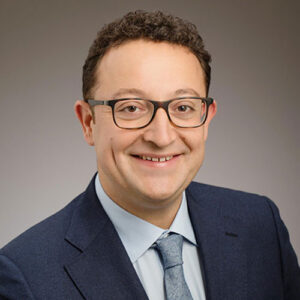
Francesco PaneraiFrancesco Panerai is an Assistant Professor in Aerospace Engineering at the University of Illinois at Urbana-Champaign. His research covers advanced materials for extreme environments, transport in porous media, and hypersonic aerothermodynamics. Prior to Illinois, he was a research scientist at NASA Ames Research Center. He received his PhD and Research Master in Aeronautics and Aerospace from von Karman Institute for Fluid Dynamics (Belgium) and a M.Sc. and a B.Sc. in Mechanical Engineering from the University of Perugia (Italy). He is a recipient of the 2019 Air Force Young Investigator Award and is an AIAA Associate Fellow. He is one of the founding members of the Center for Hypersonics and Entry Systems Studies (CHESS) at Illinois.

Building Your Wealth Webinar Series (AIAA Member Exclusive)

 On-Demand Recordings Available

AIAA Members: make sure you are signed in to the site with your member credentials to be able to access the on-demand replay.

This event is offered exclusively to AIAA members. Want to learn more about the benefits of AIAA membership?

Empower Your Financial Future with Knowledge & Strategy

Financial success doesn’t happen by chance—it’s built through informed decisions, strategic planning, and the right tools. The Building Your Wealth Series is designed to equip you with the knowledge and confidence to take control of your financial future, no matter where you are in your wealth-building journey.

Access Replays 

This series covers key financial topics, from mastering money management and maximizing retirement savings to tax-efficient investing and estate planning. Each session is designed to provide actionable insights, helping you navigate complex financial decisions with clarity and confidence.

  • Weekly, 6 May–17 June (7 weeks, 7 sessions, 2 p.m. Eastern Time on Tuesdays)

Whether you’re optimizing your 401(k), leveraging a Health Savings Account (HSA), or planning for your legacy, this series will give you the roadmap to build, protect, and grow your wealth for a lifetime.

WHO SHOULD ATTEND
This series is recommended for AIAA members who are early career professionals, 35 years or younger.

AIAA HyTASP Spring 2025 Webinar (AIAA Member Exclusive)

 On Demand Recording Available

Featuring Special Guest Lecturer, Sarah Popkin, program manager in DARPA’s Tactical Technology Office

AIAA Members: make sure you are signed in to the site with your member credentials to be able to access the on demand replay.

This event is offered exclusively to AIAA members. Want to learn more about the benefits of AIAA membership?

Access Replay

Join us for “AIAA Spring Hypersonics Webinar,” presented by Sarah Popkin, and hosted by the AIAA HyTASP Technical Committee. This webinar sets the stage for understanding DARPA’s role and function in the Department of Defense. To create or prevent strategic surprise, DARPA empowers program managers to develop new, high-risk ideas to advance U.S. technical capability. In space, a new domain called very low Earth orbit (VLEO) is being researched at DARPA across three programs. Those programs and the additional technical and fundamental physics challenges to consider when operating in VLEO will be highlighted

Building a Career on Tackling the Challenges of Hypersonic Flight (Member Exclusive Webinar)

Featuring Special Guest Lecturer, Kevin Bowcutt, principal senior technical fellow and chief scientist of hypersonics at The Boeing Company.

AIAA Members: make sure you are signed in to the site  with your member credentials to be able to register for this event.

This webinar is offered exclusively to AIAA members. Want to learn more about the benefits of AIAA membership?

Join us as we discuss some of the toughest challenges of hypersonic flight, along with efforts by the presenter and his colleagues to tackle these challenges, advance the state of the art of hypersonics, and help enable current hypersonic system capabilities. Despite progress made, many challenges remain before hypersonic flight becomes routine and the full potential of hypersonics is realized, including capabilities such as global travel, reusable vehicles for defense applications, and truly routine and affordable access to space. Further advancement is needed in challenging research domains such as high-temperature materials and viable structures affordably built from those materials; design accounting for the strong interaction of disciplines, such as fluid dynamics, propulsion, thermal, structure, and control; and revolutionary increases in the fidelity and speed of multidisciplinary modeling and simulation required to support advanced vehicle design. These tough challenges provide excellent opportunities for engineers and scientists to advance their careers in hypersonics by helping to develop solutions to the challenges.

HyTASP Technical Committee Hypersonics Webinar (AIAA Member Exclusive)

Featuring Special Guest Lecturer, Andrew Neely, Associate Dean for Research Engagement, UNSW Canberra.

AIAA Members: make sure you are signed in to the site  with your member credentials to be able to access the replay.

This event is offered exclusively to AIAA members. Want to learn more about the benefits of AIAA membership?

The Impact of Fluid-Thermal-Structural Interactions on Hypersonic Vehicle Performance.

Aerothermodynamic heating is an unavoidable consequence of high-speed flight. This presents design challenges for hypersonic vehicles that must be understood and addressed. Even at moderate hypersonic Mach numbers, elevated structural temperatures can distort the airframe of a vehicle, its control surfaces, and propulsion flow paths, degrading performance and reducing life. Multifidelity simulation approaches must be optimized for an appropriate balance between efficiency and accuracy, depending upon their application in the design cycle. Detailed validation cases are required to build confidence in these approaches but these data sets, whether from ground-based or flight experiments continue to be limited. This webinar will explore these challenges and discuss recent experimental approaches developed at UNSW Canberra to build confidence in numerical design tools.

Hypersonics Challenges (Member Exclusive Webinar)

Featuring Special Guest Lecturer, Olivier Chazot, professor and head of the Aeronautics and Aerospace Department at the Von Karman Institute for Fluid Dynamics (VKI).

AIAA Members: make sure you are signed in to the site  with your member credentials to be able to access the replay.

This webinar is offered exclusively to AIAA members. Want to learn more about the benefits of AIAA membership?

Hypersonics offers many advantages for aerospace applications in civil transport, space access, vehicle reusability, or strategic defense. However, a hypersonic regime is extremely demanding for vehicle design and those solutions need to be developed over the severe flight conditions it imposes. Aerothermodynamic phenomena at hypervelocity need to be better understood as they have a significant impact on the hypersonic vehicle design. This is especially true for their optimization, which is hardly addressed since such development is conducted with a conservative, or, more frequently, overconservative approach. While a number of active research programs are still dedicated to those investigations, this prevents us from benefiting from the full potential of hypersonic flight.

To reveal these challenges the presentation will give an overview of hypersonic flows and how they affect aerospace missions. The articulation of testing methodologies in high enthalpy and plasma facilities with high fidelity CFD tools for the study of critical aerothermodynamic phenomena in very high-speed flows will be discussed. Finally, the development from ground testing research to real-flight situation for the design of hypersonic systems and aerospace applications will be presented.

Supporting Hypersonic Flight Through UCAH and Research (Member Exclusive Webinar)

Featuring Special Guest Lecturer, Rodney D. W. Bowersox, Associate Dean for Research and Ford Professor, Aerospace Engineering, Texas A&M University, TEES Executive Director, OUSD JHTO University Consortium for Applied Hypersonics

AIAA Members: make sure you are signed in to the site  with your member credentials to be able to register for the webinar.

This webinar is brought to you by the HyTASP Technical Committee and is offered exclusively to AIAA members. Want to learn more about the benefits of AIAA membership?

Join Dr. Rodney Bowersox as he presents an overview of the OUSD Joint Hypersonics Transition Office sponsored University Consortium for Applied Hypersonics (UCAH). UCAH is envisioned as a collaborative inclusive network of universities, government, industry, and national laboratories collaborating to deliver time-sensitive applied hypersonic research and prototype solutions to the DOD. The consortium membership includes 80 universities, 76 industries, and 8 national labs, FFRDCs and UARCs. A description of the organization structure and engagement opportunities is provided.

Additionally, Bowersox will present an overview of the hypersonic turbulent aerothermochemistry research at Texas A&M University. The focus of the research is to extend modeling to include mechanical, thermal, and chemical non-equilibrium effects. Three examples are discussed: (1) 2-D Mach 5 flow with pressure gradients, (2) 2-D Mach 6 flow with thermal non-equilibrium plasma, and (3) the BOLT II Flight Test in Memory of Mike Holden, which will produce a 3-D Mach 6 boundary layer with pressure gradients, non-iso-thermal walls, and a complex transition process.

AIAA Webinar: A Brief History of Modern Hypersonics, Or How Did We Get Here?

Featuring Special Guest Lecturer, Mark J. Lewis, AIAA Past President and Executive Director of NDIA’s Emerging Technologies Institute (ETI)

AIAA Members: make sure you are signed in to the site  with your member credentials to be able to access the replay.

This event is offered exclusively to AIAA members. Want to learn more about the benefits of AIAA membership?

The development of hypersonic systems is one of the Department of Defense’s top technology modernization priorities, with multiple programs across each of the military services and defense science agencies aimed at delivering practical high-speed systems at scale. Even at the basic research level, the United States has ramped up its efforts in hypersonic flight, engaging directly with universities on an unprecedented scale. Yet, just a few years ago, hypersonics was viewed by many in the defense leadership as a distant capability, with promises that often exceeded delivered performance; programs in the past tended to start and stop with a frustratingly cyclical regularity, negatively impacting industrial capacity and workforce preparation. Now the United States seems to be on a steady consistent course to develop and produce a range of hypersonic systems.

This talk will review developments in recent years that have taken hypersonics from the fringes of defense science and technology to front and center of the mainstream defense research and engineering. This presentation also will review some the key technical and programmatic developments that have led to the current status, including both successes and failures, as well as address the underlying question of why this time it’s different.

HyTASP Technical Committee Hypersonics Webinar (AIAA Member Exclusive)

Featuring Special Guest Lecturer, Ali Gülhan, German Aerospace Center (DLR e.V.)

AIAA Members: make sure you are signed in to the site  with your member credentials to be able to register.

This event is offered exclusively to AIAA members. Want to learn more about the benefits of AIAA membership?

Challenges and of Hypersonic Flight Experiments using Sounding Rockets

In this webinar Ali Gülhan, German Aerospace Center (DLR), will discuss how high-quality validation data that is representative of the real flight environment is necessary for the simulation-based design of flight hardware. Since ground testing facilities have limitations to duplicate the flight environment and numerical tools still have shortcomings in modelling high temperature gas phenomena and gas-surface interaction in such environments, availability of flight data is essential. A complementary validation approach using ground and flight testing for gathering reliable data and validation of numerical tools also is required. Gülhan will explain how simulation of the hot hypersonic flight environment in ground facilities is limited and requires data from further flight experiments. Hypersonic flight experiments by means of multistage sounding rocket configurations are seen as the most cost-efficient options to gather valuable flight data.

HyTASP Webinar Series: Detonation-Based Combustion for High-Speed Propulsion Systems (AIAA Member Exclusive)

AIAA Members: make sure you are signed in to the site  with your member credentials to be able to access the replay.

This event is offered exclusively to AIAA members. Want to learn more about the benefits of AIAA membership?

Detonation-Based Combustion for High-Speed Propulsion Systems

Detonation-based engines have recently gained substantial interest as an alternative to traditional deflagration-based propulsion systems, with the theoretical potential to achieve overall engine performance gains in a more compact volume. Specifically, rotating detonation rocket engines (RDRE’s) can exhibit an increase in chamber pressure, temperature and exhaust gas velocity for a substantially lower injection pressure through a near constant-volume combustion process, compared to constant-pressure devices. If these benefits are successfully realized, this can result in overall engine performance gains (i.e., increased thrust and specific impulse) up to ~10% or a 5X reduction in required injection feed pressures.

During RDRE operation, one or more detonation wave(s) travel around the annulus supersonically by continuously consuming the incoming reactants while producing combustion products that exit the open end of the engine. Experimental work performed at the University of Alabama in Huntsville (UAH) in collaboration with the Air Force Research Laboratory (AFRL) is focused on characterizing engine behavior of a small-scale RDRE for versatile in-space propulsion

Specifically, this work aims to measure engine performance (i.e., thrust and specific impulse), determine the operability range for various flow conditions, and characterize the corresponding operating detonation modes for a 100 N, 25 mm outer diameter detonation-based thruster. Current emphasis is placed on investigating various chamber geometries including both annular and cylindrical configurations, as well as different fuels (i.e., methane, hydrogen); this aims to demonstrate engine behavior sensitives towards the development of engine scaling approaches for determination of the minimum engine size supporting robust detonation. Additionally, to greater understand how to create and sustain high-strength detonations in compact RDREs, fundamental studies into characteristic timescales and coupling mechanisms for detonation-based engine processes including chemical kinetics, injection, flow and acoustic are required. Using various first principle analyses, these timescales are quantified for a variety of fuels, along with different non-idealities being present (e.g., pre-burning). In total, results from these studies advance the understanding of RDREs for future designs that may lead to performance gains above those achievable from traditional designs.