
- From 29 September–13 October 2026 (2.5 Weeks, 5 Classes, 10 Total Hours)
- Every Tuesday and Thursday at 1–3 p.m. Eastern Time (all sessions will be recorded and available for replay; course notes will be available for download)
- This new unique course is essential for anyone interested in understanding cavity flow and stores separating from weapon bays
- All students will receive an AIAA Certificate of Completion at the end of the course.
Courses Category: Aeronautics
Machine Learning for Aircraft Applications – Online Short Course
- From 21 September–26 October 2026 (5.5 Weeks, 11 Classes, 33 Total Hours)
- Every Monday and Wednesday at 12–3 p.m. Eastern Time (UTC-5) (all sessions will be recorded and available for replay; course notes will be available for download)
- This essential course covers reduced-order model (ROM) techniques, focusing on aircraft performance and aerodynamic load analysis
- All students will receive an AIAA Certificate of Completion at the end of the course
Hypersonic Aerothermodynamics
Instructed by Dr. Russell Cummings, Professor of Aeronautics and Managing Director of the DoD HPCMP Hypersonic Vehicle Simulation Institute at the US Air Force Academy
- This essential 2-day course focuses on the Aerothermodynamic properties and challenges of Hypersonic flight.
Rotorcraft and Propeller Aerodynamics and Aeroacoustics: Numerical Approaches and Practical Applications
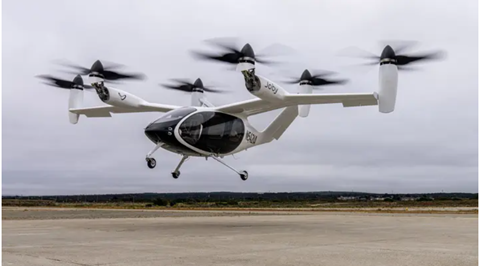
- This new unique course focuses on aerodynamics and aeroacoustics for Advanced Air Mobility.
- All students will receive an AIAA Certificate of Completion at the end of the course.
Aerodynamic Interactions in Multi-Propeller Aircraft Configurations
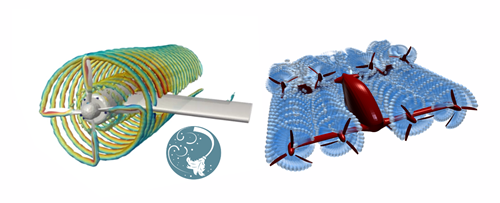
- This new essential course covers multi-propeller aircraft configurations for Advanced Air Mobility, on both a theoretical and a practical level.
- All students will receive an AIAA Certificate of Completion at the end of the course
LEARNING TRACK: Responsible AI in Aerospace

- From 1 April – 22 May 2025 (8 Weeks, 16 Lectures/Classes, 32 Total Hours). Includes 4 cutting edge AI in Aerospace courses.
- Every Tuesday and Thursday from 1–3 p.m. Eastern Time (all sessions will be recorded and available for replay; course notes will be available for download)
- All students will receive an AIAA Certificate of Completion at the end of each course. Students that attend all 4 courses will receive an additional AIAA Certificate of Completion for the Responsible AI in Aerospace Learning Track.
A Practical Introduction to Preliminary Design of Air Breathing Engines
Synopsis:
The objective of the course is to present an overview of the preliminary design of air breathing engine systems that is determined primarily by the aircraft mission, which defines the engine cycle – and different types of cycle are investigated. Preliminary design activities are defined and discussed in the context of the overall engine development process and placed in perspective. Some basic knowledge of aerodynamics and thermodynamics is assumed, so the mathematical material that appears in many good textbooks is minimized and the question “What do you actually do as an engine designer?” is addressed. The practical means and processes by which thermodynamic concepts are turned into hardware are covered and some design techniques are demonstrated. Finally, the fact that an air breathing engine is much more than the flowpath component is discussed and the future of engine design methods is raised. Class participation is encouraged throughout.
Atmospheric Flight Dynamics and Control
Synopsis:
The course covers all five aspects of flight dynamics and control in an integrated format – the equations of motion; aerodynamic modeling; steady-state analysis and control power; dynamic and modal analyses including modal approximations; and synthesis of stability-augmentation and autopilot control laws. The course contains a clear, rigorous, yet practical treatment of conventional topics dealing with rigid vehicles, while also extensively addressing the flight dynamics and control of elastic vehicles. Key topics include: the rigorous derivation of the equations of motion for rigid and flexible aircraft via Newton and Lagrange; a review/tutorial on lumped-mass vibrations including rigid-body degrees of freedom; modeling the effects of static and dynamic elastic deformation on the forces and moments; modal analysis of rigid and flexible vehicles; elastic effects on vehicle control (e.g., filtering, sensor and actuator placement); a case study on active structural mode control; plus other examples involving a flexible hypersonic vehicle and large flexible aircraft. The material on flexible vehicles is presented from a “flight-dynamics” rather than a “structural-dynamics” perspective.
The dynamics-based synthesis of stability-augmentation control laws is strongly connected to the natural modes, and specifically addresses the multi-input/multi-output character of the dynamic system. An integrated treatment of linear dynamic models is used throughout, including transfer functions, state-variable models, and polynomial-matrix representations. Typical autopilot control laws are synthesized using loop-shaping techniques, including discussions of typical sensors and gain scheduling. Finally, the student is briefly introduced to the classical “crossover” pilot model and its implications regarding flight control. MATLAB® and Simulink are used extensively in the many examples involving real aircraft.
Computational Aeroacoustics – Methods and Applications
Synopsis:
This course examines the computational issues that are unique to aeroacoustics. Course materials consist of three parts: (a) Introduction; (b) CAA Methods; and (c) Applications. The purpose of the introduction is to provide a brief review of the field of aeroacoustics, including current issues and problem areas (10% of the course). CAA methods form the main component of the course (70%). A number of applications are discussed to illustrate how CAA methods are used in realistic and practical problems (20%). CAA problems are, by definition, time dependent and usually contain high frequency components. Because of the nature of sound one would like to be able to compute CAA problems with as few number of mesh points per wavelength as possible. These characteristics of CAA problems are very different from fluid flow problems. Thus specially developed CAA methods are needed. The students are introduced to these methods.