Events Category: Events

AIAA Indiana Heritage Trust Tour

Over 25 aircraft engines and large scale models of aircraft are on display – representing 100 years of technology. Rolls-Royce Heritage Trust is providing a tour to AIAA-Indiana of this historic collection of aerospace artifacts. Parking Available but carpool recommended.

RSVP or Register

AIAA Regional Student Conferences Webinar

 On-Demand Recording Available

Watch Replay

Join us for this webinar to learn more about our Regional Student Conferences and the many benefits of participating.

AIAA’s Regional Student Conferences offer an annual opportunity for undergraduate, graduate, and (new this year) high school students to present and publish their work in a smaller conference setting. In addition to competing for cash prizes, participants gain valuable experience presenting their research, receiving constructive feedback from aerospace professionals, and connecting with peers from other universities. The conferences also feature guest speakers, exhibitor and recruiter interactions, lab and industry tours, and more.

Our Regions I-VI Student Conference is coming up this Spring 2026 and the Call for Abstracts is now open.

Dates, locations, and details for the Regional Student Conferences can be found here .

AVIATIONxWebinar: NASA Aeronautics – Vision and Outlook

Register Now

NASA has updated its vision to guide its aeronautics research portfolio and provide innovative technologies and concepts to revolutionize key parts of aviation. The four key focus areas are to revolutionize aerospace engineering methods, transform airframes and propulsion, pioneer high-speed flight, and automate airspace and safety management capabilities. Research and developing activities are executed in partnership with the industry, academia, and other government agencies. Join us as Robert Pearce, Associate Administrator, NASA Aeronautics Research Mission Directorate, discusses this update and NASA’s strategic direction as it navigates the future.

Speaker:

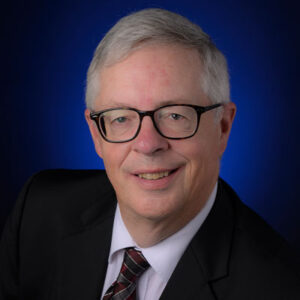
Robert Pearce, Associate Administrator, NASA Aeronautics Research Mission Directorate

Robert Pearce is the associate administrator for NASA ARMD. Pearce manages the agency’s aeronautics research portfolio and guides its strategic direction, including research in quiet supersonic flight over land, urban air mobility, autonomy, highly efficient advanced air vehicle concepts, electrified aircraft propulsion, advanced materials, airspace operations and safety, integration and flight demonstrations of aviation systems, and the nurturing and development of transformative concepts for aviation.

Moderator:

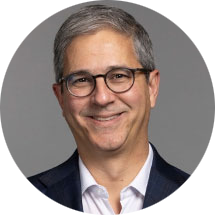
Richard WahlsRichard Wahls, Sustainable Flight National Partnership Mission Integration Manager, NASA Aeronautics Research Mission Directorate

Rich Wahls is NASA’s Sustainable Flight National Partnership (SFNP) Mission Integration Manager for the Aeronautics Research Mission Directorate (ARMD). He is responsible for long-range strategic technical planning, as well as coordination of projects, supporting SFNP across ARMD’s programs and with industry, academia, and national/international government agencies. He supports the objective of delivering validated, high-readiness-level technologies to industry that enable the next generation sustainable subsonic transport aircraft.

27th AIAA International Space Planes and Hypersonic Systems and Technologies Conference

The 27th AIAA International Space Planes and Hypersonic Systems and Technologies Conference, jointly organized with the Italian Association of Aeronautics and Astronautics (A.I.D.A.A), will provide a forum for discussion and exchange of information for attendees from across the globe about leading-edge research and development activities associated with space planes and hypersonic atmospheric flight vehicles and the technologies underpinning these capabilities.  Presentations will be provided on national programs from Europe, North America, South America, Australia, and Asia and multiple opportunities for international collaboration will be discussed.  Technical paper topics include planned and ongoing space plane and hypersonic vehicle programs, advanced launch vehicle and hypersonic atmospheric flight vehicle concepts, commercial space tourism concepts, ground and flight testing techniques, results, and lessons learned, reentry vehicle systems and technologies, aerodynamics and aerothermodynamics of space planes and hypersonic vehicles, guidance and control systems, rocket, ramjet, scramjet, and other advanced propulsion systems, including component technologies (e.g., inlets, combustion systems, fuel injection concepts, ignition and flameholding concepts, nozzles), high-temperature materials, hot structures and thermal protection systems, health monitoring and management technologies, and more.  Special panel sessions will be organized around relevant topics of strong global interest.

Register Now  Learn More Program

Technical Committee Representative

Peter Montgomery
Amentum
AFRL Rocket Lab
Edwards Air Force Base, California
[email protected]

Technical Topics

1. Missions and Vehicles addressing:
  • Mission planning and real-time adaptation and optimization
  • Planned and ongoing space plane and hypersonic vehicle programs and approaches
  • Advanced launch vehicles and hypersonic atmospheric flight vehicles
  • Reentry vehicle systems and technologies
  • Overall vehicle system performance and optimization
  • Conceptual designs
2. Operational Systems Aspects addressing:
  • Mission planning and real-time adaptation and optimization
  • Benefits and practicality of hypersonic civil transport
  • Economic and market analysis
  • Environmental effects including chemical pollution, noise, and sonic boom
  • Regulatory, certification, operational, health and safety issues
3. Thermal Management Systems for Vehicles and all Subsystems addressing:
  • Advanced thermal management concepts
  • System and component performance, dynamics and active or passive control
  • Trajectory adjustment and optimization
  • System and component development and manufacturing
  • Thermal protection systems, coatings and ablative systems
  • Thermal protection of non-operating propulsion systems (cocooning)
4. Propulsion Systems including and addressing:
  • Advanced thermal management concepts
  • System and component performance, dynamics and active or passive control
  • Trajectory adjustment and optimization
  • System and component development and manufacturing
  • Thermal protection systems, coatings and ablative systems
  • Thermal protection of non-operating propulsion systems (cocooning)
5. Propulsion Components addressing:
  • Compression components including forebodies, intakes, and compressors
  • Air cooling/collection devices
  • Injectors, combustors, isolators, nozzles and afterbodies
  • Propellant supply systems
  • Performance enhancement concepts, e.g. plasma assisted techniques and advanced nozzles
  • Component performance, dynamics and control
  • Component development and manufacturing
  • Conventional and alternative fuels, additives, catalysis
6. Guidance, Navigation, and Control Systems addressing:
  • Flight mechanics, guidance and control systems for vehicles, subsystems, and payloads
  • Routing, navigation, trajectory optimization, and operations research
  • Health monitoring sensors, actuators, controllers and algorithms
  • ystem and component performance, dynamics and control
7. Aerodynamics and Flight Dynamics Systems addressing:
  • Vehicle control and maneuverability
  • Flight stability and dynamics
  • Aerodynamic force and moment databases
  • Drag predictions
8. Materials and Structures for Vehicles and all Subsystems addressing:
  • Basic materials science and properties
  • Metallic and composite materials for hot and cooled structures
  • Thermal protection systems
  • Active/functional materials
  • Quality control, damage tolerance, structural health monitoring, and survivability
  • Materials manufacturing and processing
9. Experimental Methods addressing:
  • Test and evaluation
  • Ground test facilities, flight test operations, and comparison to simulations
  • Diagnostics and data systems
  • Scale limitations and facility effects
  • Test methodology, validation and verification
10. Computational Methods addressing:
  • Advanced computational techniques, FVM, FEM, Cartesian, Overset
  • Thermo-chemically reacting flows
  • Rarefied flows, DSMC methods
  • All-speed regimes codes
  • Turbulence modeling, RANS, DES, LES, etc.
  • Wall catalysis and ablation
  • Magneto-hydrodynamic effects
  • Radiation cooling effects
  • Fluid/structure interaction
  • Weather and particulate effects
  • CFD mesh control methods for structured and unstructured grids
  • Hypersonic vehicles design optimization
  • Code validation and verification
  • Facility modeling and simulation
11. Emerging Disciplines in Hypersonics
  • Artificial intelligence and machine learning applications in hypersonics
  • Interdisciplinary advancements focused on addressing the unique challenges associated with hypersonic flight
  • Weather effects
12. Hypersonics History addressing:
  • Historical aspects, analyses, assessments
  • Historical reviews
  • Lessons learned from previous hypersonic efforts
  • New analysis of old historical data

The Hypersonic Technologies and Aerospace Planes (HyTASP) Technical Committee invites students to participate in the HyTASP Student Paper Competition at the 27th AIAA International Space Planes and Hypersonic Systems and Technologies Conference. Eligible papers will be judged by members of the HyTASP Honors & Awards Subcommittee for the “Don Wilson Best Student Paper” award.

Call for Papers

Manage Submissions

Abstract Submission Open:  7 October 2025
Abstract Deadline:
 4 December 2025, 2000 hrs ET USA
Author Notifications: 23 February 2026
Manuscript Deadline: 2 June 2026, 2000 hrs ET USA

Organizing Committee

Chair
Peter Montgomery, Amentum, AFRL Rocket Lab

Local Chair
Erasmo Carrera, AIDAA

Event Managers
Christopher Horton, AIAA
Marco Petrolo, AIDAA

AIDAA Technical Committee
Raffaele Savino, Chair, Università di Napoli Federico II
Marta Albano, ASI
Gianpiero Colonna, CNR
Domenic D’Ambrosio, Politecnico di Torino
Sergio De Rosa, Università di Napoli Federico II
Nunzia Favaloro, CIRA
Giulio Gori, Politecnico di Milano
Vincenzo Gulizzi, Università di Palermo
Antonella Ingenito, Università di Roma La Sapienza
Stefano Mungiguerra, Università di Napoli Federico II
Renato Paciorri, Università di Roma La Sapienza
Alfonso Pagani, Politecnico di Torino
Giuseppe Pascazio, Politecnico di Bari
Fabrizio Ponti, Università di Bologna
Enrico Zappino, Politecnico di Torino4


AIAA DEFENSE Forum 2026

The AIAA Defense and Security Forum (AIAA DEFENSE Forum) is a Secret/NOFORN event providing a venue for leaders from government, military, industry, and academia to advance and accelerate modernization, informed by Office of the Under Secretary of Defense for Research and Engineering’s priorities.

Learn More

ASCENDxTexas 2026

ASCENDxTexas 2026 will focus on the innovation and adaptation necessary to navigate the evolving space economy–from policy discussions to commercial challenges and changing timelines, the next giant leap starts here. More information coming soon.

Visit ascend.events

Understanding Neurodivergence – Addressing Barriers and Challenges and Forging Stronger Collaboration

 On-Demand Recording Available

Watch Replay

This webinar is free of charge and is open to the public.

Join us for the “Understanding Neurodivergence – Addressing Barriers and Challenges and Forging Stronger Collaboration” webinar. Autism has received a lot of renewed attention in light of recent events. Unfortunately, this new attention has also brought with it a wealth of misconceptions and long-standing misinformation. Autism and other neurodivergent conditions affect a much wider swath of the population than most people realize, even those who are in fact neurodivergent themselves.

These conditions are especially prevalent in technical fields, where typical characteristics provide advantages in technical success. Despite this, normative paradigms in professional and academic settings create arbitrary and unnecessary barriers that artificially hamper neurodivergent people’s ability to contribute most fully.

The global pandemic showed us what is possible in regards to adjusting workplace paradigms and can serve as a strong example of how embracing simple adjustments can allow much wider contributions from a far broader pool of talent. This discussion will address the current gaps in Autism and Neurodivergent Awareness, Acceptance, and Support and offer ideas on adjustments that can benefit not just neurodivergent people, but whole industries and fields.

Aerospace Perspective Series: Harnessing Physics AI Models to Accelerate Aerospace Concept Exploration and Design

 On-Demand Recording Available

Access Replay

A Physics AI revolution is brewing right now in the engineering sciences: the availability of massive amounts of data together with recent advances in physics-based AI/ML modeling architectures and the availability of differentiable physics solvers is making this possible. This revolution will have a meaningful and disruptive impact on how aircraft and aircraft components are designed and how distributed engineering teams are organized and work. With advances in large-scale data availability, Physics AI models can be trained in specific domains with inference times around 1–3 seconds but with accuracy in the predictions of the physics and derived quantities within the 1-2% range.

Join Professor Juan Alonso as he explains how Luminary Cloud’s SHIFT Models for aerospace applications can result in efficient 1) exploration of vast design spaces, 2) interactive design, 3) inference-based design optimization, 4) real-time control of physics systems, 5) uncertainty quantification and design under uncertainty, and 6) digital twin applications. 

What You’ll Take Away

  • Learn about recent trends in Physics AI including how key developments are expanding the use cases these models can be leveraged for.
  • Discover the importance of generating massive amounts of high-fidelity data and how these data affect model accuracy for both scalar output quantities and field prediction.
  • Domain-specific vs foundational models: how far can we currently push Physics AI models and how can we improve model generalizability?
  • What are the most applicable use cases for this technology in aerospace engineering?
Speaker:

Juan Alanso Rounded

Juan Alonso
CTO and Cofounder, Luminary Cloud; Chair, Department of Aeronautics and Astronautics, Stanford University


Ndu Obi 768x944Obi Ndu
Chief Information and Digital Officer, Otto Aviation


Alonso cofounded Luminary Cloud, a modern CAE SaaS platform, in 2019. He previously served as Director of the NASA Fundamental Aeronautics Program. At Stanford University, he focuses on advanced computational methods for aerospace system design. Learn more about Alonso by visiting his LinkedIn profile.

This webinar is free of charge and is open to the public. Registered attendees will receive a post-event email to access the on-demand recording.

Advanced Air Mobility’s Contributions to Multimodal Solutions

On-Demand Recording Available

Watch Replay

This webinar is free of charge and is open to the public

Advanced air mobility (AAM) involves innovative aircraft technologies, ranging from small drones to air taxis, to provide safe and efficient transportation in various settings. This webinar, co-hosted by the American Institute of Aeronautics and Astronautics (AIAA) and the Intelligent Transportation Society of America (ITS America), will explore how AAM fits into the multimodal network of goods and services, addressing potential solutions to current gaps in knowledge and operations.

Speakers:
  • Tombo Jones – Director·Virginia Tech Mid-Atlantic Aviation Partnership
  • Trey Tillander, P.E. – Executive Director of Transportation Technology·Florida Department of Transportation (FDOT)
  • Husni Idris – Research Aerospace Engineer, NASA Ames Research Center
  • Vishwanath Bulusu – Senior Aerospace Scientist, Crown Innovations, Inc.

Beyond the Job Title: Perspectives from Practicing Engineers

On Demand Recording Available

Watch Replay

This webinar is free of charge and is open to the public

This panel discussion brings together three engineers to share what their day-to-day work actually looks like. This webinar session focuses on the practical realities of engineering roles—technical tasks, team interactions, challenges, and how they apply their education in real-world settings. Geared toward students and early-career professionals, the discussion aims to provide clarity on what to expect in industry and help bridge the gap between the classroom and the workplace. If you’ve ever wondered what your first, or next, job will really look like, this session offers firsthand insight.

Panelists

Josh Kivijarv works in the Flight Operations Directorate at NASA’s Johnson Space Center, where he serves as a certified flight controller, instructor, and astronaut trainer for the International Space Station. He also supports operational development for NASA’s Artemis lunar missions. Josh holds a Bachelor’s in Mechanical Engineering and a Master’s in Aerospace Engineering. Before joining the team at NASA, Josh gained broad private industry experience at Tesla.

Robert Burke works as a senior staff member at the Johns Hopkins Applied Physics Laboratory in Maryland. He works on advanced propulsion systems such as Rotating Detonation Engines, hypersonics, and rocket propulsion. He received his Masters and PhD in Aerospace Engineering at the University of Central Florida and previously worked there as a postdoctoral scientist. Robert has lectured undergraduate air-breathing propulsion courses and currently still mentors aerospace and mechanical engineering students. He is the AIAA Deputy Director of Education for Region 1.

Chris Reynolds is the Technical Assistant within the office of the Chief Technology Officer of the Lockheed Martin Corporation. Prior to this role, Chris served at both the Space and Aeronautics business areas of Lockheed Martin, including within Advanced Development Programs (ADP) Skunk Works®. Chris specializes in conceptual design, systems architecture, and test working on programs from hybrid airships to hypersonics. He holds a BS in Aerospace Engineering and an MS in Aerospace Engineering with a specialization in Multidisciplinary Design Analysis and Optimization (MDAO) from the University of Michigan.