Tag: Announces

AIAA Announces Class of 2025 Honorary Fellows and Fellows

FOR IMMEDIATE RELEASE

December 9, 2024 – Reston, Va. – The American Institute of Aeronautics and Astronautics (AIAA) proudly congratulates its newly elected Class of 2025 Honorary Fellows and Fellows. The class will be inducted during a ceremony on Tuesday, 29 April, in Washington, DC, and celebrated during the AIAA Awards Gala on Wednesday, 30 April, AIAA Awards Gala tickets will be available in early 2025.

“Congratulations to each member of the Class of 2025 AIAA Honorary Fellows and Fellows for their remarkable accomplishments. They are among the most respected names in the aerospace profession,” said Dan Hastings, AIAA President. “These distinguished individuals have earned the respect and admiration of the global science and engineering community. We are in awe of their creativity and exceptional contributions that have advanced aerospace.”

Honorary Fellow is AIAA’s highest distinction, recognizing preeminent individuals who have made significant contributions to the aerospace industry and who embody the highest possible standards in aeronautics and astronautics. In 1933, Orville Wright became the first AIAA Honorary Fellow. Today, 245 people have been named AIAA Honorary Fellow.

AIAA confers Fellow upon individuals in recognition of their notable and valuable contributions to the arts, sciences or technology of aeronautics and astronautics. Nominees are AIAA Associate Fellows. Since the inception of this honor 2,092 persons have been elected as an AIAA Fellow.

“The Class of 2025 Honorary Fellows and Fellows are impressive aerospace professionals. They are dreamers who have transformed our understanding of flight and exploration, pushing the boundaries of human potential. I am privileged to call them friends and colleagues. Their groundbreaking work reminds me that innovation is born from passion, persistence, and the audacious belief that we can always reach a little further than we thought possible,” added AIAA CEO Clay Mowry.

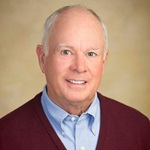
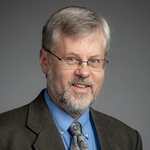
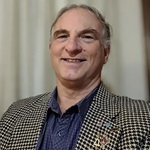
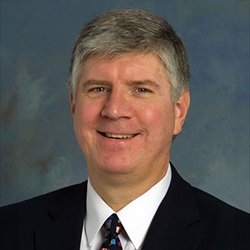
2025 AIAA Honorary Fellows

Maj. Gen. Charles F. Bolden Jr., USMC (Ret.), The Charles F. Bolden Group LLC
Alec Gallimore, Duke University
The Honorable Steven J. Isakowitz, The Aerospace Corporation

2025 AIAA Fellows

Maj. Gen. James B. Armor Jr., USAF (Ret.), The Armor Group LLC
Hamsa Balakrishnan, Massachusetts Institute of Technology
Brett A. Bednarcyk, NASA Glenn Research Center
John Maurice Carson III, NASA
Paul J. Cefola, University at Buffalo
Todd K. Citron, The Boeing Company
Stephen B. Clay, Air Force Research Laboratory
William A. Crossley, Purdue University
Boris Diskin, NASA Langley Research Center
Mary Lynne Dittmar, Axiom Space (retired) / Dittmar Associates
Stephen N. Frick, Lockheed Martin Space
Demoz Gebre-Egziabher, University of Minnesota
Luisella Giulicchi, European Space Agency
Vinay K. Goyal, The Aerospace Corporation
Michael J. Hirschberg, The Vertical Flight Society
Tristram Tupper Hyde, NASA Goddard Space Flight Center
Oliver L.P. Masefield, SolvAero Consulting GmbH
Richard G. Morgan, University of Queensland
Natasha A. Neogi, NASA Langley Research Center
Robert Pearce, NASA
Mason Peck, Cornell University
Lisa J. Porter, LogiQ, Inc.
Joseph M. Powers, University of Notre Dame
Michael G. Ryschkewitsch, Johns Hopkins University Applied Physics Laboratory
Murray L. Scott, Advanced Composite Structures Australia
Philippe R. Spalart, Flexcompute
Paul F. Taylor, Gulfstream Aerospace Corporation
Manuel Torres, Lockheed Martin

Media Contact: Rebecca Gray, [email protected], 804-397-5270

About AIAA
The American Institute of Aeronautics and Astronautics (AIAA) is the world’s largest aerospace technical society. With nearly 30,000 individual members from 91 countries, and 100 corporate members, AIAA brings together industry, academia, and government to advance engineering and science in aviation, space, and defense. For more information, visit  aiaa.org, and follow AIAA on X/TwitterFacebookLinkedIn, and Instagram.

AIAA Announces 2025 Sustained Service Awards Winners

FOR IMMEDIATE RELEASE

December 3, 2024 – Reston, Va. – The American Institute of Aeronautics and Astronautics (AIAA) is pleased to announce the winners of the 2025 Sustained Service Awards. The award recognizes sustained, significant service and contributions to AIAA by members of the Institute.

“Volunteers are the driving force of the Institute – we couldn’t achieve our mission without the ingenuity, hands-on collaboration, and selfless service of our members,” said AIAA CEO Clay Mowry. “This year’s Sustained Service honorees exemplify servant leadership. We are grateful for their invaluable contributions to our community.”

The Sustained Service Award winners are AIAA members in good standing who have shown continuing dedication to the interests of the Institute by making significant and sustained contributions over a period of time, typically 10 years or more. Active participation and service at the local section/regional level, and/or the national level is a potential discriminator in the evaluation of candidates.

The 2025 Sustained Service Awards winners are:

  • Steven X. BauerSteven X. Bauer, NASA Langley Research Center
    For sustained leadership, service, and contributions to the Hampton Roads Section, Region I, and AIAA National.Bauer became an AIAA student member in his freshman year of college, 1981. He served as student branch officer and has held many positions in the Hampton Roads Section, including section chair. He was the Region I Director for six years. Bauer has worked at NASA Langley Research Center since 1983 and is retiring in December 2024.
  • Gene R. DionneGene R. Dionne, Lockheed Martin Corporation (retired)
    For his passionate, unmatched support of AIAA and the Rocky Mountain Section through volunteering across all committees.Dionne spent 26 years in the U.S. Air Force, mostly in space systems acquisition and technology development. He was intimate in the manufacturing, integration, test and launch/on-orbit operations of ~30 satellites, which all exceeded their mean mission durations. Dionne spent 22 years at Lockheed Martin Space in systems engineering and program management. He was selected as AIAA Fellow in 2014, and served on the Fellows Selection Committee for three years. He was AIAA Rocky Mountain Section Chair for two years and continued to assist on the section’s executive council for another 20 years as the “Fellow-at-large.”
  • Trevor S. ElliottTrevor S. Elliott, University of Tennessee at Chattanooga
    For prolific, dedicated, and outstanding service to AIAA forums, technical committees, student teams, outreach groups, rocketry organizations, and aerospace communities leading to numerous student-led recognitions.Elliott is a UC Foundation Associate Professor of Mechanical Engineering at the University of Tennessee at Chattanooga. He serves as primary Faculty Advisor for the UTC Racing Mocs, SAE Chapter, and the UTC Rocket Mocs, roles where he has guided teams that have won national placement in collegiate competitions and set a world record in amateur rocketry. He is an active member of the AIAA Solid Rockets Technical Committee and Hybrid Rockets Technical Committee chair and technical discipline chair.
  • David C. FlemingDavid C. Fleming, University of Michigan
    For sustained service to the Cape Canaveral Section and Florida Institute of Technology Student Branch through continued participation, council leadership, and unwavering dedication to AIAA’s mission.Fleming earned a B.S. degree in Aeronautics and Astronautics from MIT and M.S. and Ph.D. degrees from the University of Maryland, College Park. He served on the faculty of the Florida Institute of Technology for 28 years, including a three-year term as department head. Fleming was faculty adviser of the AIAA Florida Tech Student Branch for over 25 years. Currently, he serves as Lecturer at the University of Michigan.
  • Aaron L. Harcrow Jr.Aaron L. Harcrow Jr., No Box Innovations
    For over 30 years of outstanding and sustained service to the Atlanta Section and Region II, contributing to the success of the Section.Harcrow joined AIAA as a student member in 1981 and regards his 42-plus-years membership as a learning experience in the many ways to volunteer for AIAA, for which there appears to be no end in sight! In addition to volunteering for AIAA, Harcrow has developed multidisciplinary skills in aerospace engineering, systems engineering, project management, innovative design, product development, CAD/CAM/CNC, computer programming, and teaching undergraduate engineering courses. He holds one USPTO patent.
  • Christopher J. PestakChristopher J. Pestak, HX5, LLC
    For dedicated service to AIAA and the field of aerospace for over 40 years, and holding significant leadership positions within AIAA.Pestak is Program Manager of the Glenn Engineering and Research Support (GEARS) contract for HX5, LLC. He manages 350 staff supporting NASA Glenn Research Center performing wide-ranging work in space and aeronautics. Spaceflight systems have been a primary focus of his 42-year career. Pestak holds a B.S. in Electrical Engineering and an M.S. in Industrial Engineering, both from Cleveland State University. He is an AIAA Fellow.
  • Robert W. PitzRobert W. Pitz, Vanderbilt University
    For over three decades of distinguished and continuous service to AIAA, especially in national leadership roles involving publication, honors, ethics, and technical committee activities.Pitz has mechanical engineering degrees from Purdue University (B.S.) and UC Berkeley (M.S. and Ph.D.). After five years at GE Research, he joined Vanderbilt University where he is a Professor in the Department of Mechanical Engineering and served as Department Chair (1998–2017). He won the NSF Presidential Young Investigator Award (1987) and AIAA Best Paper Award in Propellants & Combustion (1996). Pitz is an AIAA Fellow. He also is a Fellow of ASME and the Combustion Institute.

Media Contact: Rebecca Gray, [email protected], 804-397-5270 cell

About AIAA
The American Institute of Aeronautics and Astronautics (AIAA) is the world’s largest aerospace technical society. With nearly 30,000 individual members from 91 countries, and 100 corporate members, AIAA brings together industry, academia, and government to advance engineering and science in aviation, space, and defense. For more information, visit aiaa.org, and follow AIAA on X/TwitterFacebookLinkedIn, and Instagram.

FAA Announces Pilot Training, Certification Rules for Air Taxis

Reuters reports, “The Federal Aviation Administration on Tuesday finalized comprehensive training and pilot certification rules for flying air taxis, addressing a key hurdle to the deployment of electric vertical takeoff and landing aircraft. The FAA called the rule ‘the final piece in the puzzle for safely introducing these aircraft in the near term.’ Some flying companies hope to begin flying commercial passengers as soon as 2025.”
Full Story (Reuters)

AIAA Announces Winners of Prestigious Zarem Graduate Student Awards for Distinguished Achievement in Aeronautics and Astronautics

September 5, 2023 – Reston, Va. – The American Institute of Aeronautics and Astronautics (AIAA) is pleased to announce the winners of the Zarem Graduate Student Award for Distinguished Achievement:

    • Stephen Monroe, Clarkson University, won the aeronautics award for his paper, “Parallel Unsteady Reynolds-Averaged Navier-Stokes (URANS) Studies of the Performance of ONR Waterjet AxWJ-2.” Monroe will present his paper at the 2024 International Congress of the Aeronautical Sciences (ICAS) in Florence, Italy, 9-13 September 2024.


  • Quentin Roberts, University of Washington, won the astronautics award for his paper, “Investigation of Pre-Ignition Propellant Mixing in Rotating Detonation Rocket Engine.” Roberts will present his paper at the 2023 International Astronautical Congress (IAC) in Baku, Azerbaijan, 2-6 October 2023.

The winners will receive their awards at the 2024 AIAA SciTech Forum, Orlando, Florida, 8–12 January 2024. This award was established by AIAA Honorary Fellow Abe Zarem, founder and managing director of Frontier Associates, to annually recognize graduate students in aeronautics and astronautics who have demonstrated outstanding scholarship in their field.

    • Stephen Monroe, Clarkson University, Aeronautics Award
      Stephen-Moore-2023Stephen Monroe just completed his first year as an M.S. student in Mechanical Engineering at Clarkson University. He received his B.S. from Clarkson University in 2022. In his senior year, Monroe began learning CFD algorithms and HPC in the research group of Professor Chunlei Liang. During the first year of graduate study, Monroe conducted URANS studies of an ONR waterjet propulsion unit on parallel computers. He also is performing large eddy simulations of the same propulsion system to examine finer flow structures. Monroe is determined to become a skillful computational fluid dynamicist in large eddy simulations using an open-source code before completing his M.S. program. While uncertain about his future in academia, Monroe intends on using the skills he has developed to become a proficient propulsion system designer.“Coming into the Graduate School, I only intended on achieving an M.S. degree. Having been recognized for my hard work by the Abe Zarem award, not only has my passion for research been rejuvenated, but my consideration of furthering my education has as well,” said Monroe.Cr-Chuniei-Liang-2023Monroe’s faculty advisor, Chunlei Liang, is Professor of Mechanical and Aerospace Engineering at Clarkson University. He received his Ph.D. from the University of London in 2005. Liang is an ASME Fellow and an AIAA Associate Fellow.
    • Quentin Roberts, University of Washington, Astronautics Award
      Quentin-Roberts-2023Quentin Roberts is an M.S. student at the University of Washington studying aeronautics and astronautics with a concentration in fluids. His research is on injector mixing in rotating detonation rocket engines (RDREs). Roberts will start work in fall 2023 as a propulsion analyst at Blue Origin.                       “Receiving this award will allow me to greatly expand my horizons in the world of astronautics by not only providing an opportunity to learn about what research the international community is working on, but also an opportunity to present my own research to an international audience,” said Roberts.
    • Dr-Carl-KnowlenRoberts’ faculty advisor, Carl Knowlen, received his bachelor’s and master’s degrees in Aeronautical and Astronautical Engineering from the University of Washington in 1983 and 1985, respectively. He continued with his graduate research on ram accelerators at the UW and completed his Ph.D. program in 1991. Dr. Knowlen then accepted a Postdoctoral Research Associate position with the UW Department of Aeronautics and Astronautics and has been teaching AA Department courses on a regular basis since 2002.

For more information on the Abe M. Zarem Graduate Awards for Distinguished Achievement, please contact Michael Lagana.

Media Contact: Rebecca Gray, [email protected], 804-397-5270 cell

About AIAA
The American Institute of Aeronautics and Astronautics (AIAA) is the world’s largest aerospace technical society. With nearly 30,000 individual members from 91 countries, and 100 corporate members, AIAA brings together industry, academia, and government to advance engineering and science in aviation, space, and defense. For more information, visit aiaa.org, or follow AIAA on TwitterFacebookLinkedIn, and Instagram.

AIAA Announces New $10,000 Mary W. Jackson Scholarship

FOR IMMEDIATE RELEASE

October 2, 2024 – Reston, Va. – The American Institute of Aeronautics and Astronautics (AIAA) Foundation has launched a $10,000 undergraduate scholarship honoring the late NASA mathematician and aerospace engineer, Mary W. Jackson. The scholarship was created to provide even greater access to opportunity for the best students studying in the aerospace sciences and will be available to students studying at institutions in the United States or its territories.

“Honoring pioneering NASA scientist and aerospace engineer, Mary W. Jackson, through a scholarship is not just a tribute to her pioneering spirit, but a commitment to empowering the next generation of aerospace engineers. By investing in today’s students, AIAA is ensuring that her legacy inspires innovation and excellence in aerospace for years to come,” said Laura McGill, AIAA Foundation Chair.

Applications open 1 October 2024 and close 31 January 2025. The scholarship will be awarded in summer 2025. Students from underrepresented backgrounds are encouraged to apply.

For more information on AIAA’s Undergraduate Scholarships and Graduate Awards Program, visit aiaa.org/foundation.

AIAA Media Contact: Rebecca Gray, [email protected], 804-397-5270 cell

About AIAA
The American Institute of Aeronautics and Astronautics (AIAA) is the world’s largest aerospace technical society. With nearly 30,000 individual members from 91 countries, and 100 corporate members, AIAA brings together industry, academia, and government to advance engineering and science in aviation, space, and defense. For more information, visit aiaa.org or follow AIAA on X/TwitterFacebookLinkedIn, and Instagram.

AIAA Announces 2024 Regional Student Conference Winners

FOR IMMEDIATE RELEASE

May 7, 2024 – Reston, Va. – The American Institute of Aeronautics and Astronautics (AIAA) is pleased to announce the winners of six of the 2024 Regional Student Conferences. Additionally, the papers presented at the regional student conferences will be published by AIAA and available on Aerospace Research Center (ARC) later this year.

“We are thrilled to interact with so many of our student members during the AIAA Regional Student Conferences. University students gain practical experience presenting and publishing their research findings, receiving valuable feedback from professionals in the aerospace community,” said AIAA CEO Dan Dumbacher. “We look forward to seeing these students shape the future of aerospace!”

AIAA holds conferences in each region for university student members at the undergraduate and graduate levels. The student conferences are a way for students to present their research in person. They are judged on technical content and presentation skills by AIAA members working in the aerospace industry. Lockheed Martin was the generous sponsor of these conferences, in addition to many other regional-level sponsors.

More than 260 papers were presented by university and high school students across six regions, with over 900 students and professionals in attendance.

The first-place university student winners in each undergraduate, graduate, and team categories (listed below) are invited to attend and present their papers at the AIAA International Student Conference held in conjunction with the 2025 AIAA SciTech Forum, 6-10 January, Orlando, Florida.

Region I Winners
Undergraduate Category

  • 1st Place – “Wind Tunnel Testing of High Advance-Ratio Compound Helicopter Designs,” Howard Zheng, University of Maryland College Park (College Park, Md.)
  • 2nd Place – “Experimental Investigation of the Bell X-1’s Vertical Stabilizer Using Heated Flos to Replicate Supersonic Flight Conditions In A Subsonic Wind Tunnel,” Annemarie Bernardi and Craig Merrett, Clarkson University (Potsdam, N.Y.)
  • 3rd Place – “The Evaluation of Various Controller Architectures for an Air Brake on a High-Powered Model Rocket,” Sophie Jack, University of Maryland College Park (College Park, Md.)

Team Category

  • 1st Place – “Design and Feasibility of a Polar-Orbiting Gravimetry CubeSat,” Liam Piper, Ellie Sherman, Jackson Neu, and Ethan Prigge, Worcester Polytechnic Institute (Worcester, Mass.)
  • 2nd Place – “2024: A DEEP Space Odyssey,” Aubrey Monk, Felix May, Thomas Pfaffe, Josh Profeta, Jaylean Ureña, Rida Awais, Eli Jenkinson, and Javid Bayandor, University at Buffalo (Buffalo, N.Y.)
  • 3rd Place – “CubeSat Test Platform for an Ultra-Lightweight Carbon Fiber Radiation System for High Performance Nuclear Electric Power and Propulsion Systems,” Liam Piper, Nathaniel Polus, Benjamin Peters, and Paige Rust, Worcester Polytechnic Institute (Worcester, Mass.)

Region II Winners
Undergraduate Category

  • 1st Place – “Analytical and Computational Models of Rijke Tube Pressure Waveforms Using a Sigmoidal Temperature Distribution,” Emma Signor and Joseph Majdalani, Auburn University (Auburn, Ala.)
  • 2nd Place – “Experimental Study of Rotor-Sand Ground Interactions Utilizing Scaled NASA Dragonfly Model,” Darrell Nieves Lugo, Mario Vegnali, and Michael Kinzel, University of Central Florida (Orlando, Fla.)
  • 3rd Place – “Implementation of Alternative Pressure-Sensitive Paint for Future Ground Testing,” Meghan Smitherman, University of Tennessee Knoxville (Knoxville, Tenn.)

Masters Category

  • 1st Place – “Structural Health Monitoring for Launch Vehicle Reusability Using Fiber Bragg Grating Written Optical Fibers,” Thomas Colicci and Andrew Noonan, Vanderbilt University (Nashville, Tenn.)
  • 2nd Place – “Designing and Manufacturing University of South Carolina’s First CubeSat Prototype,” Shruti Jadhav and Patrick Bailey, University of South Carolina (Columbia, S.C.)
  • 3rd Place – “Development of a Mechanical Stage Separation Mechanism for Two-Stage Sounding Rockets,” Griffin Jourda and Nishant Sood, Georgia Institute of Technology (Atlanta, Ga.)

Team Category

  • 1st Place – “Lessons Learned from the Launch of a Student-Built Jet-A/Liquid Oxygen Rocket,” Rithvik Nagarajan, Ethan Heyns, Braden Anderson, Michael Krause, Callum MacDonald, Varun Natarajan, Anthony Otlowski, and Tristan Terry, Georgia Institute of Technology (Atlanta, Ga.)
  • 2nd Place – “Validation and Development of an Atmospheric Electroaerodynamic Propulsion System,” Gaige Sidaway, Britain Steele, Tyler Zeringue and Conner Evans, Mississippi State University (Starkville, Miss.)
  • 3rd Place – “Liquid Bipropellant Rocket Design,” Matthew House, Sherie LaPrade, Niyati Shah, Shelton Waddell, Michael Cowles, Nate Deforest, and Rodrigo Graca, Florida Institute of Technology (Melbourne, Fla.)

Outstanding Branch Activity Category

  • 1st Place – “Volunteer Spirit and Outreach Through AIAA,” University of Tennessee Knoxville (Knoxville, Tenn.)
  • 2nd Place – “GT-AIAA: Diverse Perspectives and Increased Engagement,” Georgia Institute of Technology (Atlanta, Ga.)
  • 3rd Place – “Inspiring Young Aerospace Professionals—The USC AIAA Process to Educate, Engage, and Retain,” University of South Carolina (Columbia, S.C.)

Freshman/Sophomore Open Topic Category

  • 1st Place – “Unlocking New Horizons: The Role of Kenya’s Broglio Space Center in the Commercial Space Era,” Kurt Gugelev-Shapiro, Georgia Institute of Technology (Atlanta, Ga.)
  • 2nd Place – “Managing Safety Hazards In The Preliminary Design Phase of a Student-Lead Liquid Rocketry Program,” Michael Johns, University of Alabama Huntsville (Huntsville, Ala.)
  • 3rd Place – “Applications of Bio-Inspired UAVs for Enhanced Aerial Capabilities,” Haitish Gandhi, Embry-Riddle Aeronautical University (Daytona Beach, Fla.)

Poster Session Category

  • 1st Place – “Static Fire Test Stand for Jet Vanes Analysis,” Shalini Shailesh, Margaret Hwang, Catherine Gang, Alexander Swift, Ahmet Baturay Coksaygili, Kush Bandi, Owen Pollack, and Pritham Sathish, Georgia Institute of Technology (Atlanta, Ga.)
  • 2nd Place – “Multiphysics Analysis of Carbon Composite Structural Batteries,” Atharva Gujrathi, Georgia Institute of Technology (Atlanta, Ga.)
  • 3rd Place – “Design of a Launchable Remote-Controlled Rover and Protective Aeroshell,” Matthew Loewer, Colby Weeks, Lake Williams, Jackson Zazzaro, and Wout De Backer, University of South Carolina (Columbia, S.C.)

Region III Winners
Undergraduate Category

  • 1st Place – “Evaluating Performance of Simple Gas-on-Liquid Injector Designs in a Small Bipropellant Rocket Engine,” Stephen Hyde and Victor Argueta, Alma College (Alma, Mich.)
  • 2nd Place – “A Parallel Approach to Arbitrarily-High Antenna Pattern Visualizations,” Brady Phelps and Chad Mourning, Ohio University (Athens, Ohio)
  • 3rd Place – “Using the Drag Equation and Euler’s Method in Python to Predict Model Rocket Flight Trajectories,” Kulvir Chavda and Heather Arnett, University of Illinois Urbana-Champaign (Champaign, Ill.)

Masters Category

  • 1st Place – “Analysis of the Circular Restricted N-Body Problem (CRNBP) in the Sun-Venus System,” Annika Gilliam and Robert Bettinger, Air Force Institute of Technology (Dayton, Ohio)
  • 2nd Place – “Optimizing Robotic Arm Capture of Tumbling Satellites with a Genetic Fuzzy System Approach,” Sathya Karthikeyan and Donghoon Kim, University of Cincinnati (Cincinnati, Ohio)
  • 3rd Place – “Machine Learning Applications for Compression Strength After Low Velocity Impacted Carbon Fiber Composites,” Jason Mack and KT Tan, University of Akron (Akron, Ohio)

Team Category

  • 1st Place – “Design of a Low Barrier to Entry Reusable Rocket Engine and Test Stand,” Seth Arkwright, Matthew DiPofi, Jackson Godsey, Joshua Slivka, and Nicole Zimmerli, University of Akron (Akron, Ohio)
  • 2nd Place – “Design and Flight Vehicle Integration of a VaPak Liquid Engine Rocket,” Ana Clecia Alves Almeida, Reece Davis, and Jonathan Armbrust, University of Akron (Akron, Ohio)
  • 3rd Place – “United States Military Academy Army Rocketry and Engineering Sciences Team: Project Endurance,” Ellery Doyna, Elizabeth Joo, Allen Schneider, Arnav Pai, Timothy Ormsby, Ella Davis, Benjamin Johnson, Matthew Dupuis, Chase Adams, Aiden Ford, Tavis Cahanding, Pavel Shilenko, Michelle Hon, James Ye, Jacob Lombardo, Maxx Simeon, Matthew Dupuis, Juan Herrera Vasquez, Jake Moffat, Thomas Dickerson, Reagan Eastlick, and MAJ Robert Perezalemany, United States Military Academy (West Point, N.Y.)

Region IV Winners
Undergraduate Category

  • 1st Place – “Comparison of Analytical and Experimental Propeller Performance for Small Unmanned Aircraft Applications,” Noah Greeson, Dawson Manning, and Kurt Rouser, Oklahoma State University (Stillwater, Okla.)
  • 2nd Place – “Design of Aerospike Nozzles for Rotating Detonation Engines Using Computational Fluid Dynamics and Machine Learning Techniques,” Philip Wilson, Khushi Piparava, and Liwei Zhang, University of Texas Arlington (Arlington, Texas)
  • 3rd Place – “Static Calibration of Platinum-based Pressure Sensitive Paint,” Neil Sawant and Christopher Combs, University of Texas at San Antonio (San Antonio, Texas)

Masters Category

  • 1st Place – “Influence of Freestream Reynolds Number on Unsteady Reflected-Shock Boundary-Layer Interaction in Shock Tube Experiments,” Adam Bicak and Hiroshi Ozawa, University of Oklahoma (Norman, Okla.)
  • 2nd Place – “Development of a Small-Scale, Modular Kerosene-Nitrous Oxide Liquid Rocket Ground Test Rig,” Cade Christison and Kurt Rouser, Oklahoma State University (Stillwater, Okla.)
  • 3rd Place – “Convolutional Neural Network and Homogenization based Hybrid Approach for Lattice Structures,” Mohammed Abir Mahdi, Shafi Al Salman Romeo, and Wei Zhao, Oklahoma State University (Stillwater, Okla.)

Team Category

  • 1st Place – “Design and Evaluation of a Thrust Reverser for Small Unmanned Aircraft Turbojets,” Dawson Manning, Peyton Stice, Austin Rouser, Logan Rock, Sam Hjelm, Brooks Benson, and Kurt Rouser, Oklahoma State University (Stillwater, Okla.)
  • 2nd Place – “Applying Pose Estimation Techniques to Visualize Drone Trajectory in GPS-Denied Environments,” Dao Ton-Nu, Ryan Mok, Azeem Bhaiwala, Evan Sayer, Jose Rodriguez, and Adam Nokes, University of Texas at Austin (Austin, Texas)
  • 3rd Place – “Enhancing Altitude Control in Aerospace Systems,” Jackson Perrine, Alyssa Pina, Brian Davis, Daniel Bluedorn, Josh Berkman, Kaiden Kiracofe, Kelsey Sanchez, Jared Pulliam, Juancarlos Munoz, and Veronica Fujihara, New Mexico State University (Las Cruces, N.M.)

Region V Winners
Undergraduate Category

  • 1st place – “Experimental Investigation of the Impact of Propeller Configuration, Motor Noise, and Sound Reflection on Sound Pressure Level,” Olivia Hilburn and Charles Wisniewski, United States Air Force Academy (Air Force Academy, Colo.)
  • 2nd place – “Project The Belly: Long Range, Short Field, Unmanned Cargo Plane Design,” Robert Immekus, and Endrit Mehmetaj, Saint Louis University (St. Louis, Mo.)
  • 3rd place – “Preliminary Investigation of a High-Speed Formation Flight Concept,” Joseph Oczkewicz and Samuel Stanton, United State Air Force Academy (Air Force Academy, Colo.)

Masters Category

  • 1st place – “An Exploration of Supplemental Lift Device Integration and Applications in Multi-Rotor UAV’s,” Nehemiah Hofer and Mujahid Abdulrahim, University of Missouri Kansas City (Kansas City, Mo.)
  • 2nd place – “Development of an Externally-Mounted VHF Antenna Array for a Long-Endurance Medium-Scale UAS,” Matthew Turner, Samuel Ross, and Emily Arnold, University of Kansas (Lawrence, Kan.)

Team Category

  • 1st place – “Experimental Validation of CFD on Hypersonic Turbulent Boundary Layers,” Holtman Dunham, Alexander Kennedy, Sarah Treece, and Michael Semper, United States Air Force Academy (Air Force Academy, Colo.)
  • 2nd place – “OpenUAS: An Open-Source Unmanned Aircraft Systems (UAS) Testbed Solution Under Cost Constraints,” Varad Kulkarni, Allison Howard, Sydney Turner, Mukul Kulkarni, Nisha Raj, Eric Rasmussen, Mehmet Sefer, Karanvir Singh, and Kristin Rozier, Iowa State University (Ames, Iowa)
  • 3rd place – “Noise-Free Relative Attitude Determination System for Payload Extended from Satellite Body,” Aidan Luczkow, Tanner Brummond, Steven Liu, Mark Wilbourne, Kate Kosmicki, and Robert Marshall, University of Colorado Boulder (Boulder, Colo.)

Region VI Winners
Undergraduate Category

  • 1st Place – “Apogee Altitude Control of Sounding Rockets with an Analytic Guidance Algorithm,” Kyle Woody and Conor Van Bibber, University California Berkeley (Berkeley, Calif.)
  • 2nd Place – “Implementation of Rotating Test Stand for Supersonic Wind Tunnel,” Suren Sanai and Nandeesh Hiremath, California Polytechnic State University, San Luis Obispo (San Luis Obispo, Calif.)
  • 3rd Place – “Characterization of an Adamantane Thruster by a Langmuir Probe,” Cameron Coen and Autumn Zaretsky, University of Southern California (Los Angeles, Calif.)

Masters Category

  • 1st Place – “Performance Characteristics of a Low-Cost Self Contained Pressure Data Acquisition System,” Nathan Eller and Nandeesh Hiremath, California Polytechnic State University San Luis Obispo (San Luis Obispo, Calif.)
  • 2nd Place – “Variable-Density Gyroid Infill for Increased Strength and Stiffness of 3D Printed Components,” Isaac Wegner and Matthew Campbell, Oregon State University (Corvallis, Ore.)
  • 3rd Place – “Establishing a Class 3B Laser Particle Imaging Velocimetry System at the Cal Poly Water Tunnel and Verifying Results with a Class 4 Laser System,” Jensen Lam and Nandeesh Hiremath, California Polytechnic State University San Luis Obispo (San Luis Obispo, Calif.)

Team Category

  • 1st Place – “Design of a Non-Flapping Seagull-Inspired Composite Morphing Drone,” Moise Brambila, Alex Rini, Jordan Eghdamzamiri, Hariet Yousefi, Joshua Herrera, Donovan Hanna, Caleb Black, Youssef Saad, Aramar Arias-Rodas, and Peter Bishay, California State University Northridge (Northridge, Calif.)
  • 2nd Place – “Electrically-Actuated Jumping Exoskeleton For Lunar Locomotion,” Kaitlyn Kumar, Yvonne Li, Manas Shah, and Nicolas Gomez, University of Southern California (Los Angeles, Calif.)
  • 3rd Place – “Design and Aerodynamic Performance of a Morphing Aileron,” Christina Azzi, Anushka Tahiliani, and Sarah Nguyen, University of Southern California (Los Angeles, Calif.)

High School Category

  • 1st Place – “Eco-Adaptaive UAV for Sustainable Agriculture: Utilizing Deep Learning and Flora Thermography for Artificial Pollination,” Sahana Anamika, Sahithi Cherukuri, and Serena Gandhi, Santa Clara High School (Santa Clara, Calif.)
  • 2nd Place – “Enhancing Microdrone State Estimation: A Multi-Sensor Fusion Approach for Improved State Estimation in GPS Denied Environments,” Yogya Mehrotra, Dougherty Valley High School (San Ramon, Calif.)
  • 2nd Place – “Synthesis and Applications of Graphene Ink for Manufacturing in Space,” Nathan Kim, Hannah Rodda, and Melissa Kuebler, Calvary Chapel High School (Santa Ana, Calif.)

Additionally, AIAA supported the 20th  PEGASUS Student Conference, 26–27 April 2024, at the Universidad Politècnica de Catalunya in Terrassa, Spain. This annual conference gives graduate students the opportunity to present their technical work. The first-, second-, and third-place winners will receive cash prizes from AIAA and the first-place winner will compete at the International Student Conference alongside the Regional Student Conference winners.

  • 1st Place –”Optimization Strategies for System Architecting Problems,” Santiago Valencia IbanezTU Delft
  • 2nd Place – “Experimental study of flame/wall interaction for hydrogen/air mixtures,” Malik Suryadeb, ENSMA
  • 3rd Place (tie) – “Joint analysis of Europa Clipper and JUICE missions to contain the Galilean moons’ ephemerides,” Vittorio GargiuloSapienza – Università di Roma
  • 3rd Place (tie)”Impact of non-ideal fluid modeling on droplet vaporization for aerospace fuels,” Edoardo FortiSapienza – Università di Roma

Media Contact: Rebecca Gray, [email protected], 804-397-5270 cell

About AIAA
The American Institute of Aeronautics and Astronautics (AIAA) is the world’s largest aerospace technical society. With nearly 30,000 individual members from 91 countries, and 100 corporate members, AIAA brings together industry, academia, and government to advance engineering and science in aviation, space, and defense. For more information, visit aiaa.org, or follow AIAA on Twitter, Facebook, LinkedIn, and Instagram.
2024 AIAA DEFENSE Forum to Focus on Accelerating Technology Transition for Battlespace Dominance

FOR IMMEDIATE RELEASE

March 22, 2024 – Reston, Va. – The American Institute of Aeronautics and Astronautics (AIAA) has announced its three-day program for the 2024 AIAA DEFENSE Forum, 16–18 April at the Johns Hopkins University Applied Physics Laboratory, Laurel, Maryland. This year’s program will explore the critical role of the science and technology community in providing innovative and operationally relevant capabilities to dominate the battlespace. This Secret/NOFORN event provides the ideal venue for leaders from government, military, industry, and academia to advance and accelerate innovation. Registration for the 2024 AIAA DEFENSE Forum is open to the national security community.

“We believe it’s more important than ever for the science and technology community to gather for the 2024 AIAA DEFENSE Forum for discussion and debate on the most pressing strategic, programmatic, and technical topics and national security policy issues. The intimate, classified discussions and interaction among sectors are crucial to developing and fielding solutions for the warfighter,” said AIAA CEO Dan Dumbacher.

The speakers and panelists participating in the 2024 AIAA DEFENSE Forum are proven leaders and innovators within the industry. Confirmed speakers include:

  • Angela Ambrose, GM Defense
  • Samuel Bendett, CNA
  • Kimberly Caldwell, Spirit AeroSystems
  • Anthony Di Stasio, Office of the Under Secretary of Defense for Acquisition and Sustainment
  • Jay Dryer, Strategic Capabilities Office
  • Col. Edward Ferguson, USAF, U.S. Space Command
  • Shawn Fetterolf, Intel Federal
  • Mark Glenn, Joint Hypersonic Transition Office, Office of the Assistant Secretary of Defense for Science and Technology (OASD(S&T))
  • Maynard A. Holliday, Office of the Under Secretary of Defense for Research and Engineering
  • Marcia Holmes, U.S. Department of Defense
  • George Ka’iliwai III, U.S. Indo-Pacific Command
  • Aaron Kofford, DARPA
  • Khoi Nguyen, U.S. Cyber Command
  • Heidi C. Perry, MIT Lincoln Laboratory
  • Col. Ryan Simms, USAF, Office of the Deputy Under Secretary of the Air Force, International Affairs
  • Sonny Tahiliani, RTX Ventures
  • Robert Taylor, U.S. Strategic Command
  • Lt. Gen. L. Neil Thurgood, USA (Ret.), Anduril Industries

The forum technical sessions will provide an in-depth discussion of technical topics, including Strategic Missile Systems; Digital Engineering; Guidance, Navigation, Control and Estimation; High-Maneuverability and Hypersonic Systems and Technologies; and Autonomy, Collaborative Engagement, Machine Intelligence, and Robotic and Uncrewed Systems.

For the most up-to-date program and registration information, visit aiaa.org/defense.

Media contact: Rebecca B. Gray, [email protected], 804-397-5270

About AIAA
The American Institute of Aeronautics and Astronautics (AIAA) is the world’s largest aerospace technical society. With nearly 30,000 individual members from 91 countries, and 100 corporate members, AIAA brings together industry, academia, and government to advance engineering and science in aviation, space, and defense. For more information, visit aiaa.org, or follow AIAA on Twitter, Facebook, LinkedIn, or Instagram.

AIAA Announces 2024 Election Results

FOR IMMEDIATE RELEASE

March 11, 2024 – Reston, Va. – The American Institute of Aeronautics and Astronautics (AIAA) has released the results of its recent 2024 elections. The newly elected AIAA officials will take office in May.

“We are proud to announce the newest AIAA leaders who will play key roles in serving our membership and driving the implementation of our strategy,” said Laura McGill, AIAA president. “I am grateful to each of the candidates for their willingness to lead important activities that benefit our profession. Thank you to all our candidates, as well as the members who took the time to get to know them and cast their vote. Congratulations to our new leaders.”

2024 Election Results for Council of Directors

    Speaker
    Dan Jensen, Rolls-Royce

2024 Election Results for Integration and Outreach Activities Division

    Director-Elect–Young Professional Group

    Taylor Fazzini, Northrop Grumman Aeronautics Systems

2024 Election Results for Regional Engagement Activities Division

    Director–Region III
    Peggy Cornell, NASA Glenn Research Center
    Director–Region VI
    Oleg Yakimenko, Naval Postgraduate School

2024 Election Results for Integration and Outreach Activities Division

    Director-Elect–Young Professional Group
    Taylor Fazzini, Northrop Grumman Aeronautics Systems
    Director–Aerospace Sciences Group
    Martiqua Post, U.S. Air Force Academy

Media contact: Rebecca B. Gray, [email protected], 804-397-5270

About AIAA
The American Institute of Aeronautics and Astronautics (AIAA) is the world’s largest aerospace technical society. With nearly 30,000 individual members from 91 countries, and 100 corporate members, AIAA brings together industry, academia, and government to advance engineering and science in aviation, space, and defense. For more information, visit aiaa.org, or follow AIAA on TwitterFacebookLinkedIn, or Instagram.